Quick heads up: This post may contain affiliate links to gear, hotels, flights, or experiences I’ve used or genuinely recommend. If you book through one, I may earn a commission at no extra cost to you. Full disclosure here.
You can visit Sapa without a guide. I did exactly that, trekking into the Muong Hoa Valley, visiting Fansipan, and getting around entirely on my own. It worked well for the most part, but there are a few places where having a guide would have changed the experience.
🌾 Can You Visit Sapa Without a Tour?
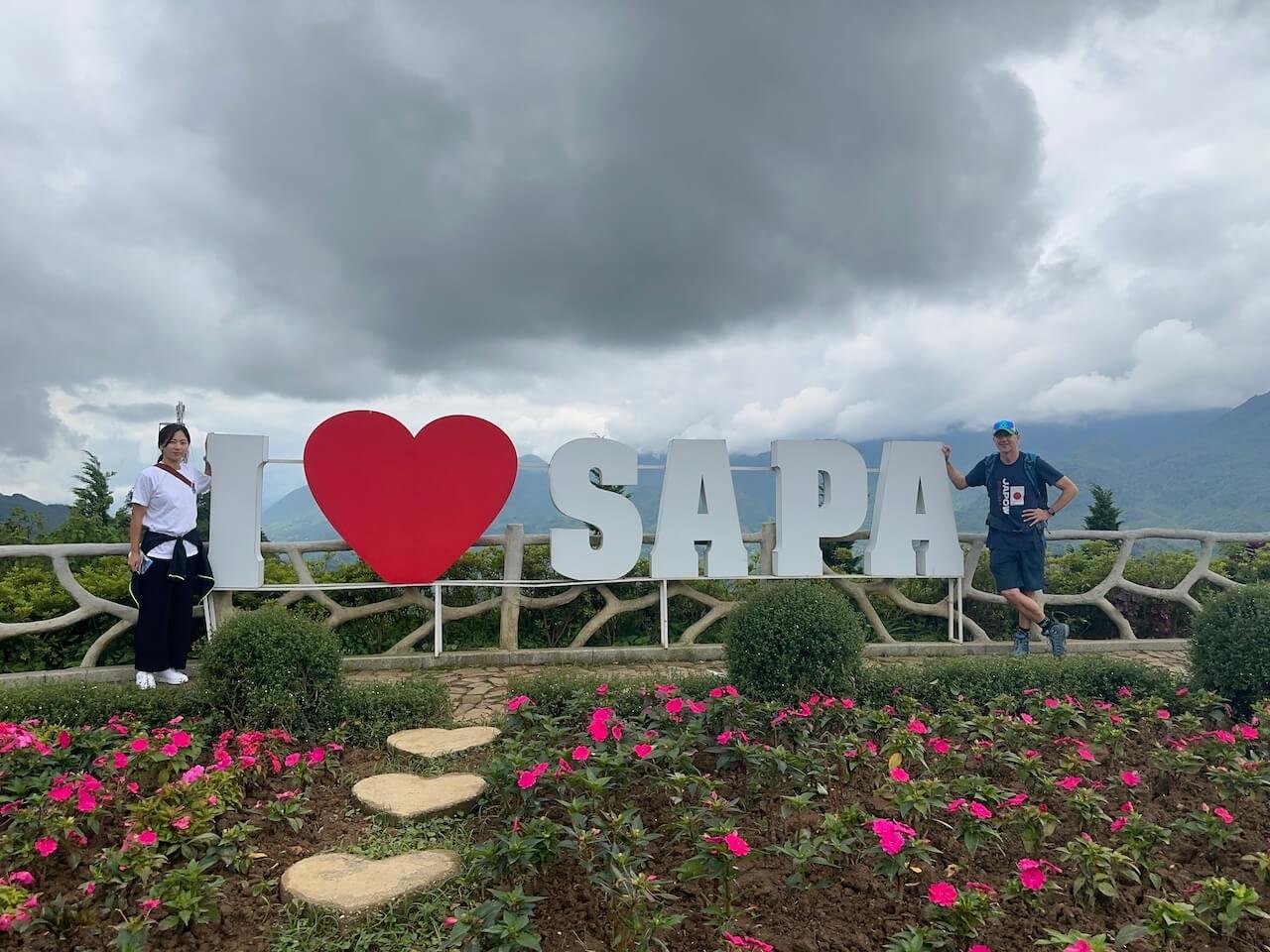
Yes. You can explore Sapa without a guide, and that’s exactly what we did over three days in northern Vietnam.
We trekked to Lao Chai on our own, rode the Fansipan cable car, and got around using a mix of walking, motorbike taxis, and the occasional Grab. At no point did we feel stuck or unable to figure things out.
That said, going without a guide changes the experience. You get flexibility and freedom, but you give up local insight and some deeper cultural context.
If you’re comfortable navigating on your own and don’t mind a bit of trial and error, Sapa works well as a self-guided trip. If you want more structure or a deeper understanding of the region, a guided trek is still worth considering.
🤷♂️ Why We Skipped the Tours
We visited Sapa right after a Ha Long Bay trip that I actually enjoyed quite a bit.
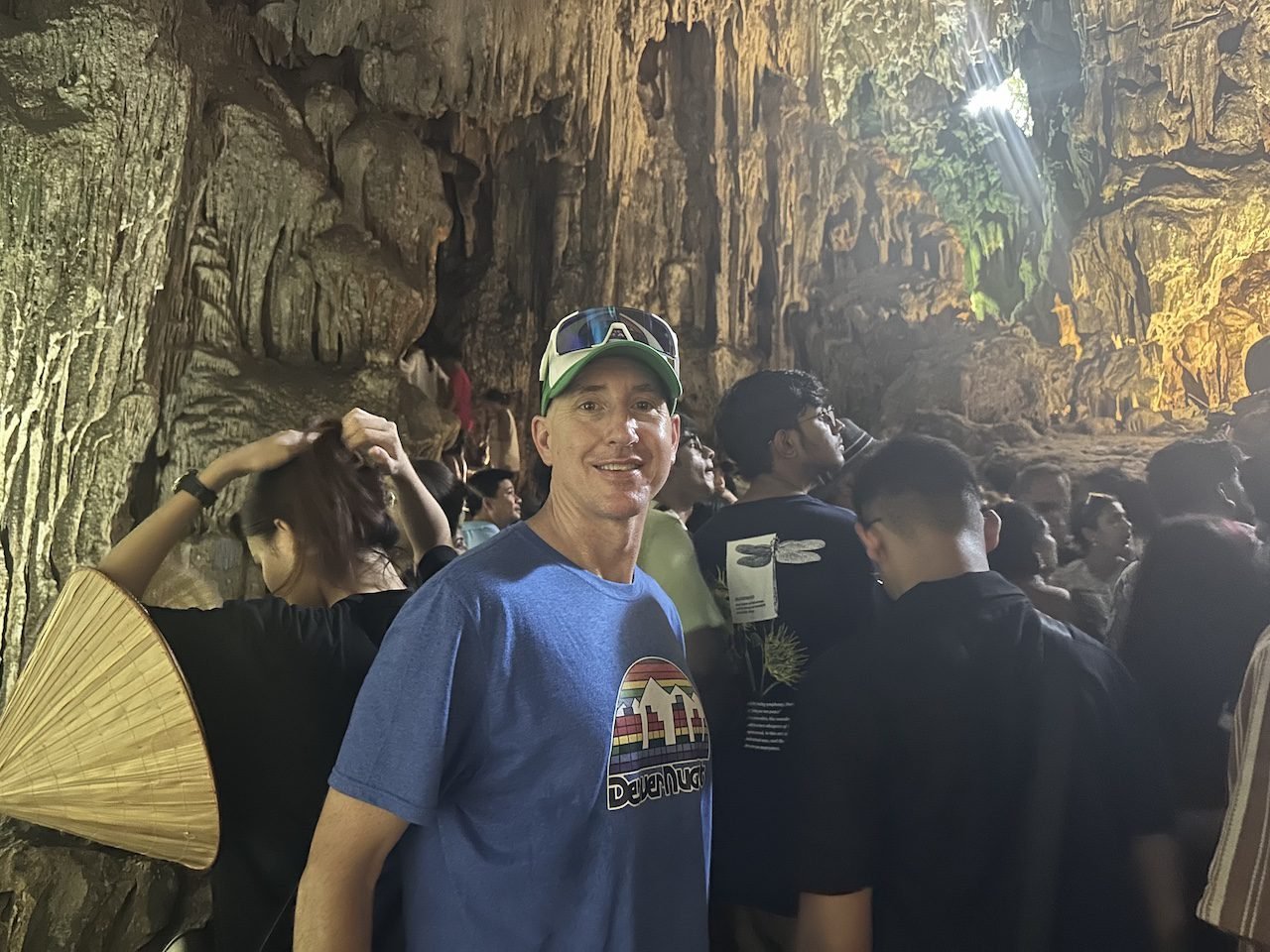
The only part I didn’t love was being packed into a cave with a huge crowd of tourists from all over the world. Not long after that, I came down with something that felt a little too close to Covid, and I didn’t want to risk being around big groups.
By the time we got to Sapa, I wasn’t in the mood for another tightly structured group experience.
So we kept it simple.
We booked a hotel, made a loose plan, and decided to explore Sapa on our own.
No guide, no fixed itinerary. Just exploring on our own, making plans on the fly, and seeing how it played out.
My Korean wife is always keen to learn a new English idiom, and on this trip it was “just go with the flow.”
🗺️ What It’s Like Exploring Sapa Without a Guide
Getting Around
Getting around Sapa without a guide was pretty straightforward.
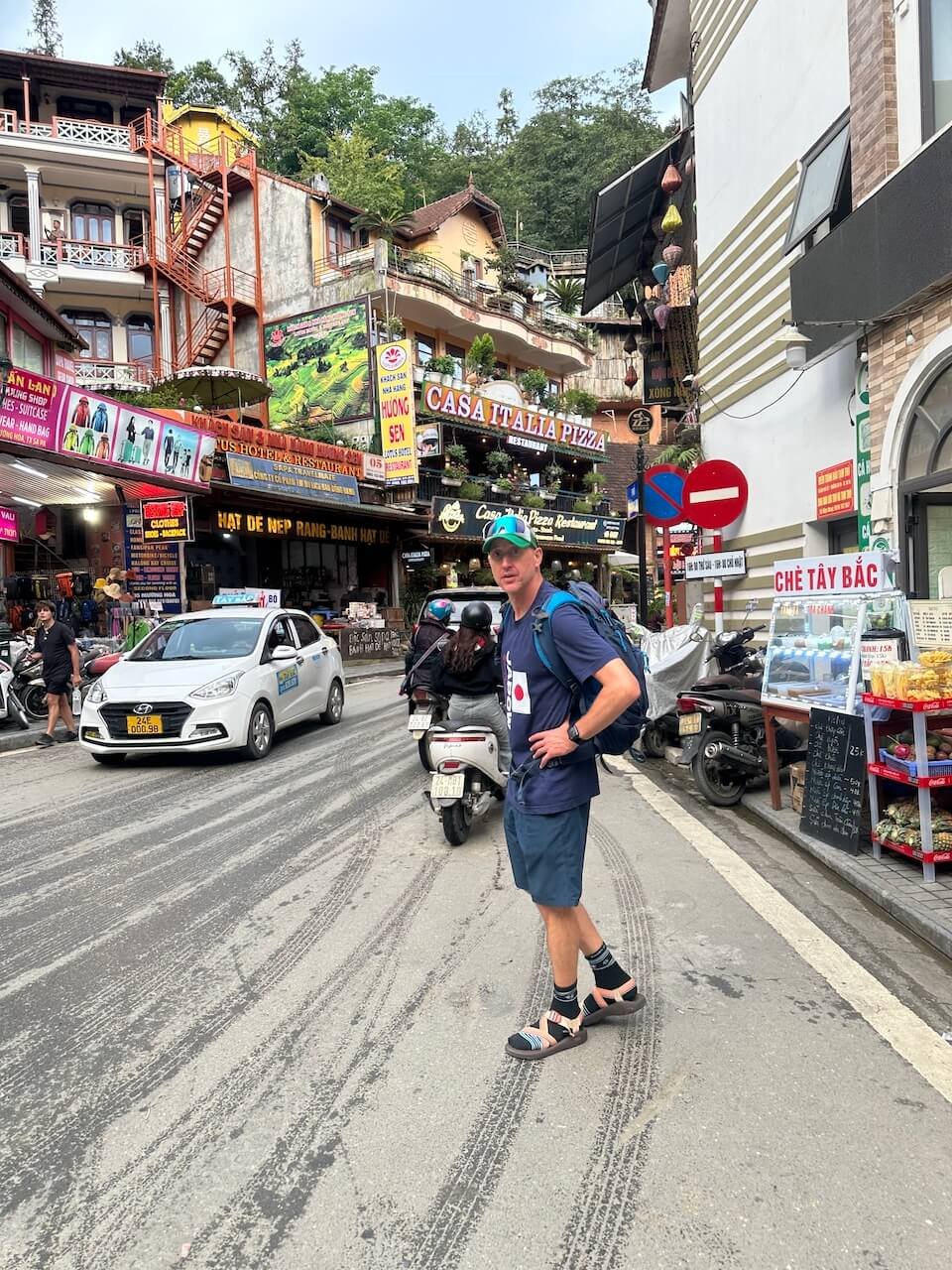
In town, we mostly walked, used Grab when we needed a ride (basically Southeast Asia’s version of Uber), or hopped on the back of motorcycle taxis for short trips. There are also small golf cart-style shuttles running around town that make it easy to get from place to place.
Once we left town, we followed roads and trails using Google Maps, which worked well both around town and out on the trails.
👉 I used an Airalo eSIM to stay connected for maps, rides, and everything else along the way. You can read my full Airalo review here.
Trekking on Our Own
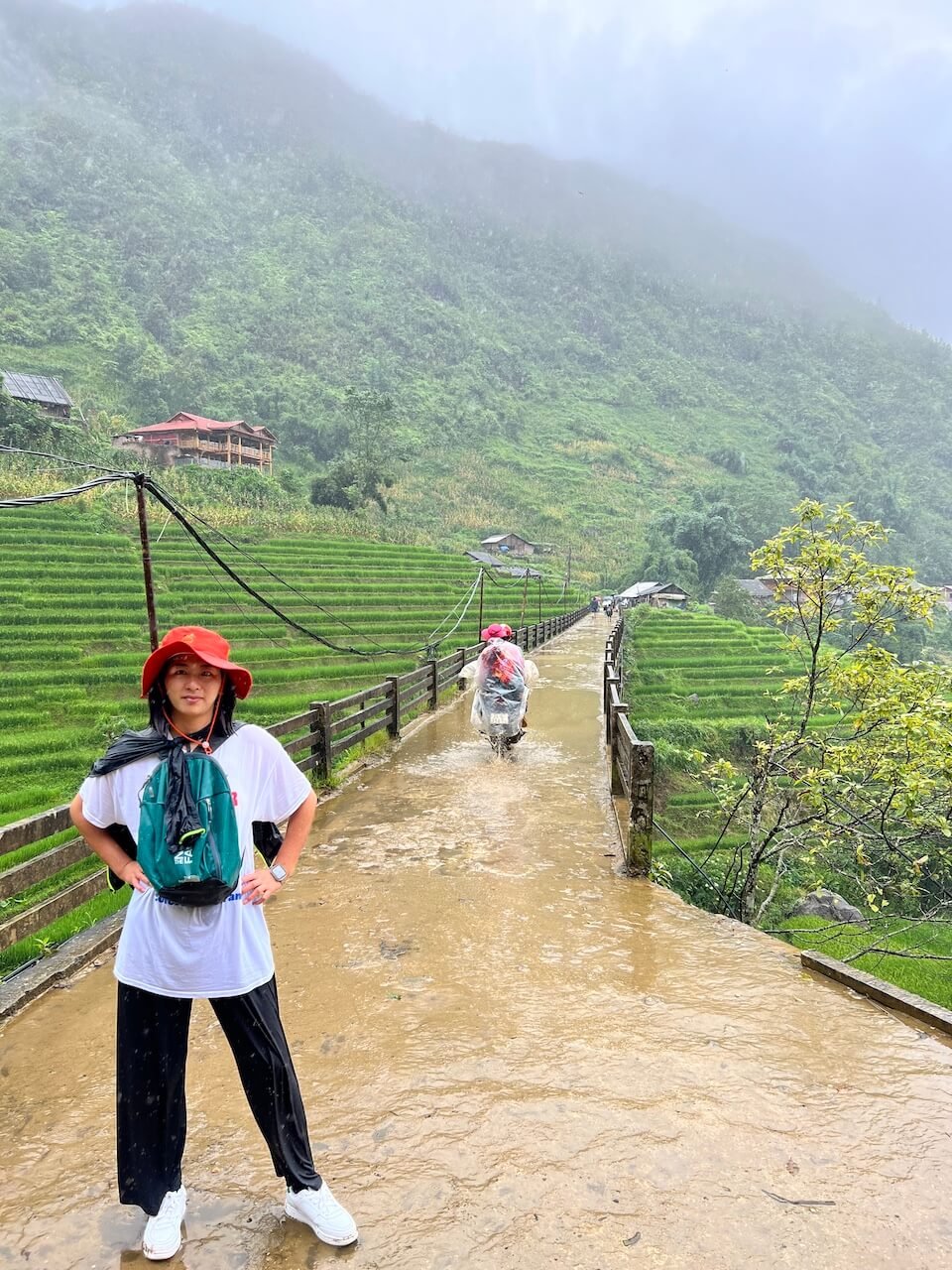
We made our way down into the Muong Hoa Valley without a guide, heading toward Lao Chai.
It didn’t feel remote in a way that made it stressful. There were other people around, and the main paths were easy enough to follow. Still, you’re on your own when it comes to pacing, direction, and decisions.
The biggest factor for us was the weather.
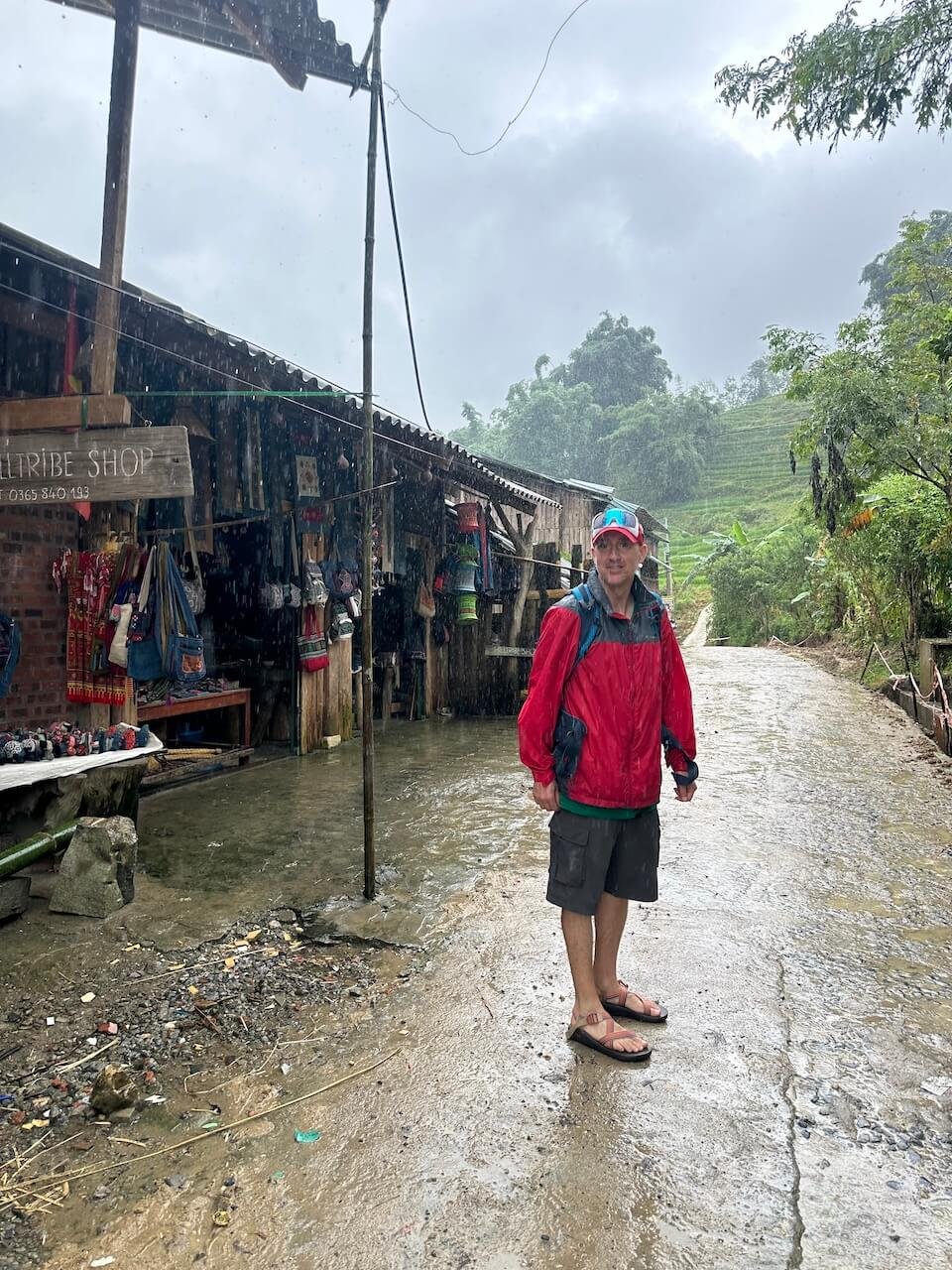
We were dealing with rain, which turned parts of the trail muddy and slick. Nothing technical, but it definitely slowed things down and made footing something you had to pay attention to.
The Tradeoff
Going without a guide gave us a lot of flexibility.
We could take our time, change plans, or stop whenever we felt like it. That part of the experience worked really well.
What you don’t get is any real context beyond what you can pick up on your own. You’re moving through villages and landscapes without much explanation of what you’re seeing.
That didn’t ruin our experience, because we were simply seeking scenery and vibes. But if those things are important to you, a guide would add a lot.
🟢 What Worked Well
Trekking Into the Muong Hoa Valley
Trekking down into the Muong Hoa Valley on our own worked out better than I expected.
The route toward Lao Chai was easy enough to follow, and there were always other people around, so it never felt like we were out there completely alone. We could move at our own pace, stop when we wanted, and not worry about keeping up with a group.
We stuck mostly to the main paths, which made navigation simple.
Even in the rain, it was manageable. Slower, a bit messier, but still straightforward.

Fansipan Without a Tour
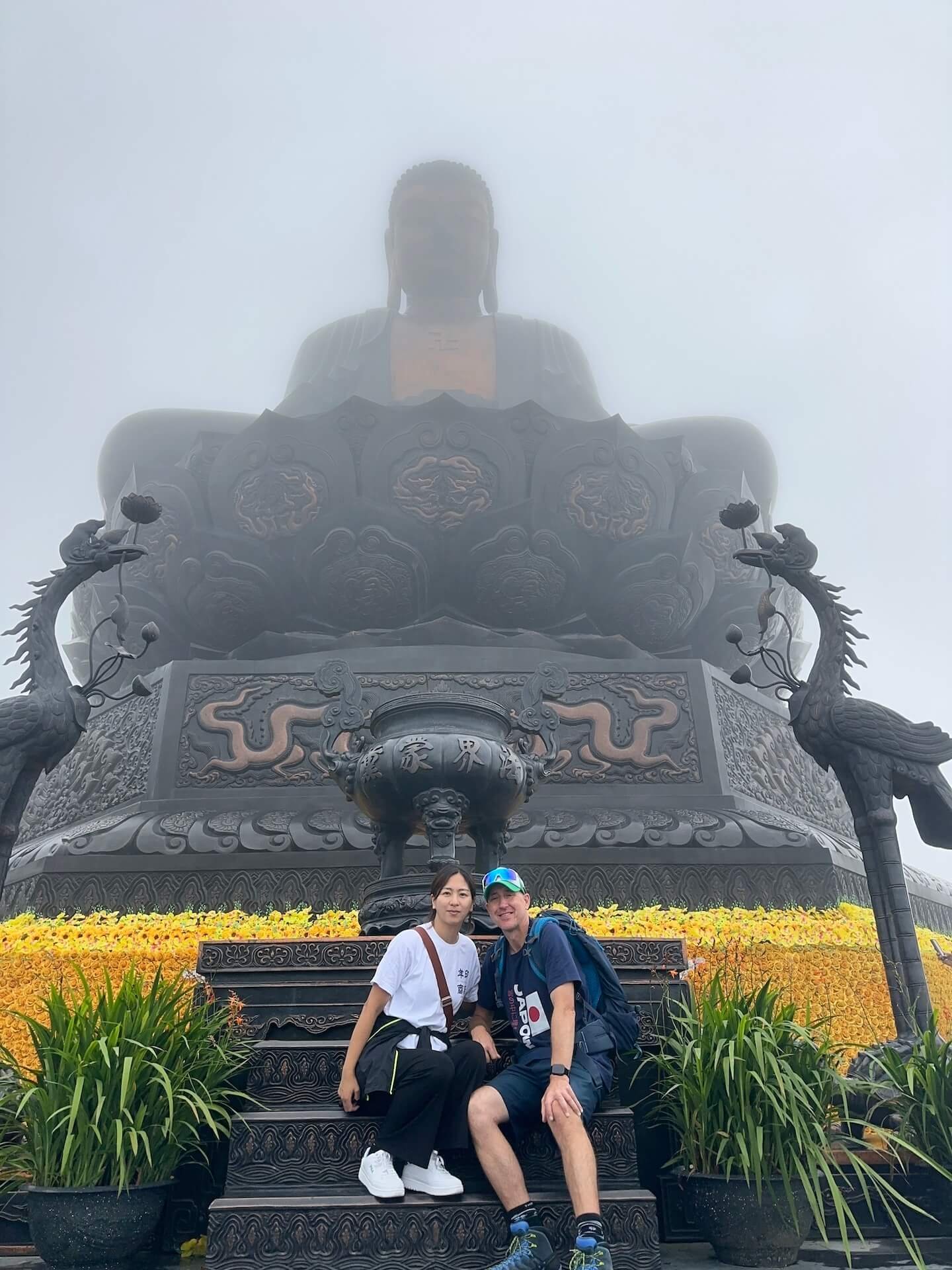
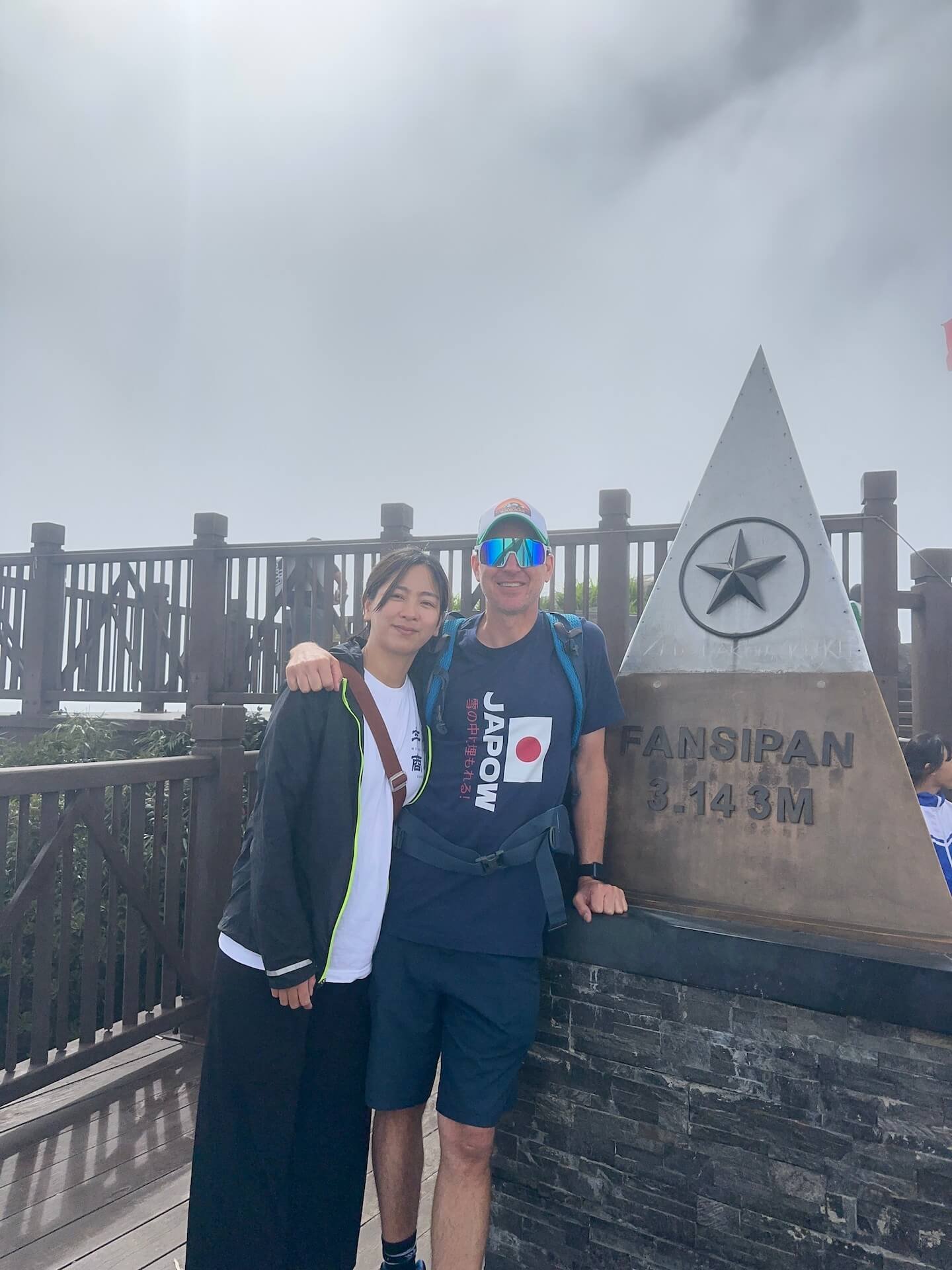
Getting up to Fansipan was also easy to figure out without a guide.
We made our way to the cable car station, bought tickets, and handled the whole thing on our own. No need to book anything in advance or go through a tour.
👉 I put together a full breakdown of the experience here: Fansipan Peak Cable Car Guide: Cost, Tickets & What to Expect

Flexibility
This was probably the biggest advantage.
We weren’t tied to a schedule, which mattered more than I expected, especially not feeling 100%. If we wanted to slow things down, change plans, or just take it easy for a bit, we could.
No pressure to keep moving. No set timeline to follow.
Keeping It Simple
We didn’t try to do everything.
A couple of treks, time in town, Fansipan, and that was enough. Not having a packed itinerary made the whole thing feel a lot more relaxed.
⚠️ Where a Guide Makes More Sense
Trekking Beyond the Main Routes
The biggest place a guide would have made a difference was trekking in the Muong Hoa Valley.
We had a great day walking it on our own, but we mostly stuck to the main road and the more obvious paths. It was scenic, no doubt about that, but it felt more like a hike than a deeper look into the area.
At times, we’d see guided groups branch off into smaller villages and side trails that we wouldn’t have found on our own. That’s where a guide starts to make a difference.
If it’s your first time in Sapa and you want more than just the scenery, I’d recommend going with a reputable guide.
👉 Explore top-rated Sapa tours on GetYourGuide
Context You Don’t Get on Your Own
Moving through the valley without a guide means you’re taking everything in at face value.
You see the rice terraces, the villages, the daily life, but you don’t really understand much of it beyond what you can piece together yourself.
That didn’t bother me much on this trip. I’ve done similar trekking elsewhere in Southeast Asia, so I wasn’t too concerned about missing that side of it.
But if that’s part of why you’re coming to Sapa, a guide would add a lot.
When Going Solo Makes Less Sense
We were dealing with rain and I wasn’t feeling great, which made the flexibility of going solo a better fit for us.
But under normal circumstances, especially for a first visit, I’d lean toward a guided trek.
Not because you can’t do it on your own, but because you’ll probably get more out of it.
Where You Probably Don’t Need a Guide
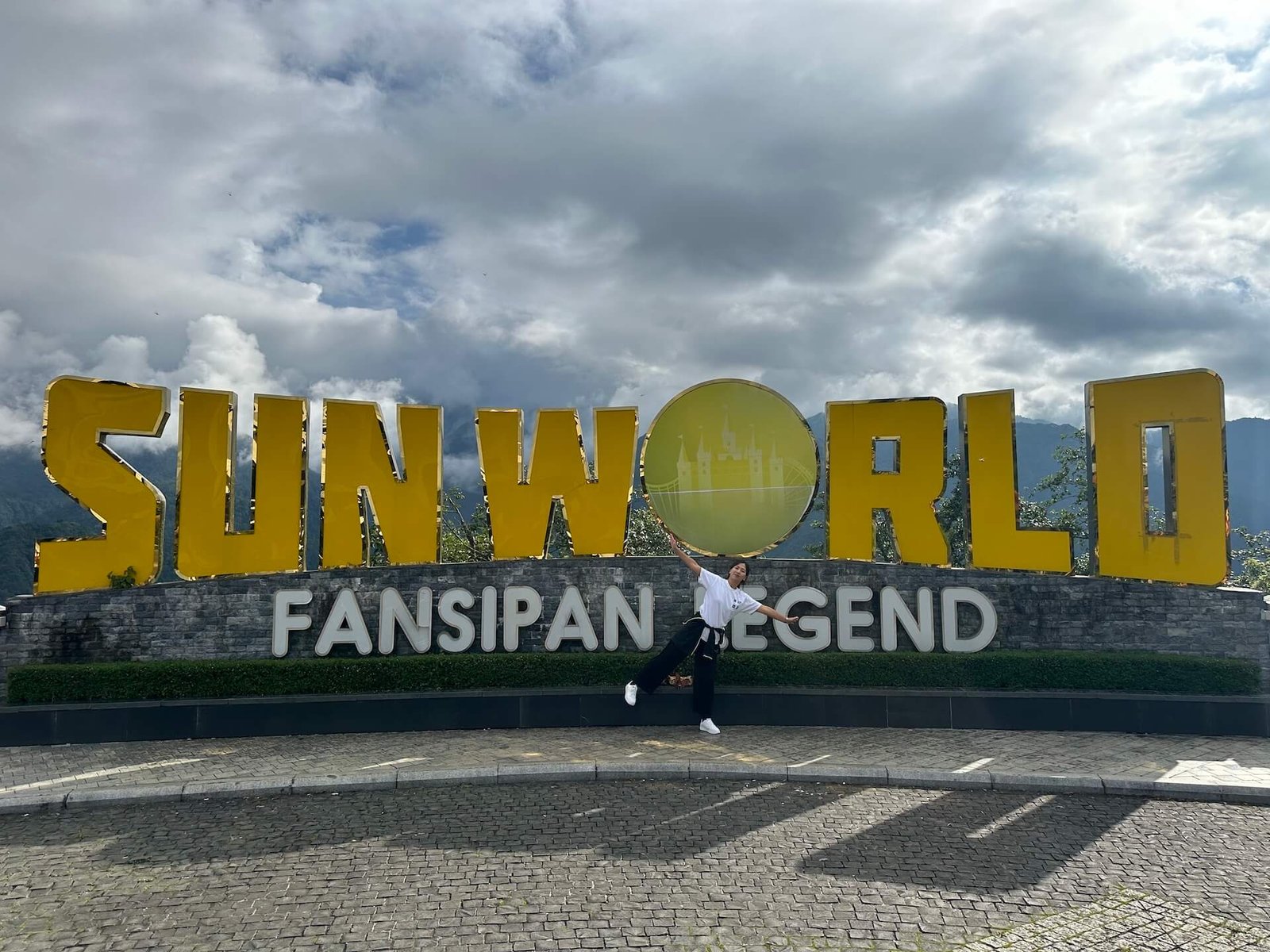
Fansipan
We had no issues getting tickets, navigating the cable car, or exploring at the top on our own.
Unless you’re planning to hike it or have a strong interest in the religious side of things, a guide isn’t really necessary here.
👉 We booked the Sun World Fansipan Legend Ticket through Klook (monorail + cable car + tram) and it worked exactly as expected.
Cat Cat Village
We hired motorcycle taxis to get there, paid the entrance fee, and explored the area on our own without any issues. It’s very built up for tourism, with a clear path and plenty of signs, so there’s not much need for a guide.


🥾 How Hard Is It to Do Sapa Without a Tour?
Overall, it’s pretty straightforward, with a few things to be aware of.
Navigation wasn’t an issue. Between Google Maps and the main paths, it was easy enough to figure out where we were going without a guide.
The bigger factor was the terrain and the weather.
We were visiting during the rainy season, so the conditions weren’t exactly a surprise. Still, the rain turned sections of the trail muddy and slick. Nothing technical, but you do have to pay attention to your footing, especially on the way down into the valley.
There were also a few smaller annoyances along the way. Without a guide, you’ll get approached pretty regularly by local women offering to guide you, and kids trying to sell small items. It’s part of the experience, but it can be a bit persistent at times.
On the trekking side, you also don’t get much in the way of local context. You’re seeing everything, but mostly just taking it in at face value.
Our Fansipan day took a bit more trial and error as well. Nothing difficult, just figuring out the order of operations with the train, cable car, and tram on our own.
Fitness-wise, you don’t need to be in peak shape, but you should be comfortable walking for a few hours at a time, often on uneven ground.
If you’re reasonably active and comfortable navigating on your own, exploring Sapa without a guide is well within reach.
🌦️ When to Visit Sapa (Quick Note)
We visited Sapa during the rainy season, so the muddy trails and wet conditions weren’t exactly a surprise.
That said, it definitely made things a bit slower going, especially on the trek down into the Muong Hoa Valley.
From what I’ve seen and heard since, the most popular times to visit are spring (March to May) and fall (September to November), when the weather is more stable and the views tend to be clearer.
If your main goal is trekking, those shoulder seasons are probably the safer bet.
But if your schedule points you toward the rainy months, it’s still manageable. Just expect some slick trails and adjust your expectations a bit.
🚐 Getting to and Around Sapa
Getting to Sapa takes a bit of planning, but once you choose your preferred method, it’s easy enough to organize.
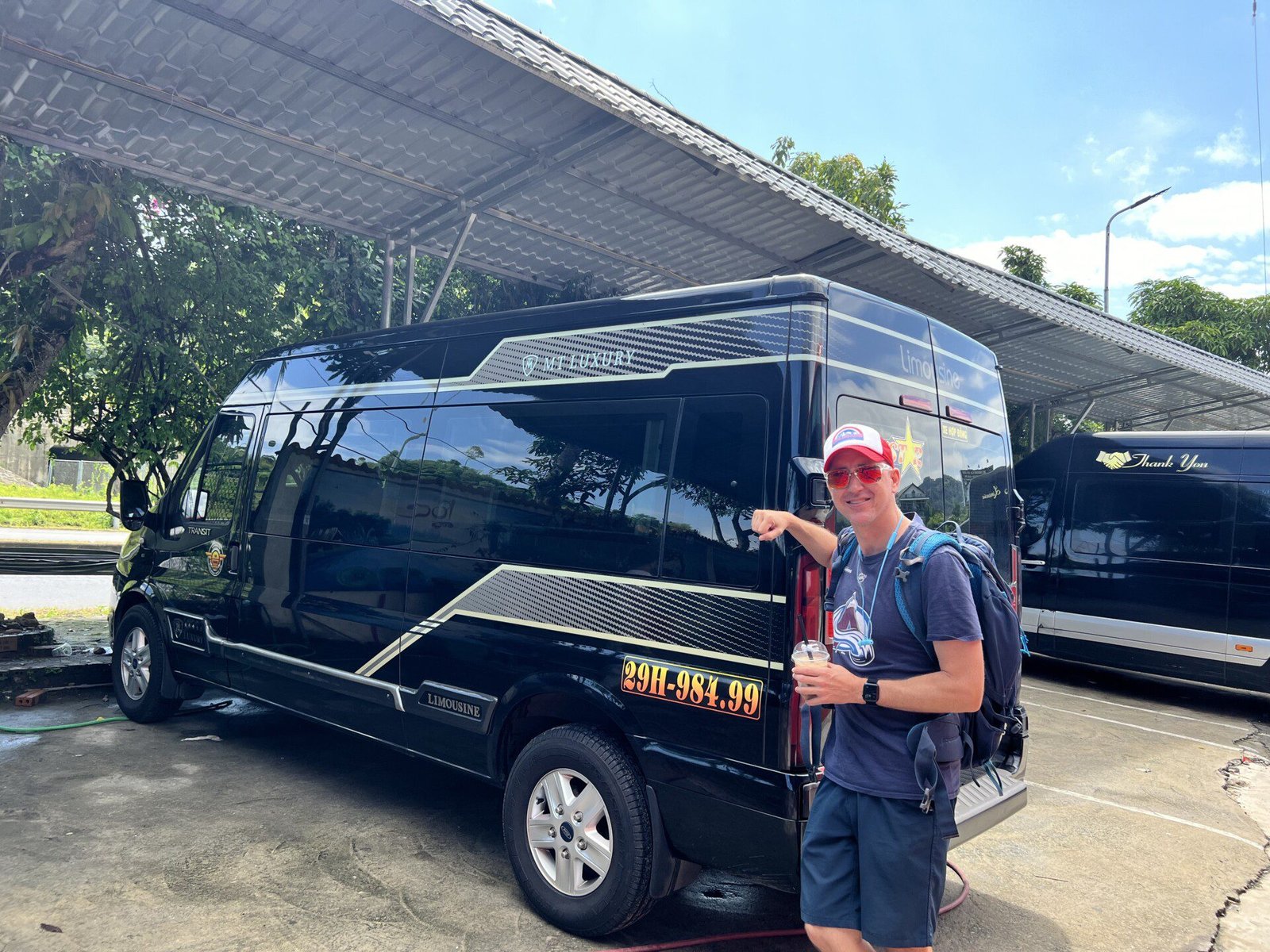
Most people head up from Hanoi by train, bus, or shared mini-van. We took one of the shared “limousine” mini-vans, which hit a nice middle ground between comfort and simplicity.
It picked us up at our hotel in Hanoi, dropped us near the center of Sapa, and the whole thing took a little over five hours with a couple of stops along the way. I’d do it the same way again.
👉 I break down the different transport options in more detail here: How to Get from Hanoi to Sapa: Best Buses, Trains & Mini-Vans
Which Option Should You Choose?
Quick Comparison Guide:
| Method | Time | Cost (USD) | Best For |
|---|---|---|---|
| Mini-Van 🚐 | 5 hrs | ~$20 | Comfort + convenience |
| Sleeper Bus 🚌 | 6–7 hrs | ~$10 | Backpackers, tight budgets |
| Train 🚆 | 8+ hrs | ~$25–35 | Slow travel, nostalgia fans |
Once you’re in Sapa, getting around is easy.
In town, you can walk most places or grab a ride using Grab, motorcycle taxis, or the small golf cart-style shuttles that run around the area.
For places a bit farther out, like trailheads or nearby villages, we mostly relied on motorcycle taxis. Quick, cheap, and easy to arrange.
🏨 Where to Stay in Sapa
We stayed at Pao’s Sapa Leisure Hotel, which sits up on its own hillside just outside of town.
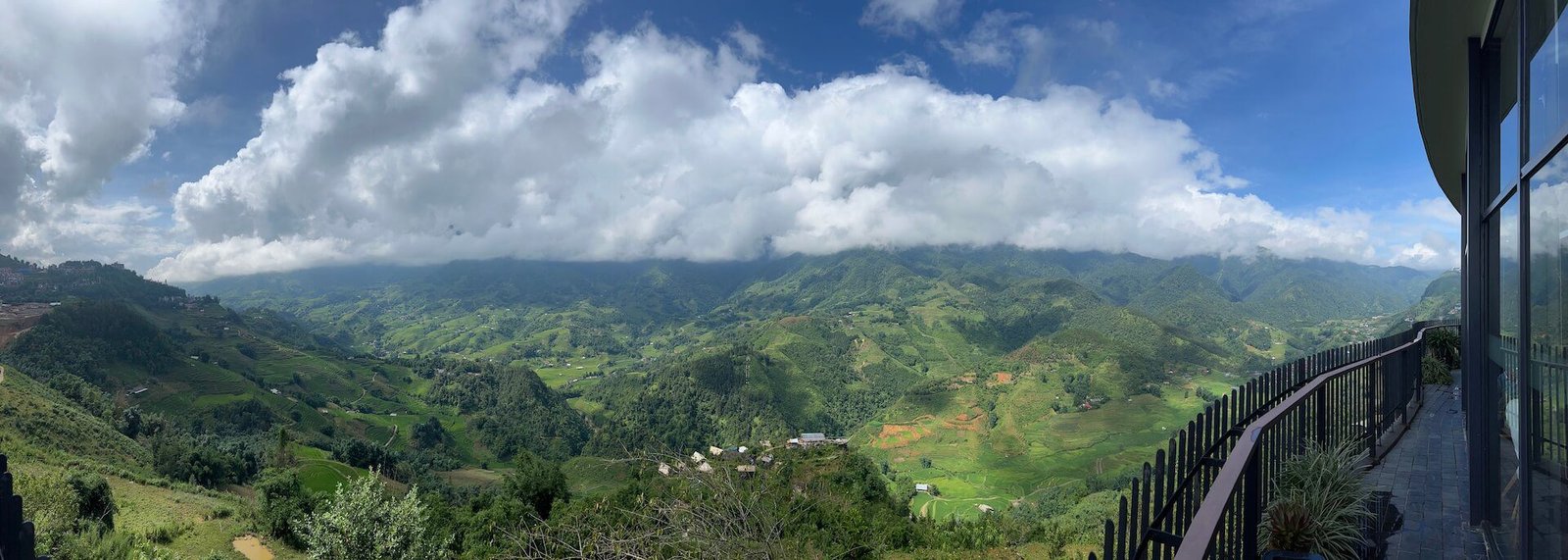
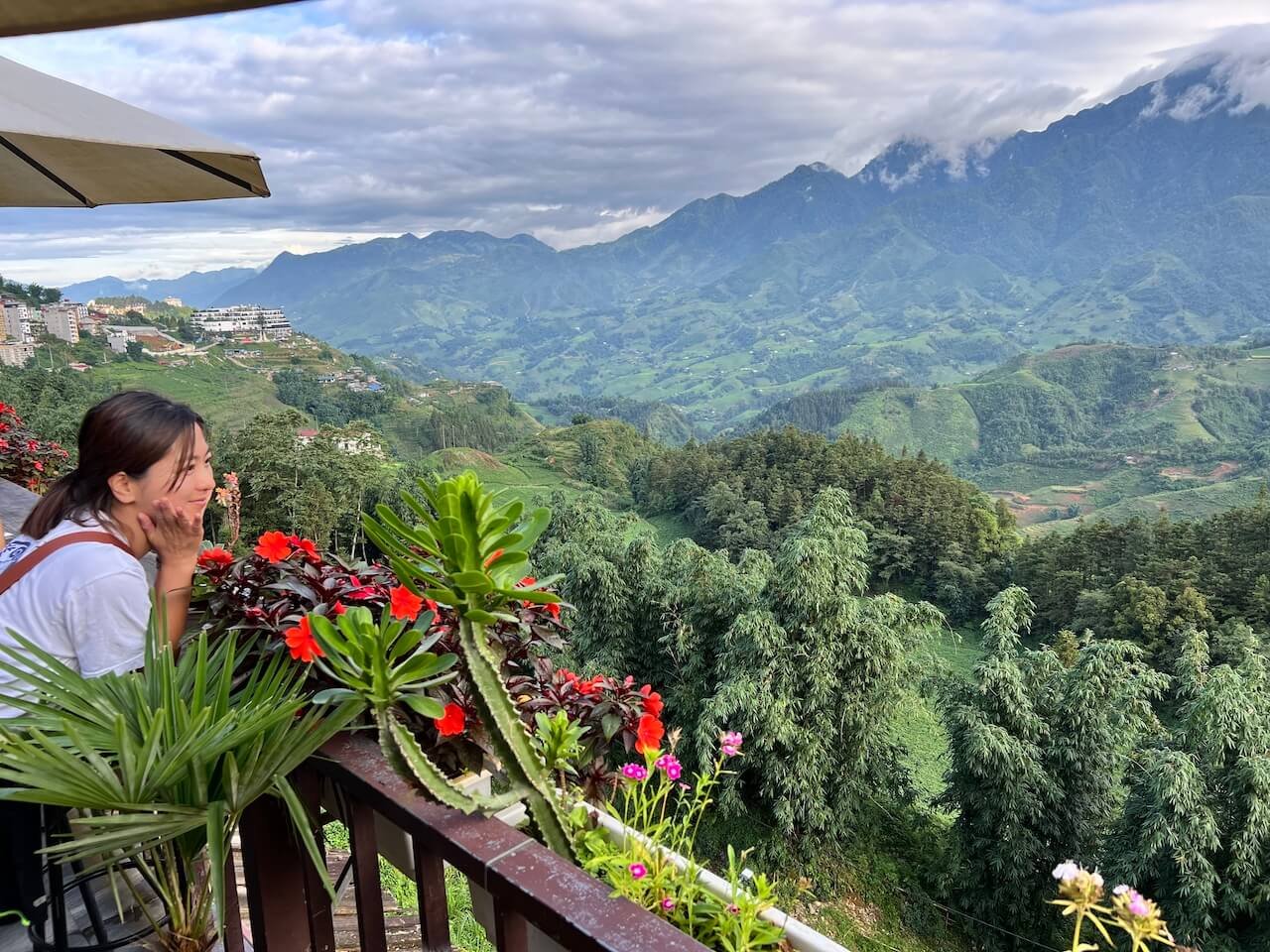
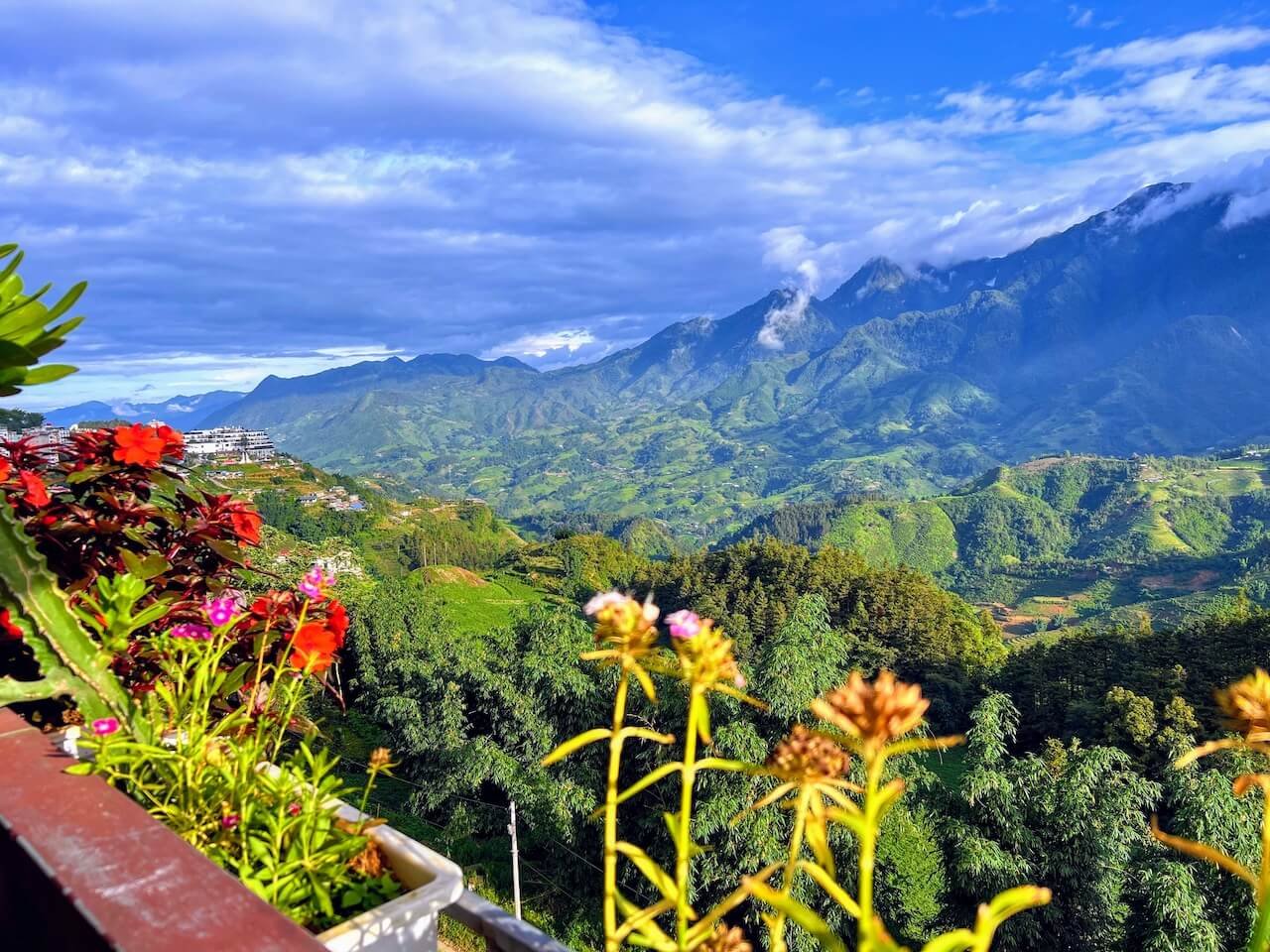
The views over the Muong Hoa Valley were the highlight. Waking up to terraced rice fields from the balcony never got old.
The room itself was spacious and clean, and the bed was one of the more comfortable ones we had on that trip. Breakfast was also a standout, with a big spread and a view that made it easy to linger a bit longer than planned.
It’s not right in the center of town, so we usually grabbed a ride rather than walking back at night. Not a big deal, just something to keep in mind.
Overall, it was a great base for a few days in Sapa. Comfortable, quiet, and close enough to everything without being in the middle of it.
🗓️ My 3 Days in Sapa (Quick Version)
We spent three full days in Sapa, and each day had a pretty different feel.
Day 1 was our self-guided trek down into the Muong Hoa Valley toward Lao Chai. That was the most rewarding part of the trip and the clearest example of what you can do on your own in Sapa.
Day 2 we rode the Fansipan cable car up to the Roof of Indochina. No guide needed there. Just tickets, a bit of figuring out, and time to wander around at the top.
Day 3 we kept things lighter with a visit to Cat Cat Village, where my wife also rented traditional clothing for a rooftop photo shoot before we headed down into the village.
👉 I’ve laid out the full day-by-day version here: 3 Days in Sapa Without a Guide: A Realistic DIY Itinerary for Independent Travelers
🤔 Should You Visit Sapa Without a Guide?
If you’re comfortable figuring things out as you go, visiting Sapa without a guide is completely feasible.
That’s how we approached it. We were able to get around, plan our days, and see some of the main highlights without too much trouble.
But looking back on it, there are definitely situations where a guide would make the experience better.
Do it on your own if:
- you’re comfortable using Google Maps and navigating as you go
- you want flexibility to change plans or take things slow
- you’re mainly interested in scenery, hiking, and exploring at your own pace
Consider a guide if:
- you want to visit smaller villages or get off the main routes
- you’re interested in cultural context, local insight, and conversation
- you’d rather not deal with logistics, planning, or figuring things out day by day
👉 Browse guided treks, market visits & more on Viator
My take:
We had a good experience doing it on our own.
But if your goal is to get a better understanding of the area and go beyond the main paths, I’d lean toward hiring a reputable guide, especially for trekking days.
Not because you need one, but because you’ll likely get more out of it.
📬 Final Thoughts
We went into Sapa without a guide and came away with a trip we really enjoyed.
It wasn’t complicated to organize, and for the most part, we were able to do everything we wanted to do on our own. The trekking, getting around town, and even something like Fansipan all worked without needing to book into a tour.
At the same time, it’s pretty clear where a guide would have added something.
We saw a lot, but we mostly experienced it at the surface level. And while that was fine for us on this trip, I can see how having someone local to walk with, explain things, and take you beyond the main paths would change the experience quite a bit.
So it really comes down to what you’re looking for.
If you want flexibility and don’t mind figuring things out as you go, doing Sapa without a guide is a solid option.
If you’re coming for a deeper understanding of the area or want a more structured experience, it’s probably worth bringing someone along who knows it better than you do.
Either way, you’re going to end up walking through one of the more interesting landscapes in Vietnam.
❓ Sapa Without a Guide FAQs
Can you visit Sapa without a guide?
Yes, you can visit Sapa without a guide and get around without much trouble. We handled transportation, trekking, and activities like Fansipan on our own using Google Maps and local rides.
Is trekking in Sapa without a guide safe?
For the main routes like the Muong Hoa Valley trek toward Lao Chai, yes. The paths are fairly easy to follow and there are usually other people around. You’re on your own for navigation and decisions, but it didn’t feel unsafe.
Is it worth hiring a guide in Sapa?
It depends on what you want. We enjoyed going on our own, but a guide would have added more cultural context and access to smaller villages. If it’s your first time in Sapa, a guide is worth considering for trekking days.
Is Sapa difficult to explore without a tour?
Not really. Getting around town and organizing activities is manageable. The main challenge is the terrain and weather, especially in the rainy season when trails can get muddy and slick.
Can you visit Fansipan without a guide?
Yes. Fansipan is very easy to do on your own. You just need to get to the station, buy tickets, and follow the process for the train, cable car, and tram.
Can you visit Cat Cat Village without a guide?
Yes. Cat Cat Village is simple to visit independently. We took motorcycle taxis, paid the entrance fee, and followed the established path through the village.
What are the downsides of visiting Sapa without a guide?
You miss out on local insight and context, especially while trekking. You’ll also need to handle logistics yourself and deal with things like persistent vendors or people offering guiding services.
Do you need to be very fit to explore Sapa on your own?
No, but you should be comfortable walking for a few hours at a time. The terrain can be uneven, and weather conditions like rain can make things more challenging.