This Sapa 3 day itinerary follows a flexible route through the Muong Hoa Valley, Fansipan, and Cat Cat Village. It’s based on how we spent three days in Sapa, adjusting for weather, energy, and what felt worth doing.
We didn’t try to do everything. We kept the days manageable and adjusted as we went.
What follows is the exact route we took, along with what worked, what didn’t, and where I’d make a few changes if I did it again.
If you’re still deciding whether to explore Sapa on your own or with a guide, I break that down separately.
👉 Sapa Without a Tour: Can You Trek and Explore on Your Own?
Here’s how it played out.
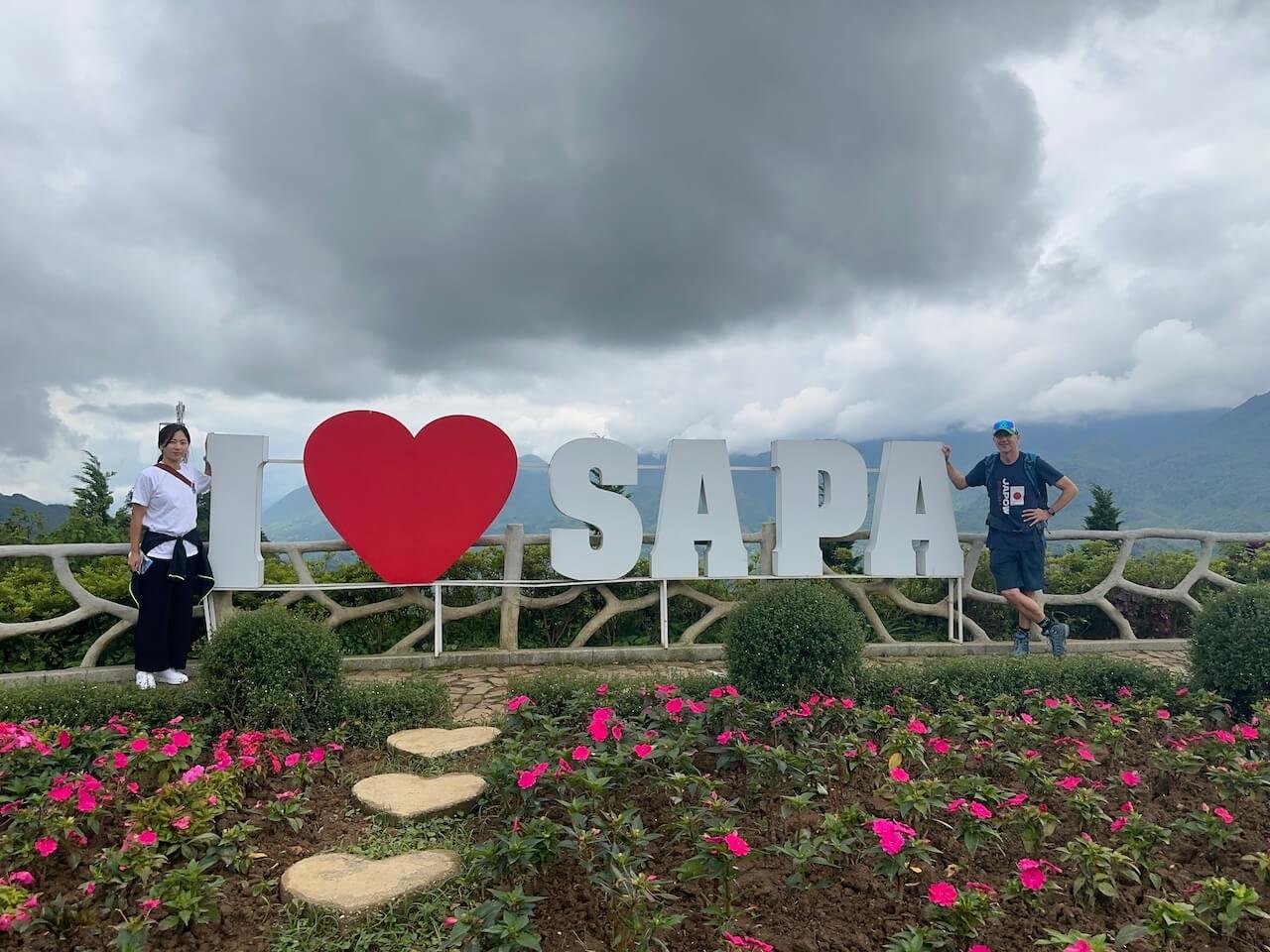
What to Expect from This Itinerary
This is a fairly relaxed three-day itinerary that focuses on the valley, Fansipan, and one of the more accessible villages near town.
Most of it can be done at your own pace. We adjusted things as we went, mostly depending on the weather, which ended up shaping the trip more than anything else.
It’s not a deep trek into remote parts of Sapa, but it still gives you a good feel for the landscape without overcomplicating things.
Sapa 3 Day Itinerary at a Glance
| Day | Highlights | Notes |
|---|---|---|
| 🥾 Day 1 | Self-guided trek from Sapa to Lao Chai through Muong Hoa Valley | Easy to moderate walk with valley views and flexible timing |
| 🚡 Day 2 | Fansipan via monorail, cable car, and summit complex | Cable car access to Vietnam’s highest peak; weather can change quickly |
| 👘 Day 3 | Cat Cat Village loop walk and time around Sapa town | Short, accessible walk with shops, viewpoints, and a waterfall |
Where to Stay in Sapa
We based ourselves on the lower end of Sapa town for this trip, which made it easy to get to everything we had planned.
We stayed at Pao’s Sapa Leisure Hotel and had a really good experience there. The location worked well, the views over the valley were hard to beat, and the rooms and breakfast were both solid. It felt like a comfortable place to come back to after a long day out.
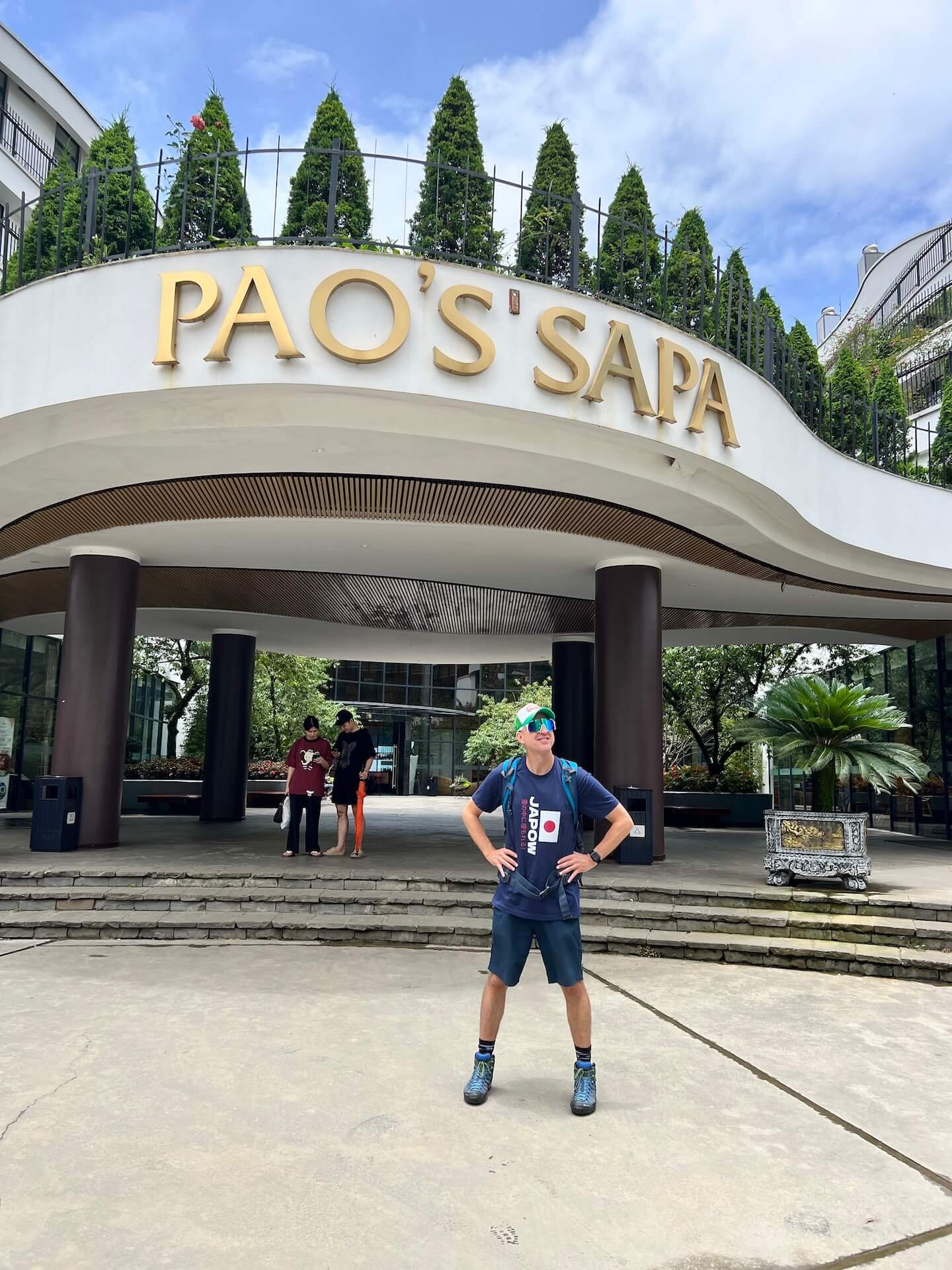
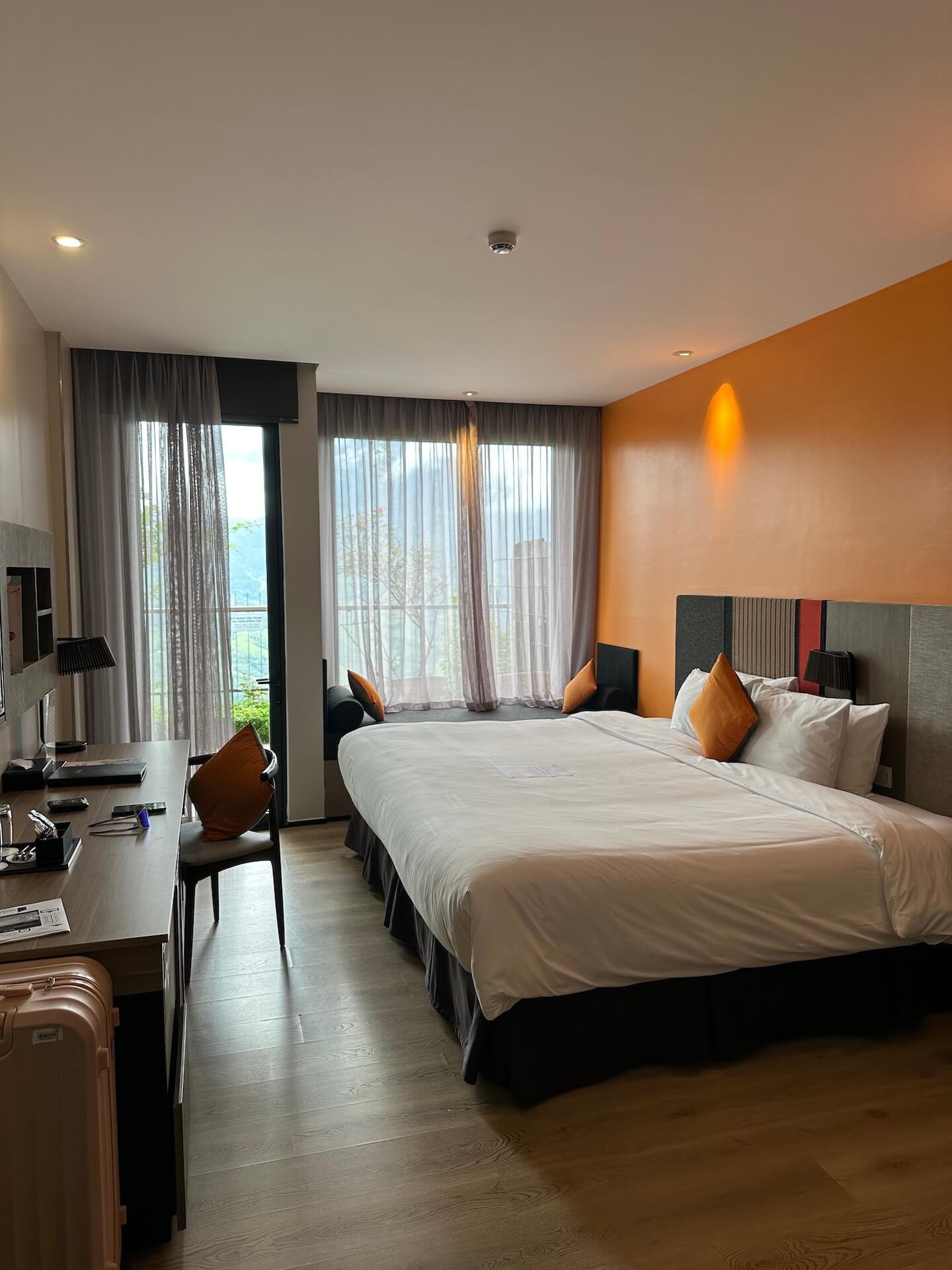
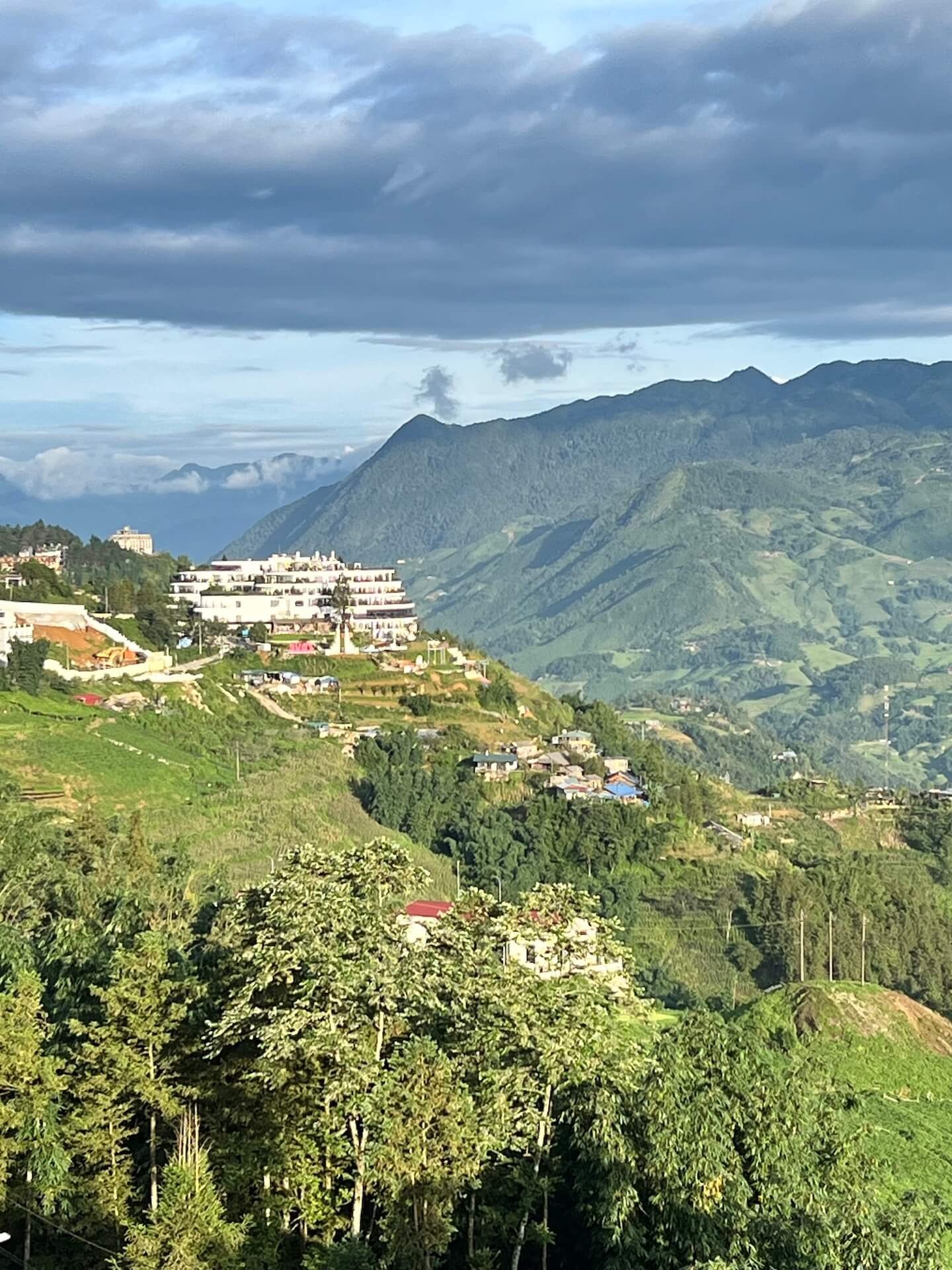
That said, where you stay in Sapa can change the feel of your trip quite a bit. Staying in town is more convenient, especially if you’re only there for a few days. You’ve got easy access to restaurants, transport, and places like Fansipan, but it can feel a bit chaotic at times.
If you’re looking for something quieter, there are a lot of homestays and small guesthouses out in the valley. That’s probably the better option if you want a slower pace and more time in the countryside, but it does take a bit more planning to get around.
If you want to see what’s available for your dates, Agoda usually has the best selection in Sapa, especially for hotels in and around town. You can also check VRBO if you’re leaning more toward a private stay or something outside the main area.
Day 1: Trek to Lao Chai Village
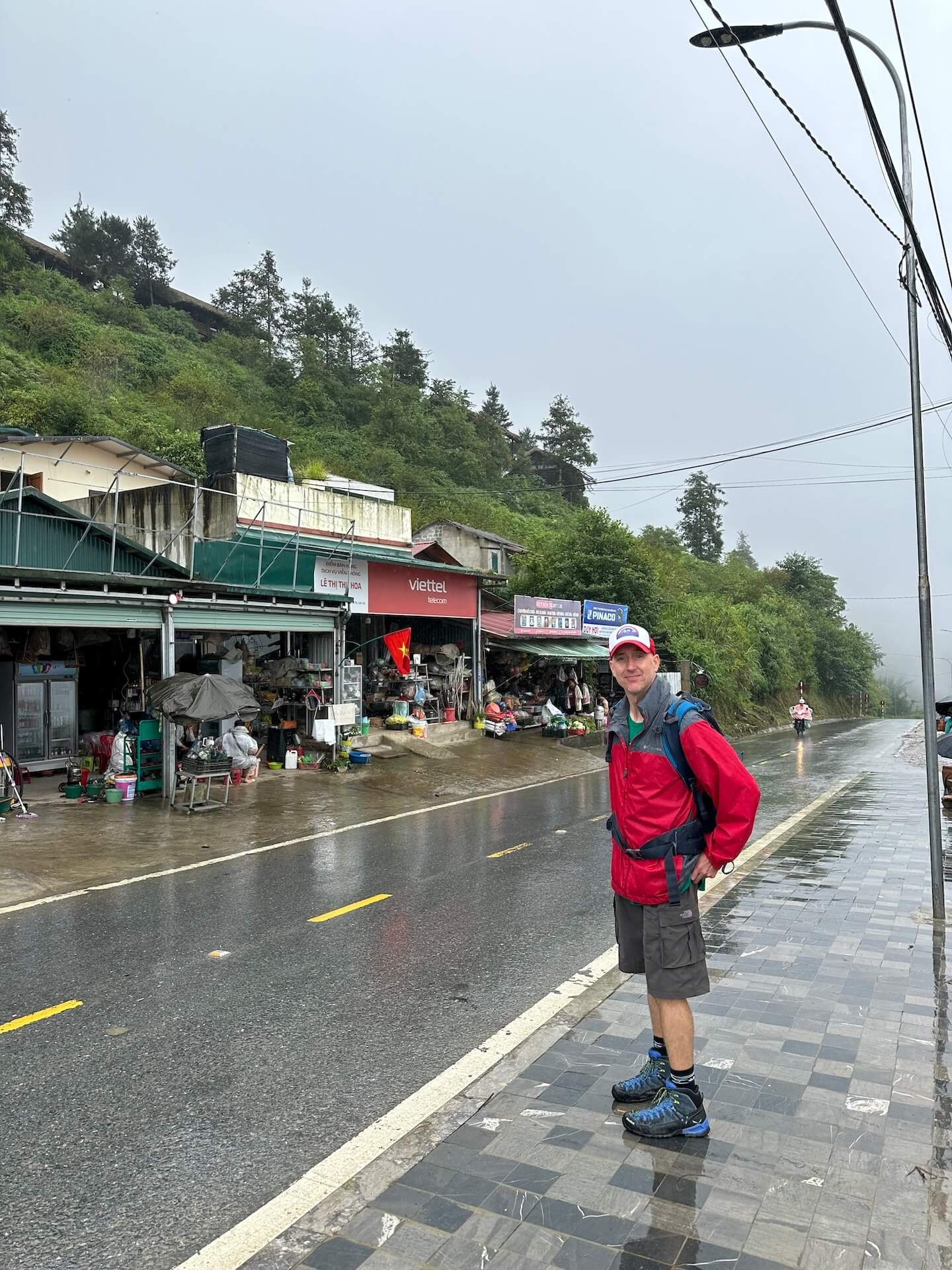
We started the day right from Pao’s, heading downhill along the main road toward the valley.
The first stretch wasn’t much to look at. Pavement, motorbikes, a few guesthouses, and the occasional offer from local guides. We followed the road for about 20 to 30 minutes until we reached the turnoff near Sapa Clay House.
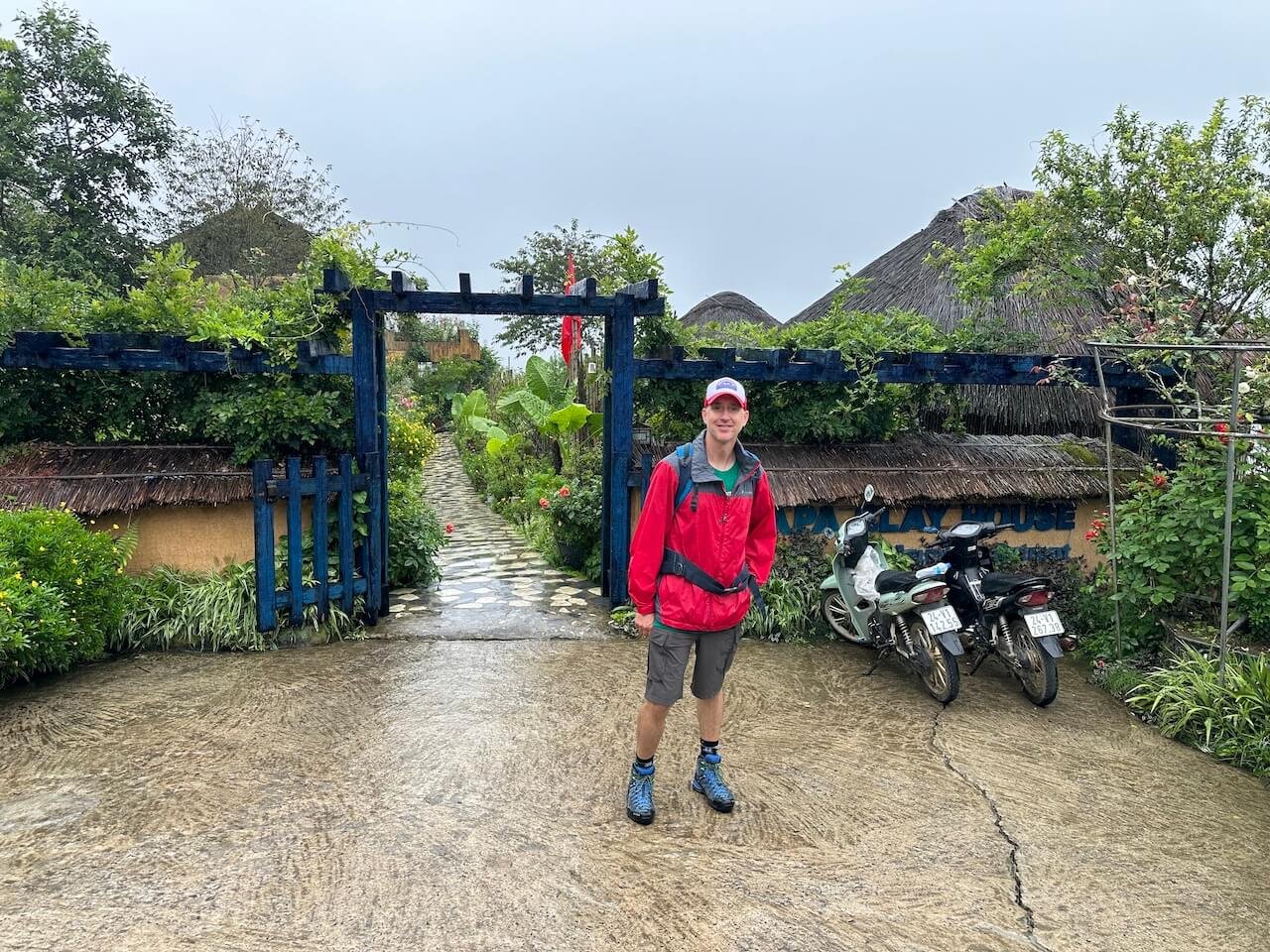
That’s where the trek really starts.
Once you leave the road, the change is pretty immediate. The views open up, the trail narrows, and it finally starts to feel like the Sapa you came for. Terraced hills, scattered homes, and a slower pace the further you go.
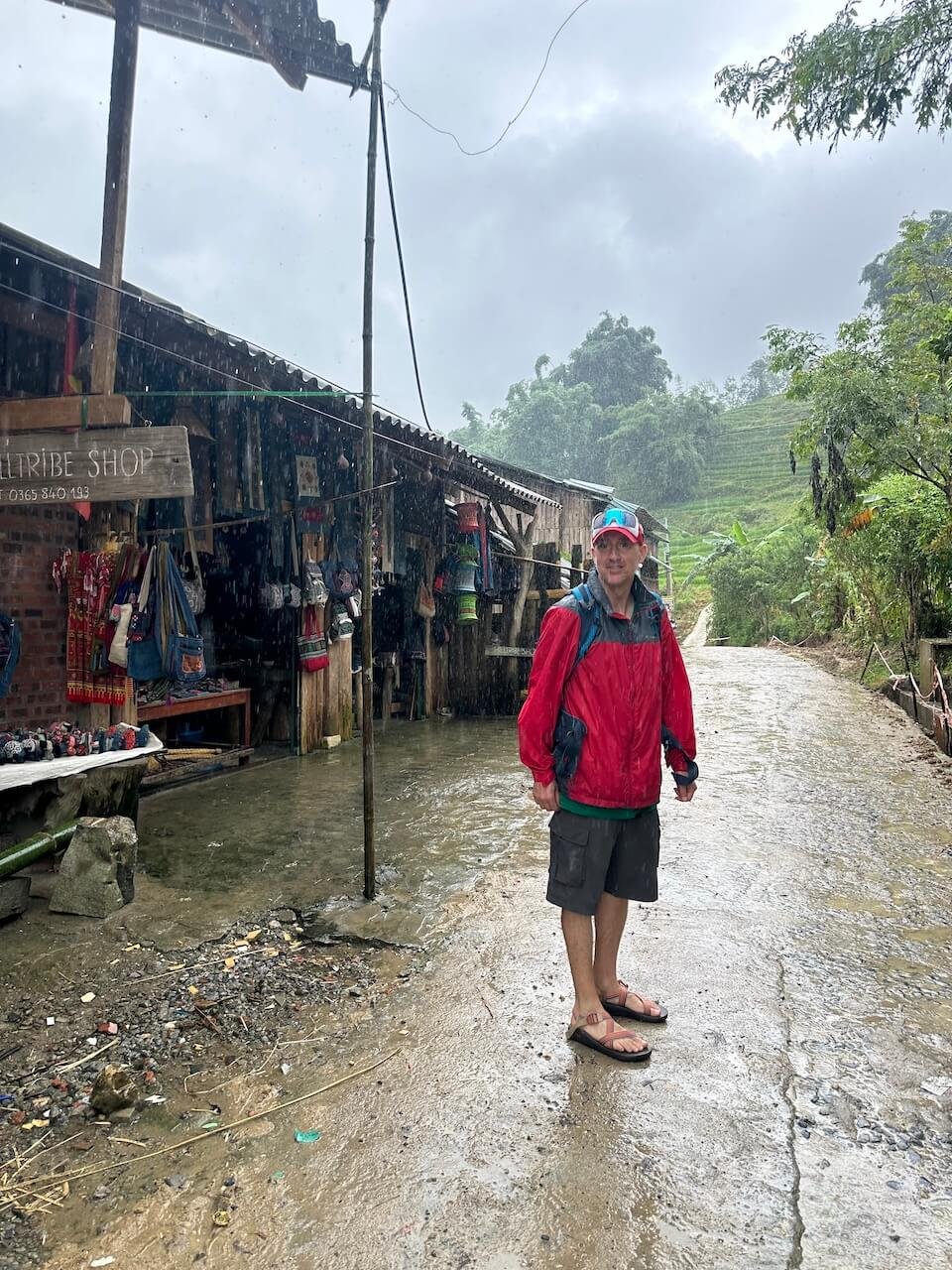
From there, we made our way toward Lao Chai without following a strict route. Some sections were paved, others cut through smaller paths depending on what looked passable that day. The rain kept us on more solid ground, but there are dirt trails through the rice fields if the weather cooperates.
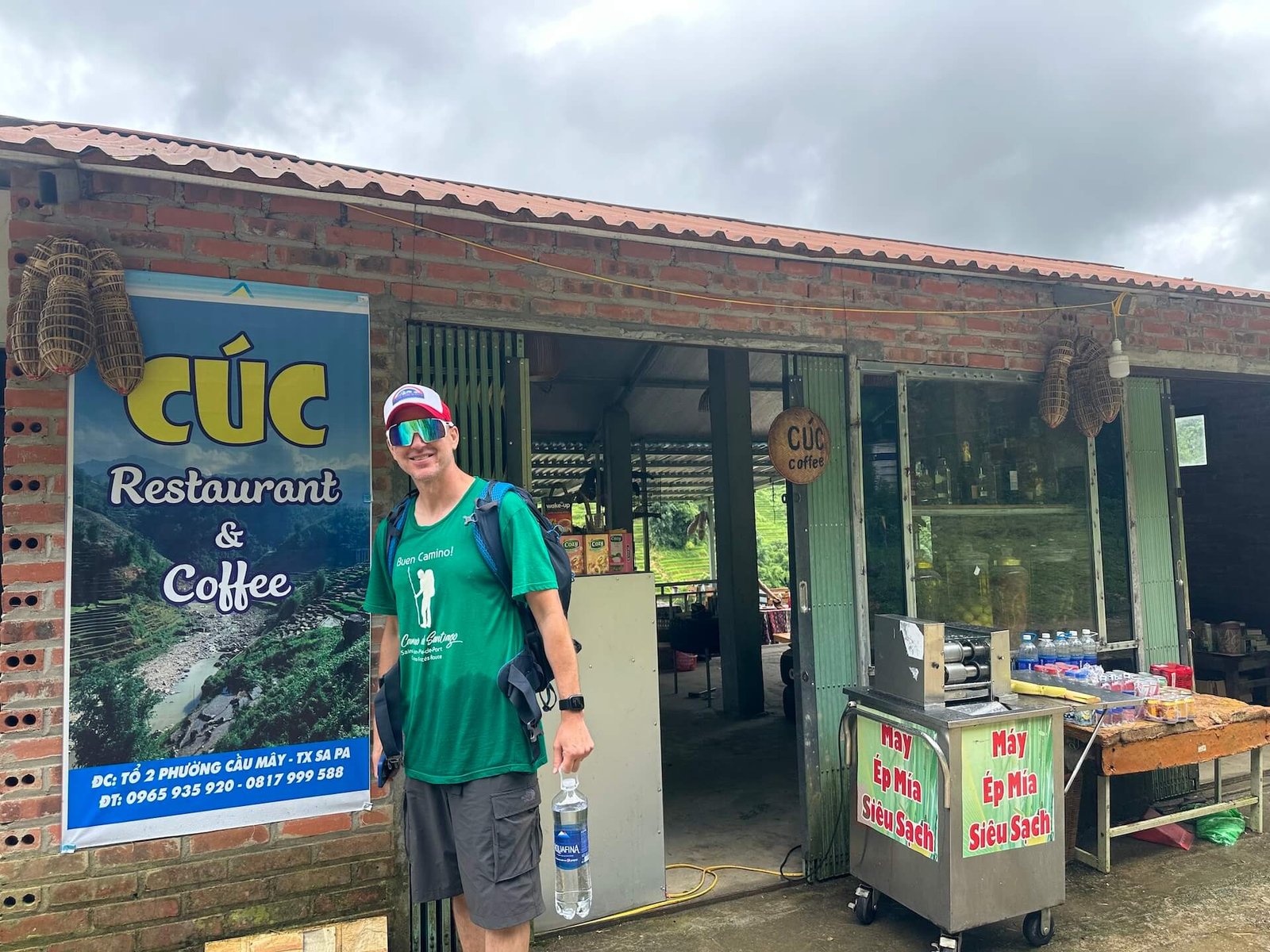
A few hours in, we stopped at Cúc Restaurant & Coffee. We showed up soaked and tired and ended up staying longer than planned. Hot food, a bit of cover from the rain, and a couple of very friendly dogs made it an easy place to reset before finishing the walk.
The final stretch into Lao Chai flattens out a bit. The village itself is a mix of open rice fields, small homes, and shops that cater to the steady flow of trekkers passing through. Some parts lean touristy, but it doesn’t take much to find quieter corners if you wander a bit.
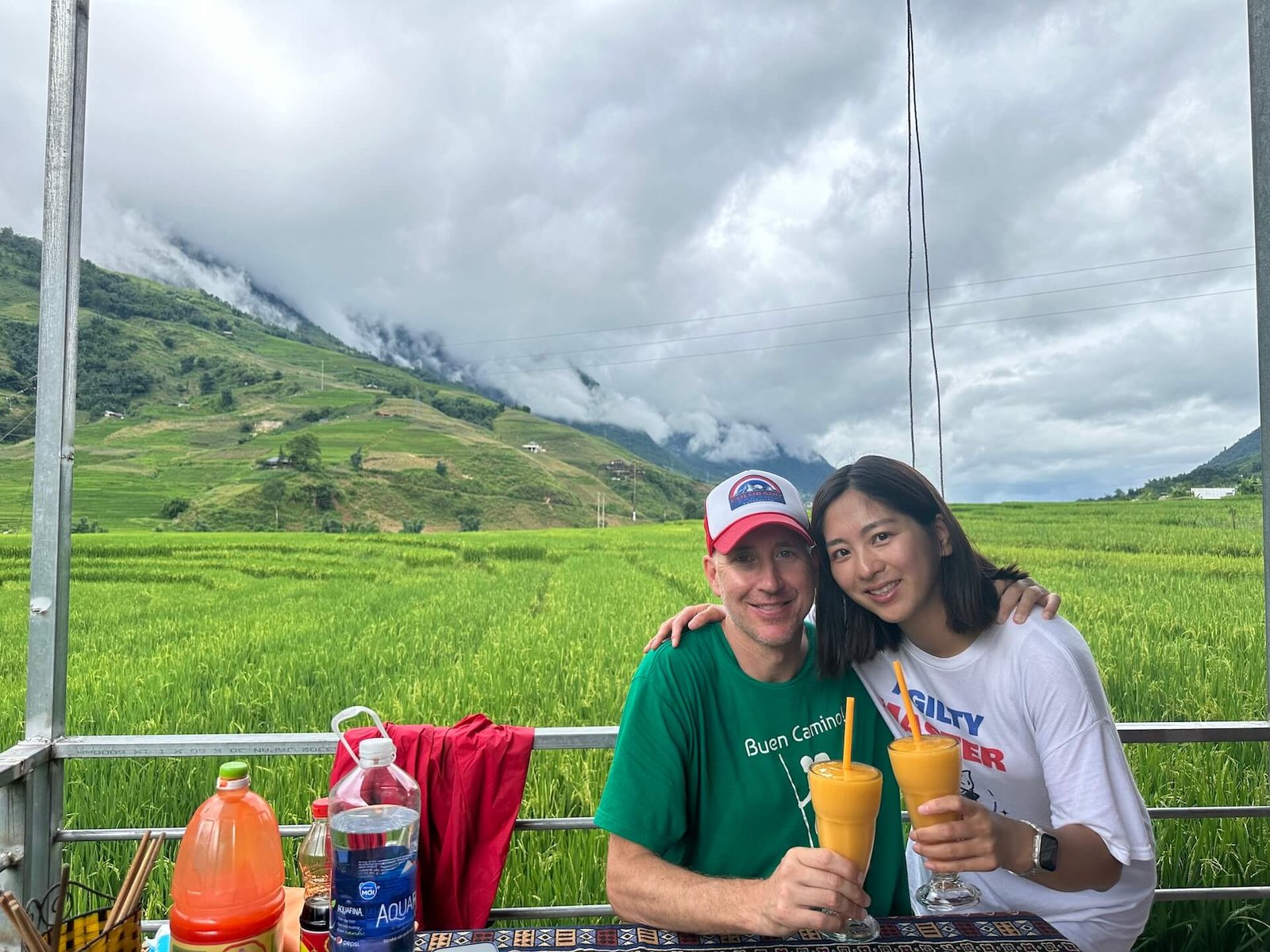
We ended the hike at a small open-air restaurant with views back over the valley. Mango smoothies, a break from the rain, and a place to sit for a while before figuring out what to do next.
Our Route to Lao Chai
We didn’t follow a strict route, but this map shows the general path we took from Sapa town down into the Muong Hoa Valley and into Lao Chai.
We started near Pao’s, left the main road near Sapa Clay House, stopped at Cúc Restaurant & Coffee, and finished in Lao Chai. Depending on the weather, you’ll either stick to the paved sections like we did or cut through the rice fields on smaller trails.

After the Trek
Once you reach Lao Chai, you’ve got a few options.
You can keep going toward Tả Van, head back to Sapa by taxi or motorbike, or stay overnight in the valley. We caught a ride back, but staying out there would be worth considering if you want a slower pace.

🎥 Exploring Lao Chai Village and Surrounding Areas
Day 2: Fansipan Cable Car and Summit
We gave our legs a bit of a break and took the easier route up Fansipan, Vietnam’s highest peak.
Getting there is part of the experience. It’s a combination of monorail, cable car, and a short funicular ride that takes you from the center of Sapa all the way to the summit complex.
On a clear day, you’re supposed to get wide-open views of the valley and surrounding mountains. We didn’t get that.
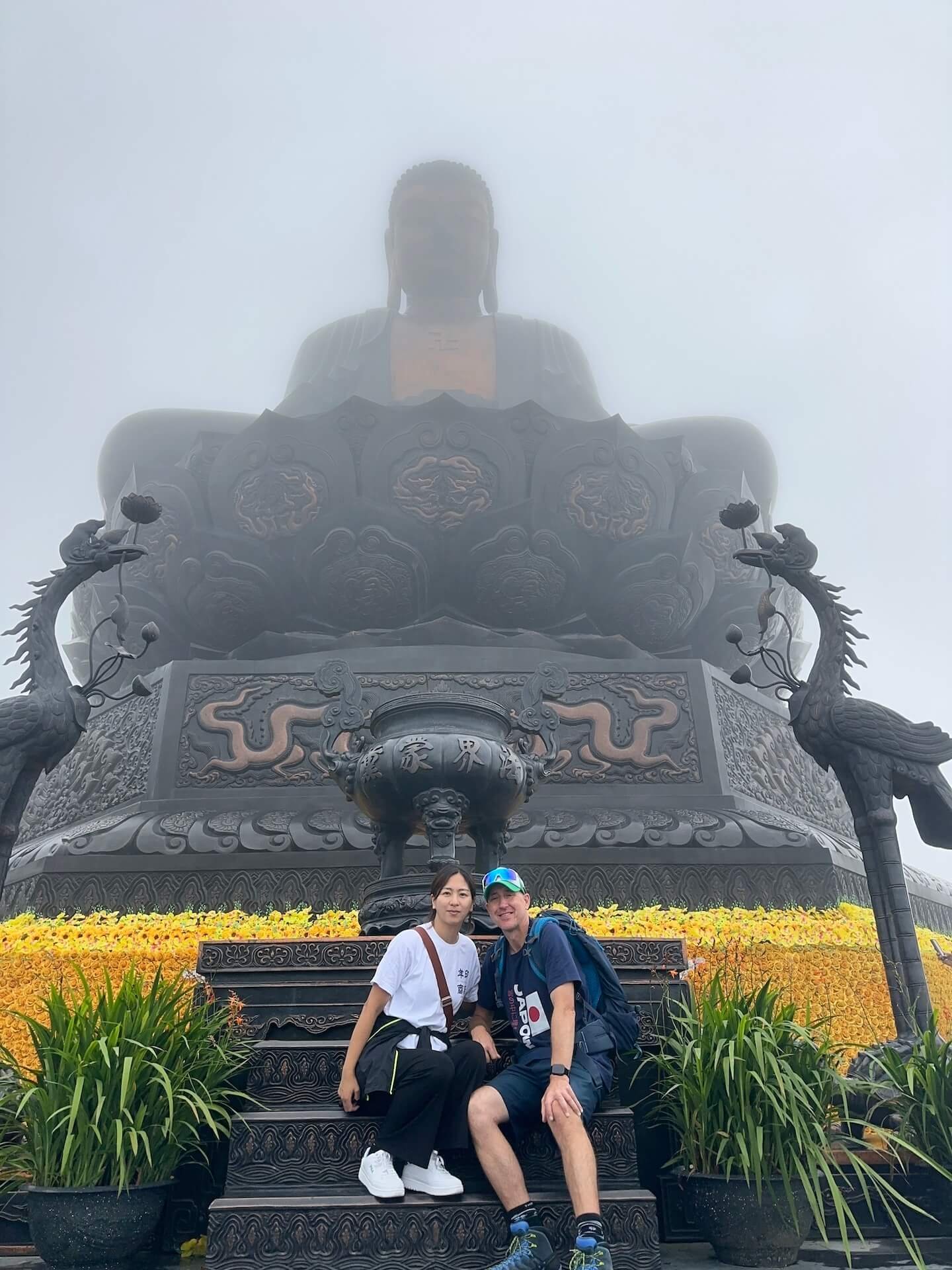
Instead, we got thick fog rolling through the temples and statues at the top. It limited the views, but it also gave the whole place a quieter, almost surreal feel.


Getting to the Fansipan Cable Car
Everything starts at Sun Plaza in Sapa town. It’s hard to miss.
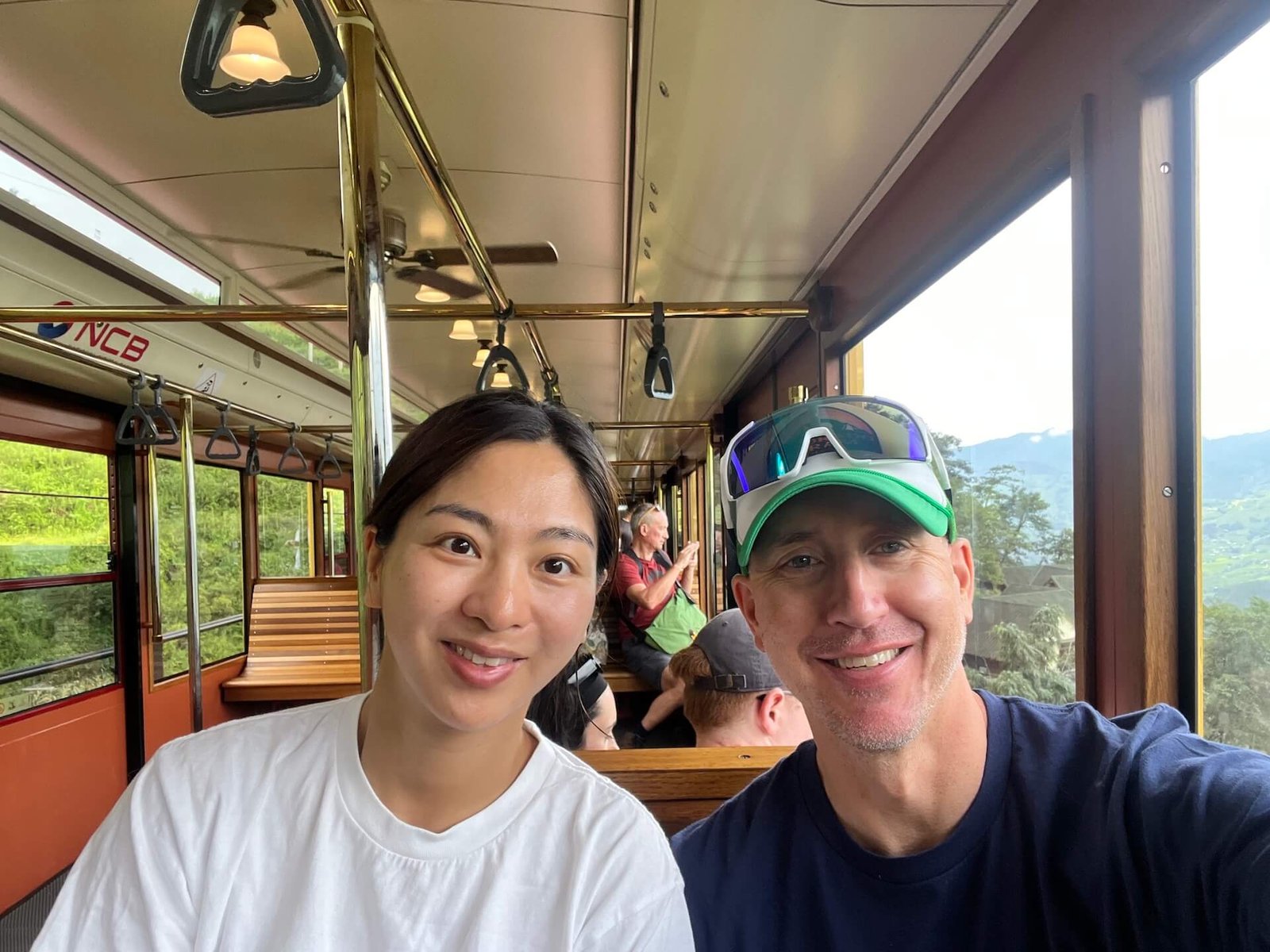
From there, you take a short monorail ride through the hills to the base of the cable car. It’s an easy, scenic start and drops you off close to the main station.
The only part that caught us off guard was getting from the monorail to the cable car itself. The signage isn’t great, and it’s easy to head toward the main exit by mistake. We did exactly that and had to double back.
Once you find the right path, it’s straightforward.


The Cable Car Ride
The cable car takes about 15 to 20 minutes and climbs quickly. You start out over the valley and gradually move into the clouds.
On a clear day, this is probably the highlight. For us, it was more about watching the landscape disappear into fog, which was still pretty cool in its own way.

At the Top
When you get off the cable car, you’ll notice the temperature drop right away.
From there, you’ve got two options:
- take the short funicular up
- or walk a long set of stairs
We took the funicular up and walked back down later.
At the summit, you’ll find the Fansipan marker, a series of temples and statues, and a network of walkways connecting everything together. Even with limited visibility, it’s worth taking some time to walk around instead of rushing back down.


The path takes you through the temple complex, past statues and viewpoints that you’d miss otherwise. It’s not a difficult walk, but the stairs can be slick if it’s wet, so just take your time.
Tickets and Booking
We booked a combo ticket that included the monorail, cable car, and funicular. It was straightforward. Scan at each stage and move on.
👉 Sun World Fansipan Legend Ticket on Klook
Prices will vary a bit depending on the package, but expect something in the $20–$40 USD range.
We chose: Round-trip Muong Hoa monorail & cable car + one-way rail to peak, which is what I’d generally recommend unless you want to add on a lunch buffet.
What to Expect
Even with the fog, the summit still delivered. The clouds gave it more of a moody, quiet atmosphere than a big panoramic viewpoint.
There are a few cafés and snack stands at the top if you want to take a break. We grabbed a coffee, wandered through the mist, and spent more time up there than we expected.
Weather and Altitude
It’s noticeably colder at the top than in town, so bring an extra layer even if it feels warm when you leave Sapa.
The weather can change quickly. Fog, wind, and light rain can all roll in within a short window.
If you’re sensitive to altitude, take it slow. You’re gaining a lot of elevation in a short amount of time.
🎥Here’s a quick video from our summit walk:
Day 3: Cat Cat Village
We kept the last day pretty light and headed over to Cat Cat Village.
It’s one of the easier places to visit from Sapa, and it definitely leans more toward the polished side compared to somewhere like Lao Chai. If you go in expecting that, it’s still a fun way to spend a few hours.
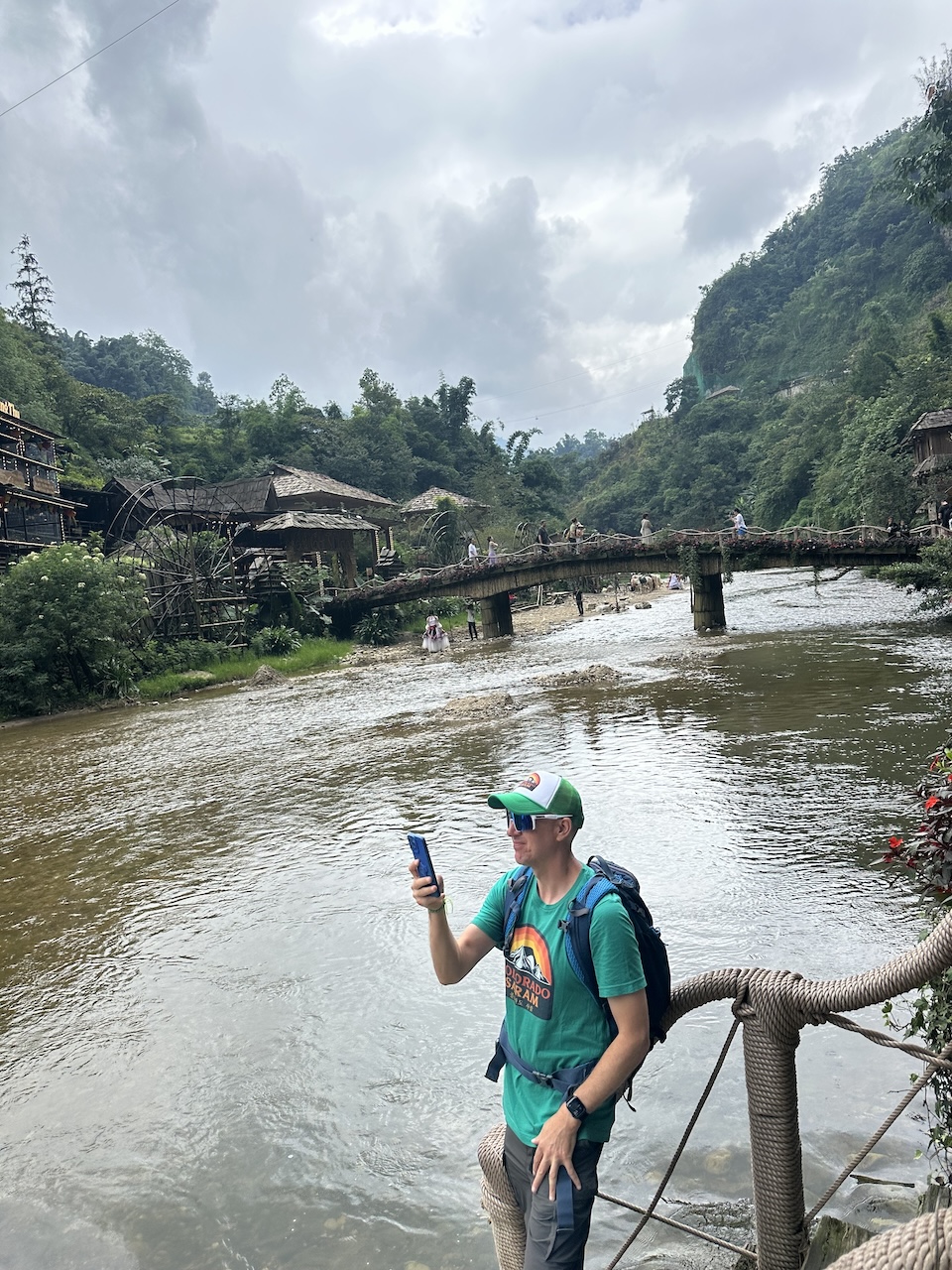
The main trail is a loop that winds through a mix of wooden houses, small waterfalls, cafés, and a steady stream of shops selling textiles and souvenirs. It’s well-maintained and easy to follow, with a few stairs along the way but nothing too demanding.
Cultural Clothing Rental
One of the more memorable parts of the day was something my wife had been planning from the start.
If you’ve spent any time traveling in Asia, you’ve probably seen this before. Dressing up in traditional outfits and taking photos is a pretty common part of the experience, especially for Korean travelers. My wife has done it in Korea, Japan, Bali, and now Sapa.
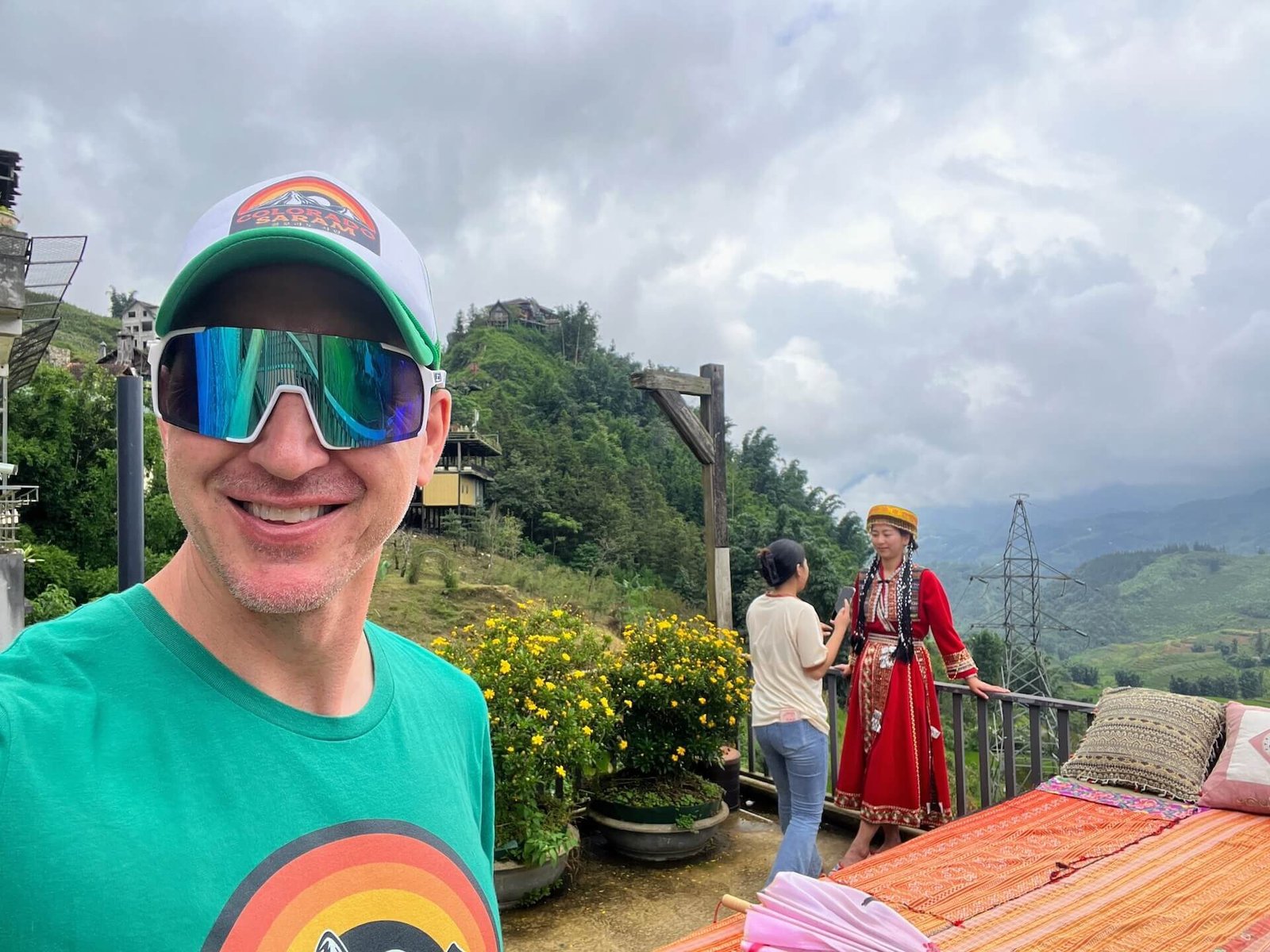
She rented a full H’Mong outfit at Peace’s House near the entrance. They handled everything. Jewelry, sash, hair styling, and then a quick rooftop photo session before we even started walking.
She kept it on for the rest of the visit and got a lot of attention along the way. A few people even assumed she was local, which was pretty funny to watch play out.
If you’re even slightly curious about it, it’s worth doing. It adds a different element to what would otherwise just be a walk through the village.

Getting There
The experience at Cat Cat Village is definitely more touristy than what you’ll find further out in the valley. It’s still fun and worth a visit though.
You’ll pass through designated viewpoints, small performance areas, and a steady lineup of shops and photo spots. It’s built to be accessible and easy to navigate, which is part of why it gets so busy.
That said, if you take your time and wander a bit off the main flow, it’s still easy to find quieter stretches along the trail.
Optional Tours
We hopped on the backs of motorbike taxis, and they knew the routine. They took us to the entrance, stopped at the ticket booth, and waited while we explored on our own.
However, if you’d prefer a bit more comfort and local insight, there are half-day tours that include transport and some background on the village.
👉 Sapa Cat Cat Village Half-Day Guided Tour on Klook
What Stood Out
Looking back, each day offered something a little different, and I wouldn’t really cut anything from the itinerary.
The trek to Lao Chai was probably the most memorable part of the trip. It felt like the version of Sapa we had in mind before arriving. Slower, quieter, and a bit more open once you get out of town.
Fansipan ended up being more about the experience than the views. The weather didn’t fully cooperate, but the fog gave it a completely different feel that worked in its own way.
Cat Cat Village was the easiest day, and probably the one that felt the most like a tourist setup, but still a fun way to wrap things up. The clothing rental isn’t really my thing, but my wife was all in, and it was fun for me to just step back and watch it all play out.
A Few Things to Keep in Mind
We didn’t really have anything we felt the need to change, but there are a couple of things worth knowing going in.
The weather plays a big role in how Sapa feels. We visited during the rainy season, which meant fog, wet trails, and limited views at times. It didn’t ruin the trip, but it definitely shaped it.
Getting around is pretty straightforward. Between walking and the occasional motorbike taxi, we didn’t have any issues moving between places.
And while we mostly just figured out food as we went, there’s probably some value in doing a bit more research ahead of time if that’s something you care about.
Quick Planning Notes
Getting to and from Sapa (from Hanoi)
Getting to Sapa takes a bit of planning, but once you’re there, things are fairly easy to manage.
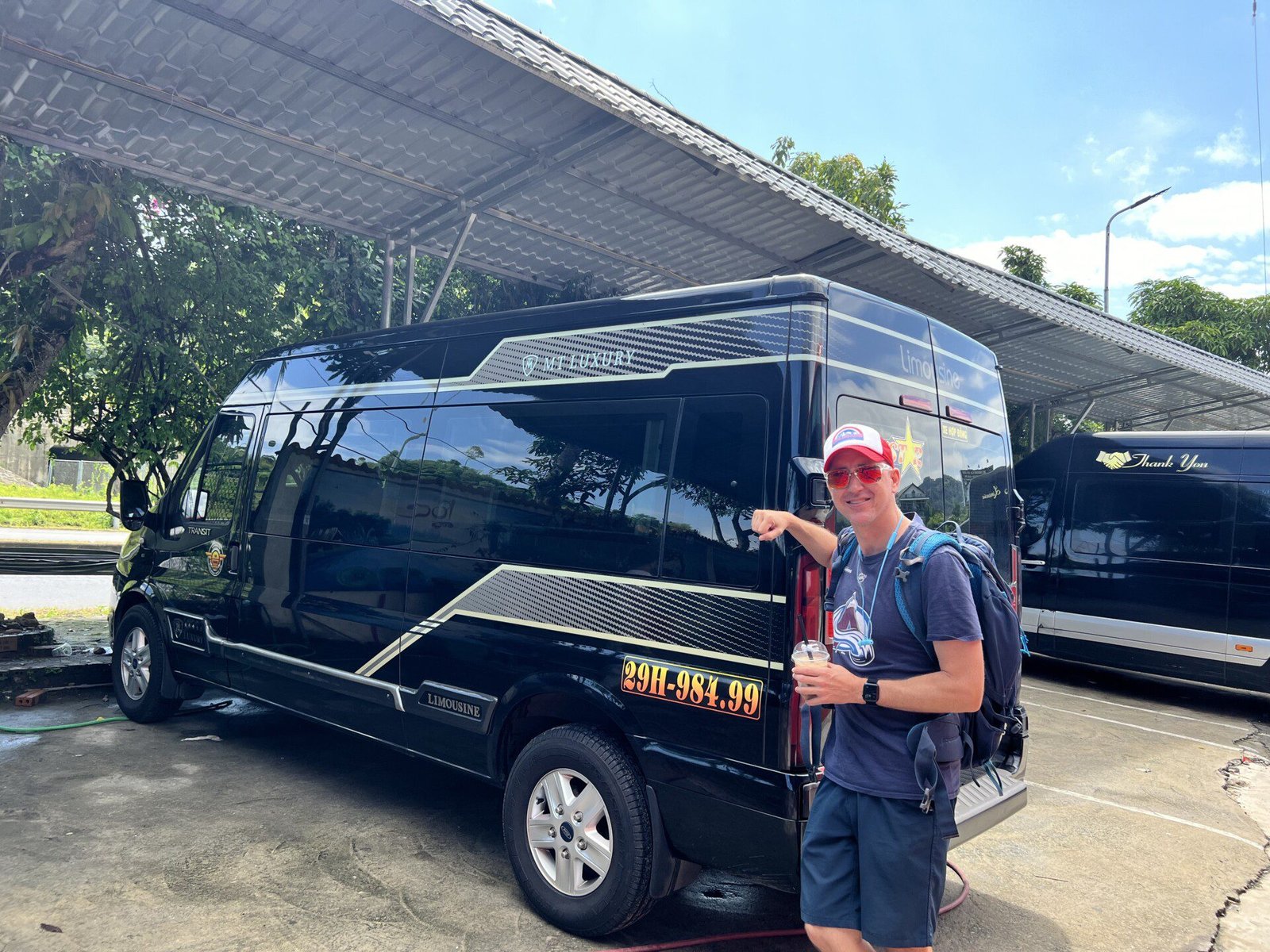
We took a shared minivan from Hanoi and it worked out really well. It was only slightly more expensive than the tourist buses, but far more comfortable and not nearly as crowded. Ours only had a handful of other travelers, which made a big difference over a full bus.
There are no flights to Sapa, so your main options are bus, train, or a minivan like this. Based on our experience, the minivan is the easiest of the three.
👉 Ha Noi – Sapa Limousine Bus And Vice Versa
For other options and further detail, I wrote a quick guide to:
👉 How to Get from Hanoi to Sapa: Best Buses, Trains & Mini-Vans
Getting Around
Most of what we did was either on foot or by motorbike taxi.
For shorter distances, especially around town or out to places like Cat Cat, it’s easy enough to grab a ride and let them handle the logistics. They’re used to the routine.
Weather
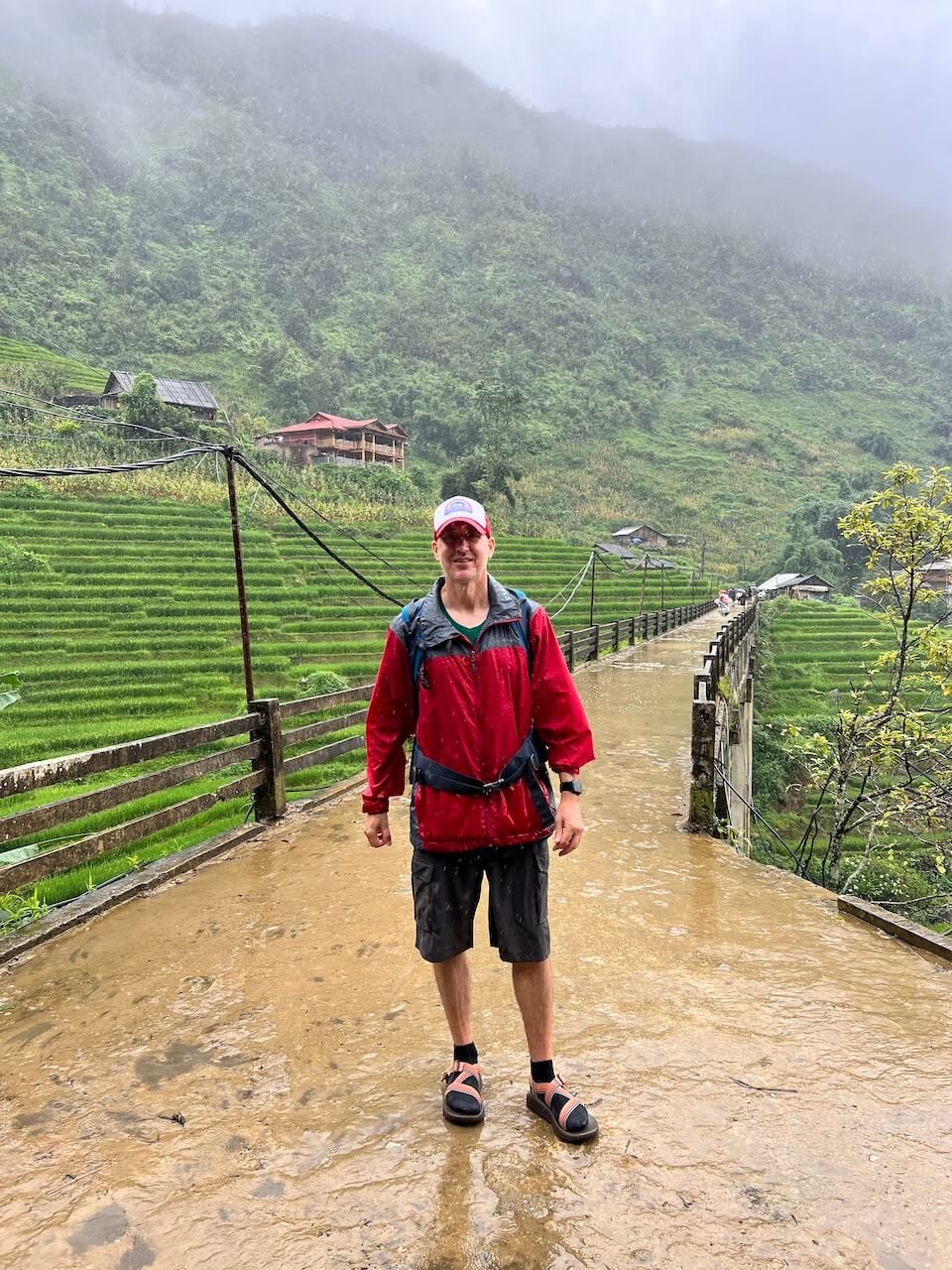
We visited in July, right in the middle of the rainy season. That meant fog, wet trails, and limited views at times. Not ideal, but still worth it. If you have flexibility, timing your trip makes a difference.
Here’s a quick breakdown of what to expect throughout the year:
Spring (March to May)
Mild temperatures, clearer skies, and good trekking conditions. This is when the terraces start to come back to life, and it’s one of the more comfortable times to be outside.
Summer (June to August)
Rainy season. Expect heavy but often short bursts of rain, muddy trails, and a lot of fog. On the flip side, everything is deep green, and the valley has a completely different feel. This is when we visited.
Autumn (September to November)
Probably the best overall window. Cooler, drier, and the rice fields turn that golden color you see in photos. Trail conditions are also at their best.
Winter (December to February)
Colder than most people expect. It can get damp and foggy, and temperatures can drop close to freezing. Not ideal for trekking, but still fine for spending time around town.
If you’re coming mainly for clear views and trekking, spring or autumn are your safest bets. If you end up in the rainy season, just expect a different version of Sapa. Less predictable, a bit messier, but still worth seeing.
Final Thoughts
Three days in Sapa felt like the right amount of time for a first visit.
We covered a good mix without rushing. A full day in the valley, a trip up to Fansipan, and an easier final day to wrap things up. It never felt like we were trying to squeeze too much in.
Sapa had been on my trekking-in-Asia list for a while, and it didn’t disappoint.
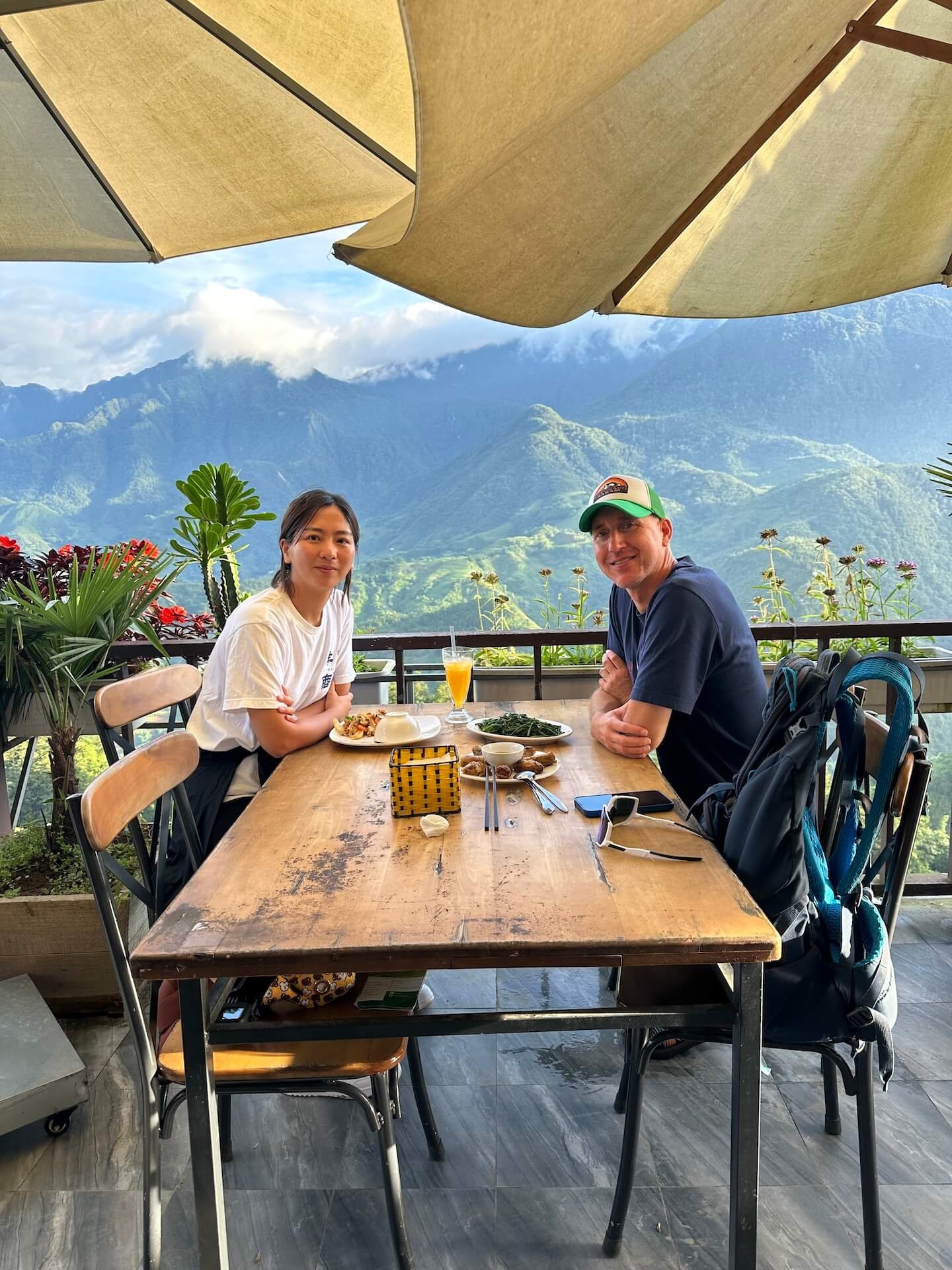
It’s definitely more touristy than some of the other places I’ve trekked, like Myanmar or Nepal, but it still lived up to what I had in mind going in. The scenery is as good as advertised, the food was excellent, and it’s an easy place to settle into for a few days. Comfortable hotels, friendly locals, and just enough infrastructure to make doing things on your own feel completely manageable.
If I were to come back, I’d probably time it for a better trekking season and look into either hiring a guide or staying in a homestay for a different perspective.
But for a first visit, this worked exactly how I hoped it would.

Sapa Itinerary FAQs
Is 3 days enough in Sapa?
Yes. Three days was enough for a first visit. We had time to trek through the valley, visit Fansipan, and explore Cat Cat Village without feeling rushed.
Do you need a guide in Sapa?
No. We did everything on our own using Google Maps and a bit of flexibility. That said, hiring a guide or staying in a homestay could add more local insight if that’s something you’re interested in.
What’s the best way to get to Sapa from Hanoi?
We took a shared minivan and highly recommend it. It was more comfortable and less crowded than the tourist buses. Other options include overnight trains and buses, but the minivan was the easiest overall.
Is Fansipan worth visiting?
Yes, especially for the experience. Even with limited views due to fog, the cable car ride and summit area were still worth it. On a clear day, the views would be even better.
When is the best time to visit Sapa?
Spring (March to May) and autumn (September to November) are generally the best times for clear views and trekking conditions. We visited during the rainy season, which meant fog and muddy trails, but it still had its own appeal.
Is Cat Cat Village worth visiting?
It depends on what you’re expecting. It’s more set up for visitors than places like Lao Chai, but it’s easy to access and makes for a relaxed half-day. If you go in knowing that, it’s still a fun stop.
👉 Sapa Without a Tour: Can You Trek and Explore on Your Own?
👉 Fansipan Peak Cable Car Guide: Cost, Tickets & What to Expect
👉 Ha Long Bay Day Trip, Overnight Cruise, or Cat Ba Tour: Which Should You Choose?