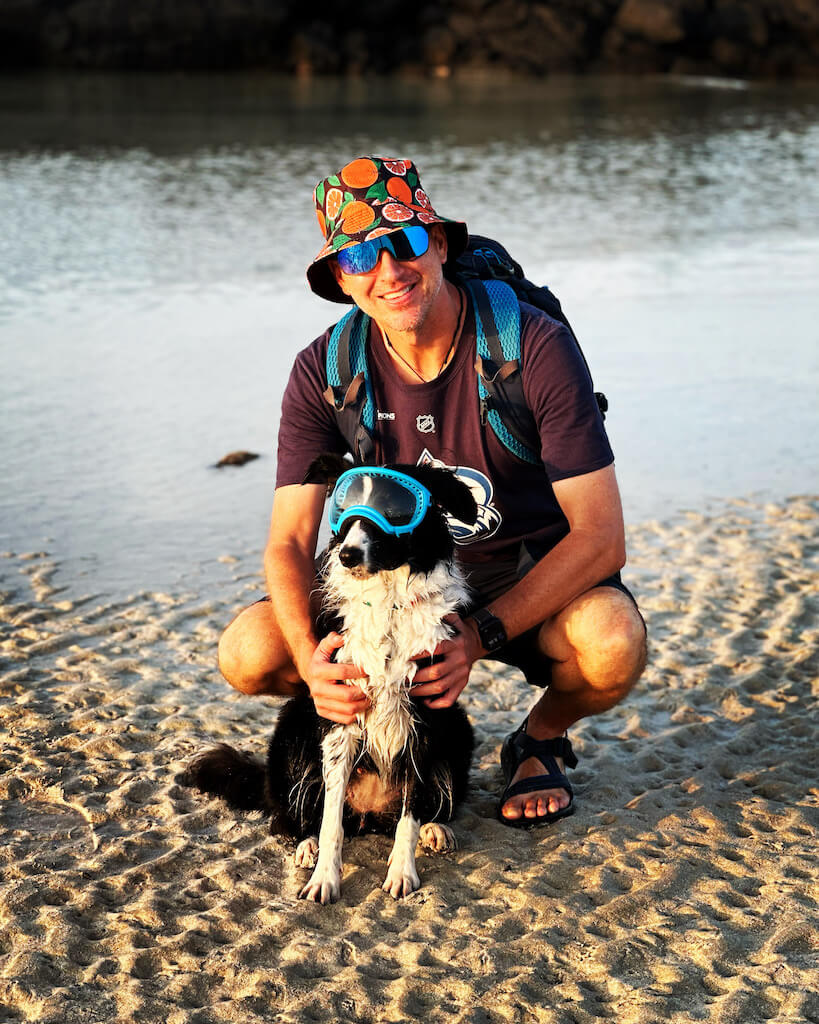
Quick heads up: This post may contain affiliate links to gear, hotels, flights, or experiences I’ve used or genuinely recommend. If you book through one, I may earn a commission at no extra cost to you. Full disclosure here.
We spent five days driving around Jeju Island, following a route that turned into this Jeju Island 5 day itinerary. We worked our way along the coast with stops for beaches, cafés, and a few places we hadn’t planned on. This itinerary follows that same route, with what we’d keep, what we’d skip, and what worked best along the way.
For this trip, I loaded up the family wagon. Clark Griswold-style. My wife, our dog, and everything we thought we’d need for five days on Jeju Island.
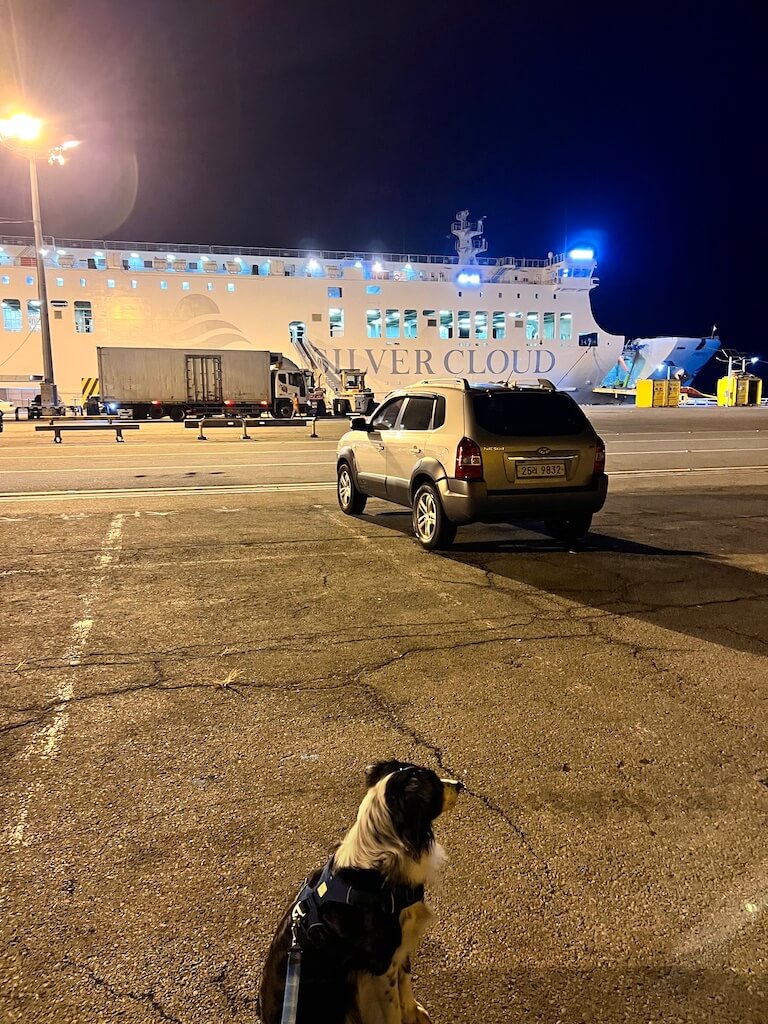
We started in Daegu and took the ferry over with our car. Slower than flying, but it made things easier once we got there.
If you’re familiar with the Vacation movies, don’t worry. The dog survives in this version.
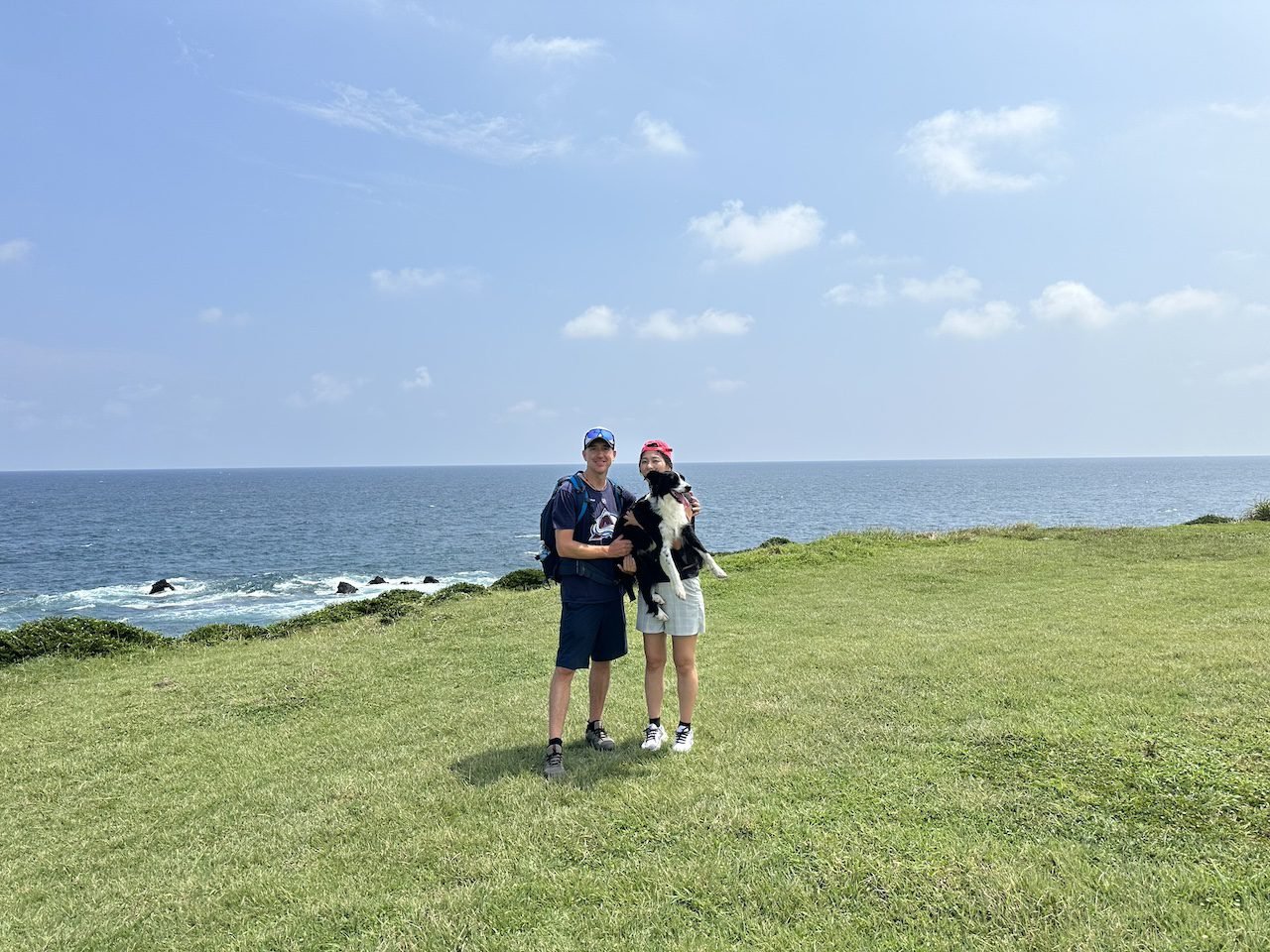
Is This 5-Day Jeju Itinerary Right for You?
We’ve done Jeju both ways. Ferry with our own car, and flying in and renting one.
Flying is easier, especially if you’re already in mainland Korea. No question. Short flight, frequent routes, done.
The constant, though, was having a car.
Every time we’ve been to Jeju, we’ve had a car. Either brought our own over by ferry, as we did on this trip, or picked up a rental at the airport.
You can get around by bus or taxi, but it takes more planning. There’s no subway system, and a lot of the places we went aren’t close to each other. Some aren’t close to anything.
We split this trip between two bases. Songdang for the first half, then Seogwipo. That kept the driving reasonable and gave us access to different parts of the island without bouncing hotels every night.
This itinerary mixes well-known spots with quieter ones. Some lived up to it. Some didn’t.
You’ll notice our border collie, Winnie, shows up throughout this itinerary. Everything here can be done with or without a dog.
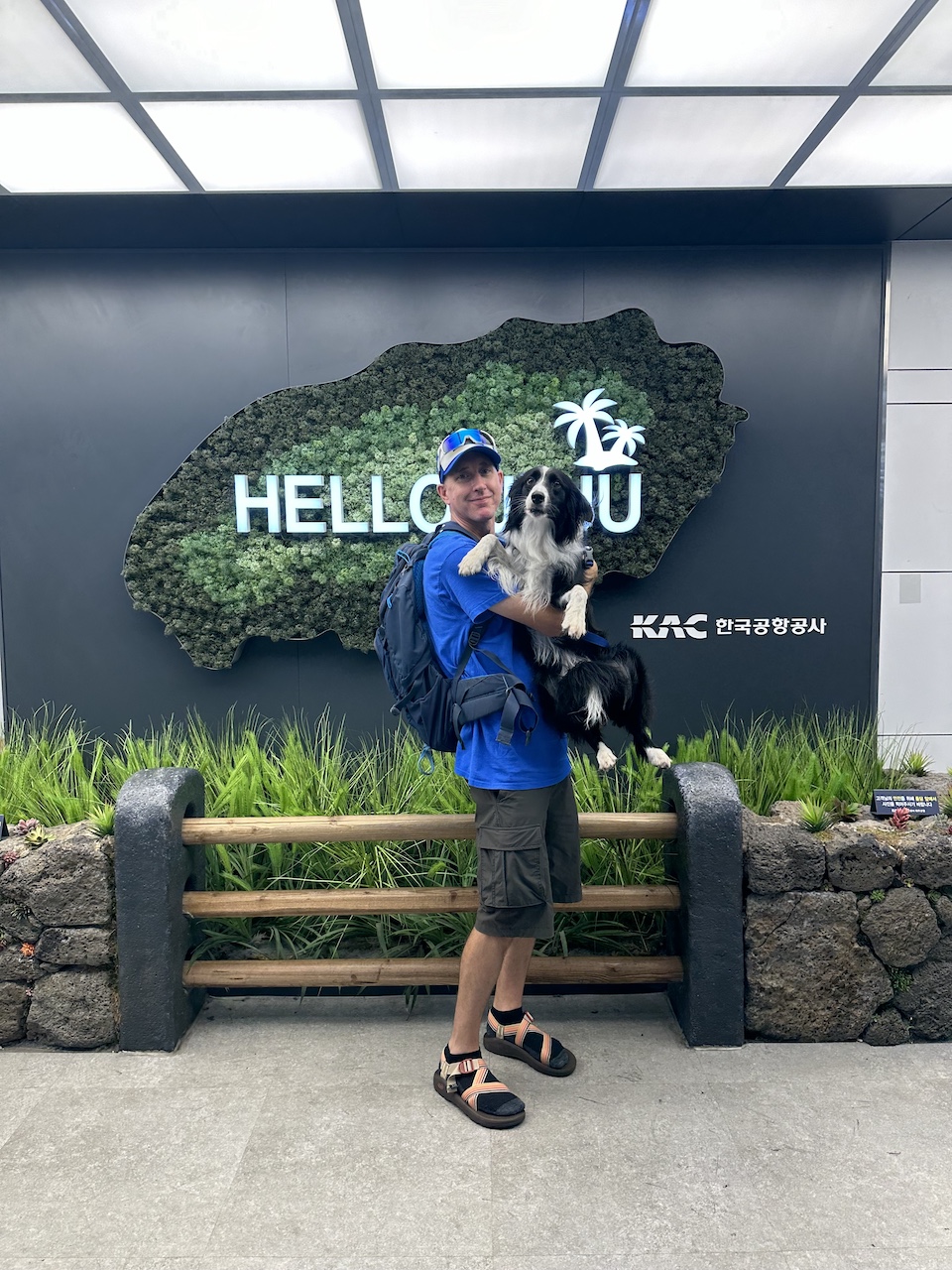
Our Jeju Route at a Glance
We didn’t try to see everything. Five days isn’t enough for that anyway.
Instead, we split the trip into two parts.
We based ourselves in Songdang for the first half. That gave us access to the east side of the island and a few inland spots without long drives.
Midway through, we moved south to Seogwipo. From there, most of our time was spent along the coastline, with shorter drives between stops and a few inland detours when it made sense.
We didn’t follow a strict loop, but it ended up feeling like one. Less backtracking, more moving forward.
Here’s a map of the places mentioned in this itinerary.
Day 1: Arrival, Aewol, and Hamdeok
We arrived on Jeju early. 6 AM ferry, still half asleep, with most of the day to kill before check-in.
So we stayed along the north coast. Easy stops, no long drives, just working our way east.
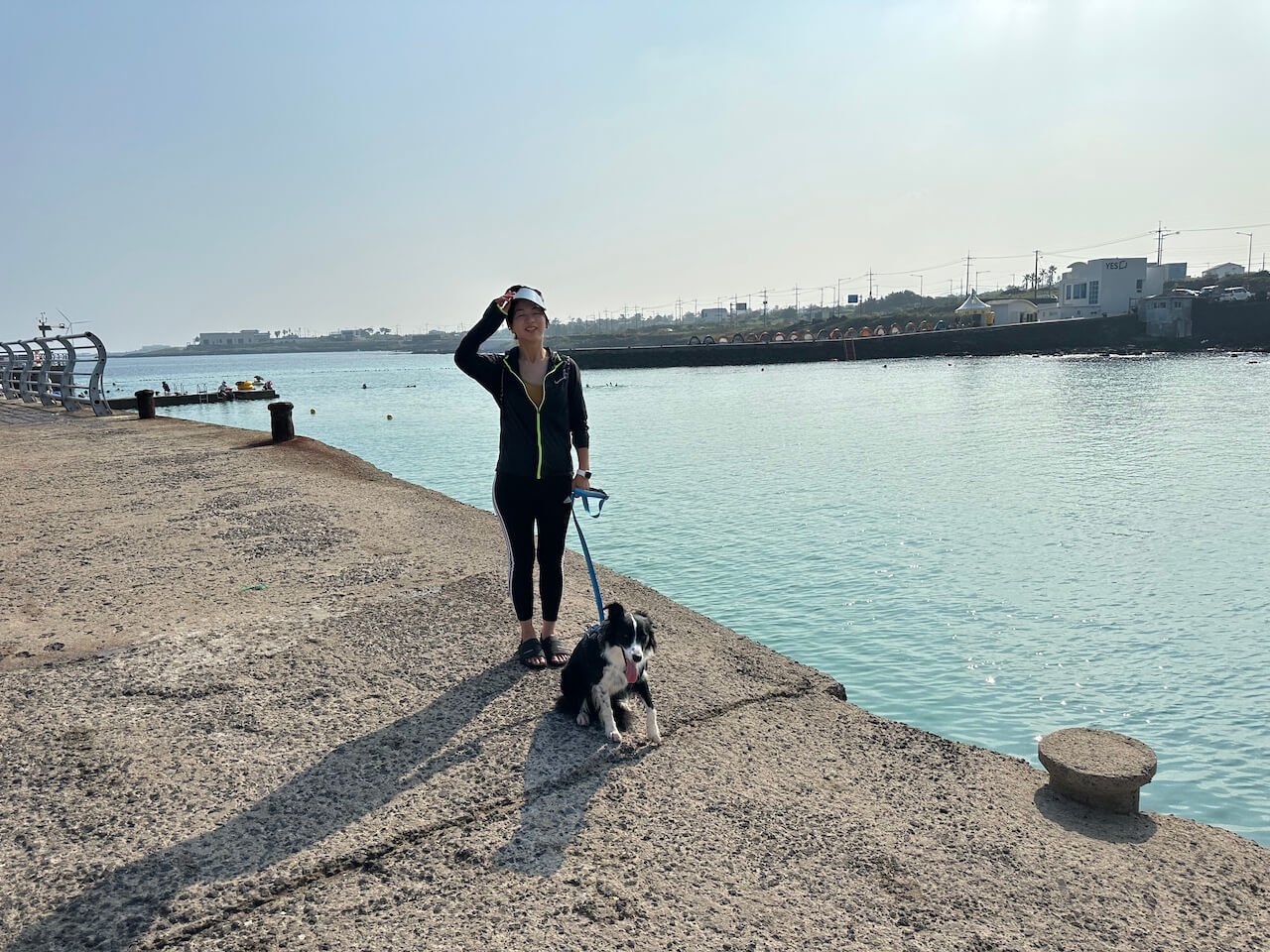
Panpo Port
Good for a quick stop, but not somewhere I’d go out of my way to visit.
With 10 hours to fill, we just needed somewhere quiet to wake up a bit, and Panpo Port worked. It’s a small cove with calm water and a few scattered shelters.
If you’re set up to swim or snorkel, it’s a better stop. We weren’t.
There’s not much here otherwise. No sand, minimal facilities, and not much reason to stay long.
Aewol Café Street
This is one of the more built-up café areas on Jeju. Ocean views, stacked cafés, and plenty of people.
We got there early enough to avoid the worst of it, but parking was already getting tight. The road in is narrow, and it bottlenecks quickly. Some cafés charge for parking.
We ended up at Bomnal Café. Good views, outdoor seating, and enough space to sit for a bit without feeling rushed.
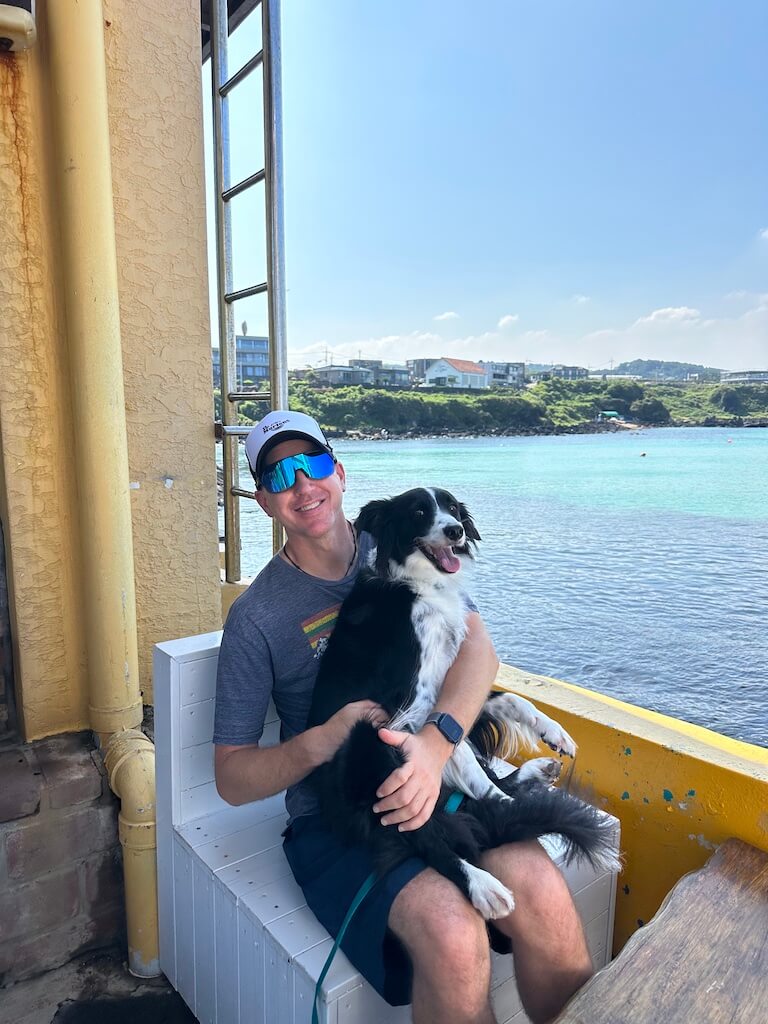 Enjoying the views at Bomnal Cafe in Aewol, Jeju Island.
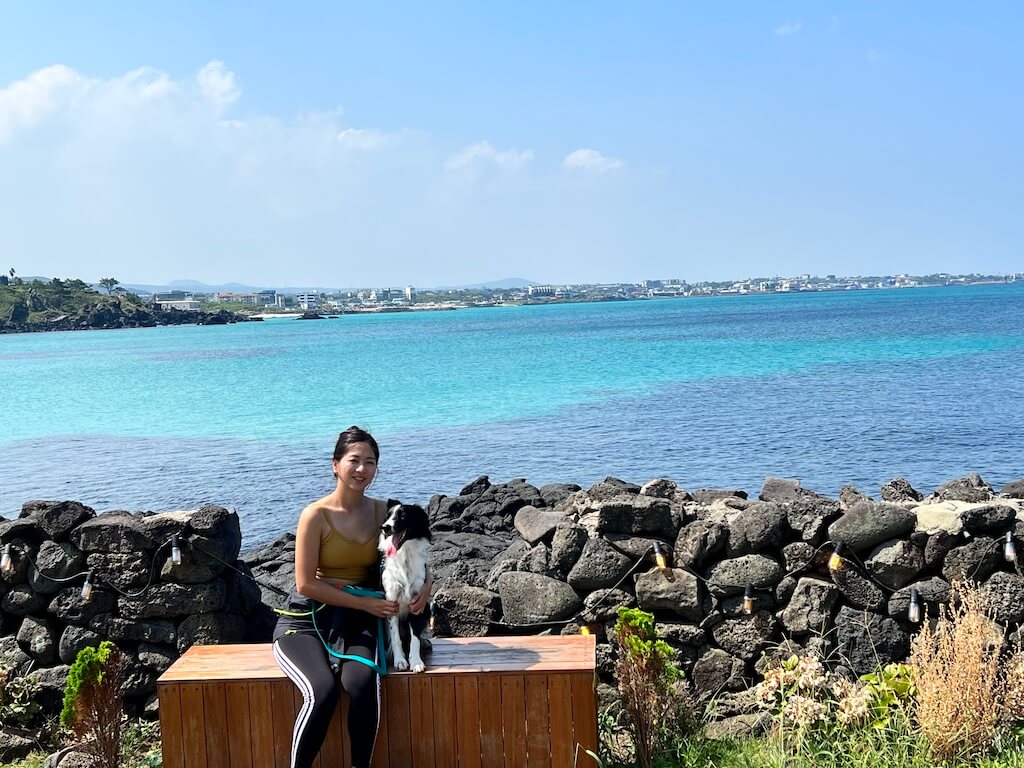 Bomnal Cafe, Aewol. Dog-Friendly and view-friendly.
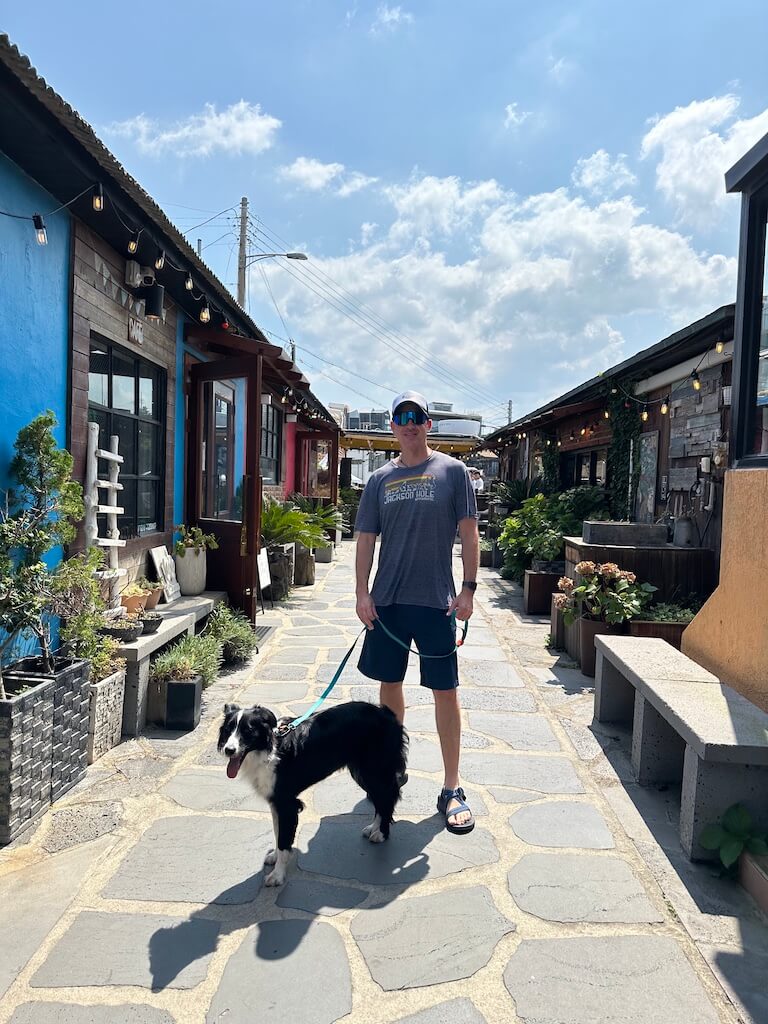 Aewol Cafe Street has a bit of the Hawaii vibe that attracts tourists to Jeju Island.
Glass Bottom Kayaking (Aewol)
Best part of the day.
My wife had seen this on social media and made it a point to come here and do it with Winnie. She was right.
For around ₩15,000 per person, you get about 30 minutes on the water. There’s no real instruction. You just rent the kayak and head out.
Hamdeok Beach
Popular for a reason. Just not my favorite, mostly due to the crowds.
White sand, clear water, plenty of space. It’s a great beach.
It’s not dog-friendly on the actual sand, which didn’t work for us. If that’s not a factor, there’s a well-developed area with food and cafés nearby.
We found more remote beaches later that suited us better, but Hamdeok is a Jeju hotspot if you’re looking for something more lively.
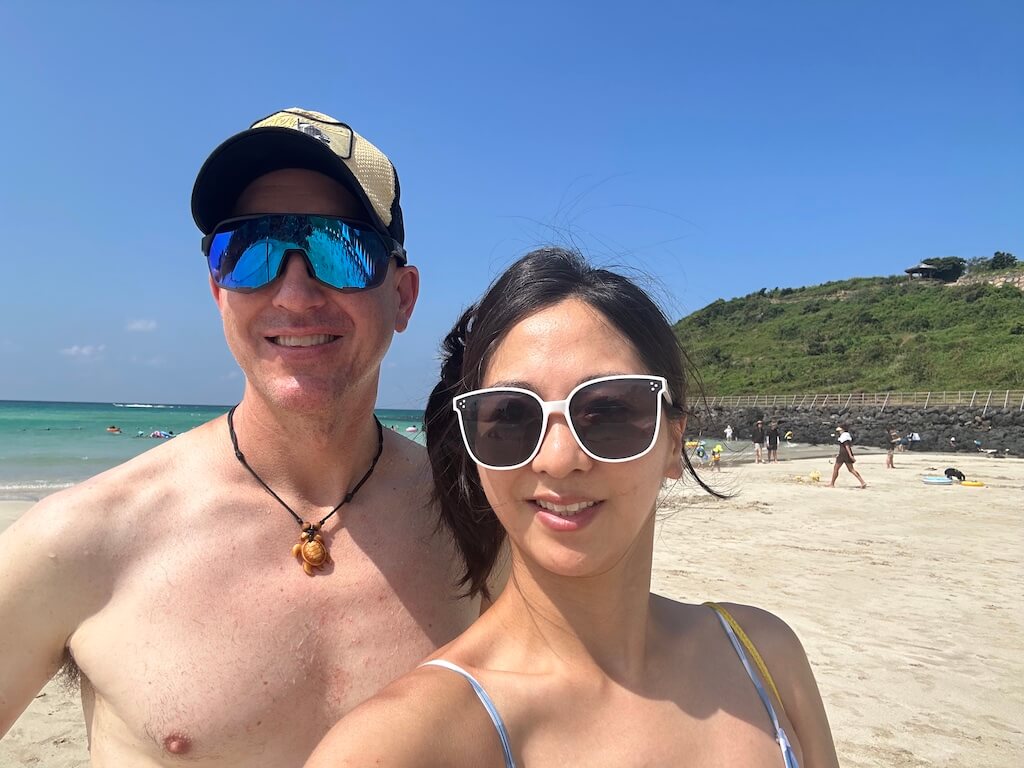
Day 2: Forest, Sunrise Peak, and Woljeongri
We were based in Songdang for the first part of the trip, staying at a cozy Airbnb tucked into the interior of the island.
From there, we started inland and worked our way back toward the coast.
Secret Forest
One of the more popular inland stops on Jeju, and worth checking out if you’re nearby.
It’s tucked into the interior and feels removed from the busier parts of the island. Tall trees, winding paths, and filtered light give it that quiet, enclosed feel.
It’s also a popular photo spot, very much built for the Instagram crowd (who, us?).
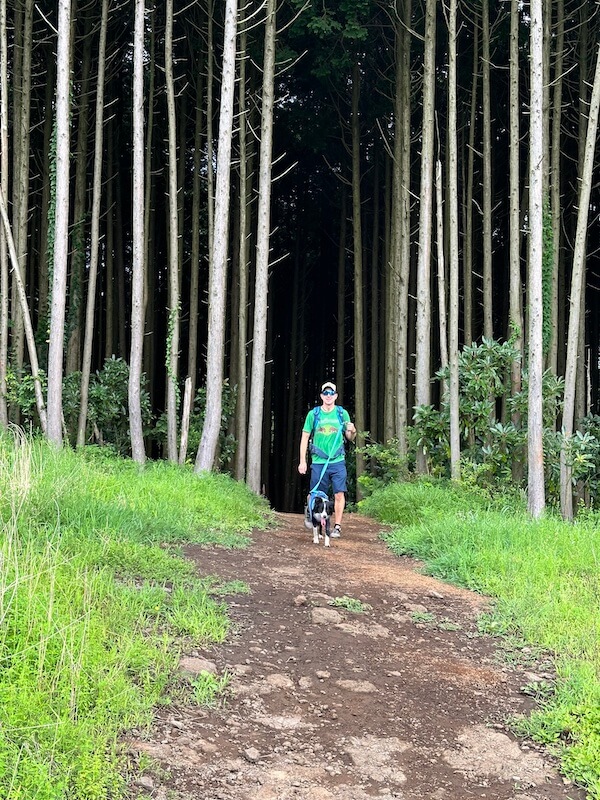
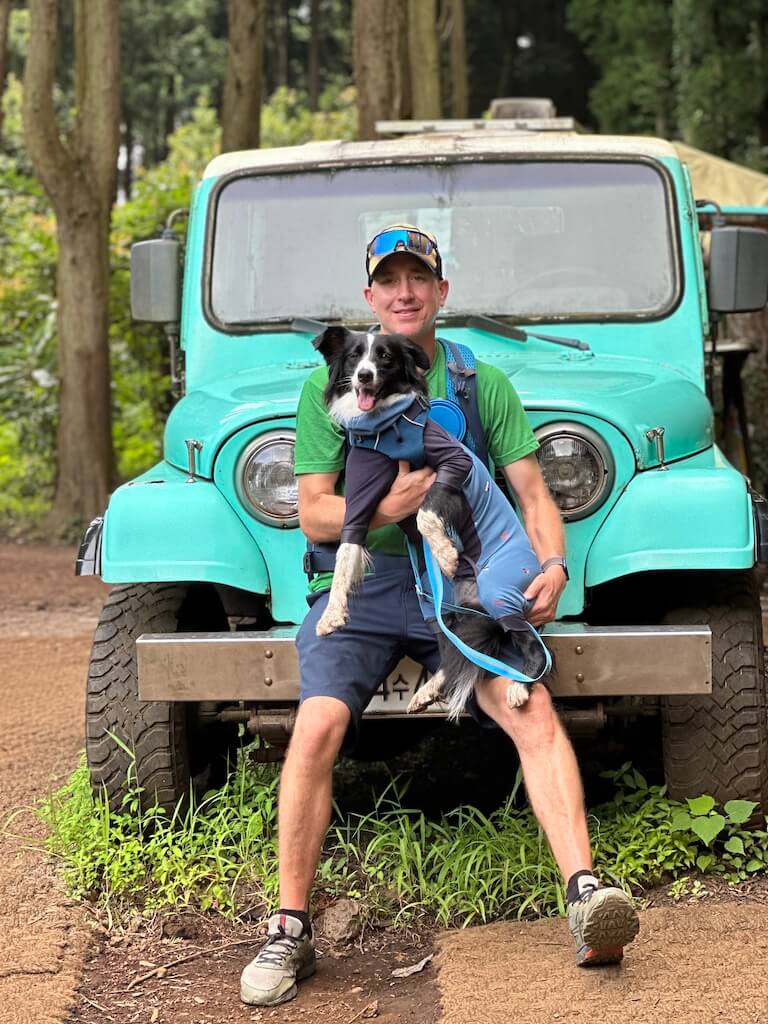
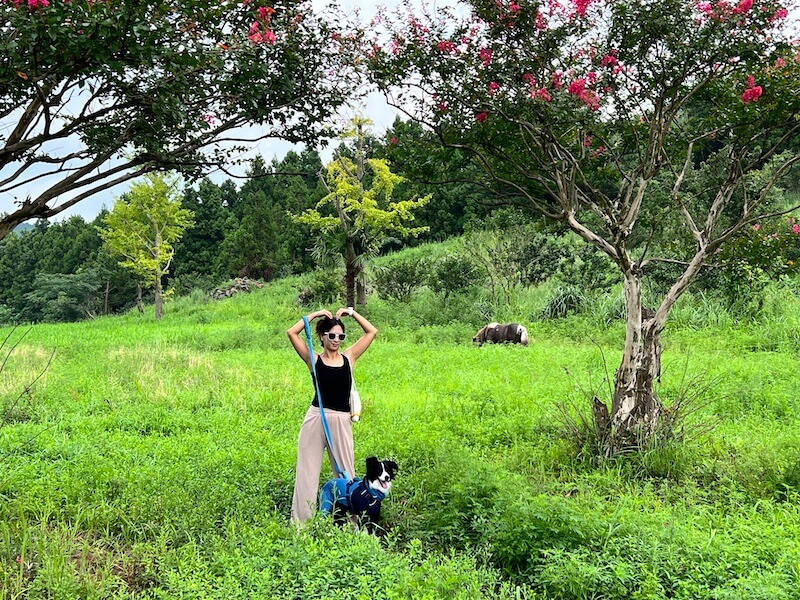
The only downside was ticks. Our Airbnb host warned us and gave us bug spray, but I still found one on my leg back at the car. Something to keep in mind if you’re walking through the brush.
You’ll need a car or a taxi to get here. It’s not on a bus route, and getting back out can be tricky if you haven’t planned ahead.
Seongsan Ilchulbong (Sunrise Peak)
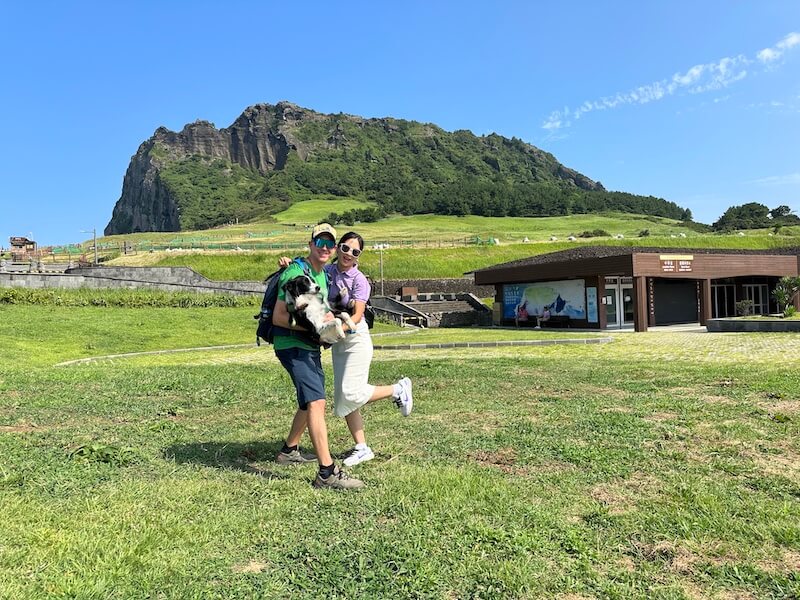
One of the main landmarks on Jeju, and worth seeing even if you don’t hike it.
We showed up midday in August with a dog, which pretty much ruled out the hike from the start. Dogs aren’t allowed on the trail, and the heat alone would’ve made it a tough climb.
So we stayed at the base, took a few photos, and moved on. That was enough for us.
If you’re planning to hike it, early morning or late afternoon would make a big difference.

Woljeongri Beach
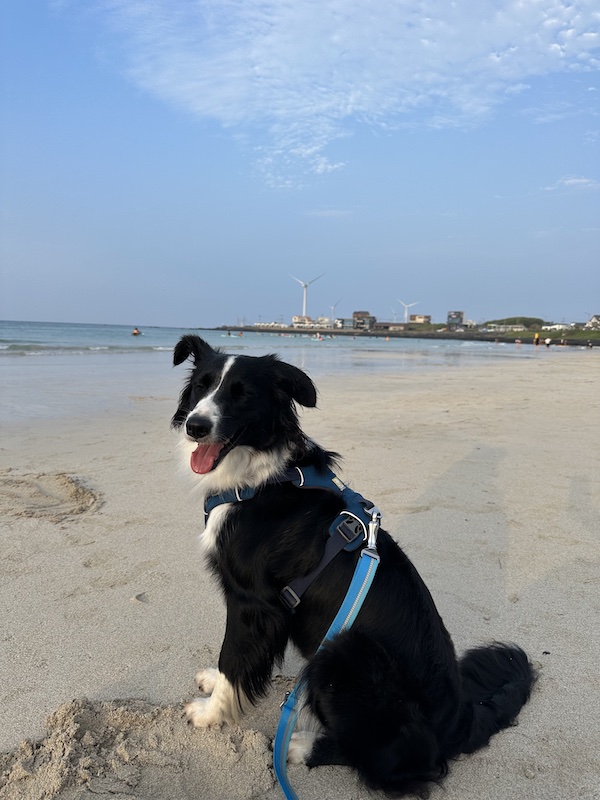
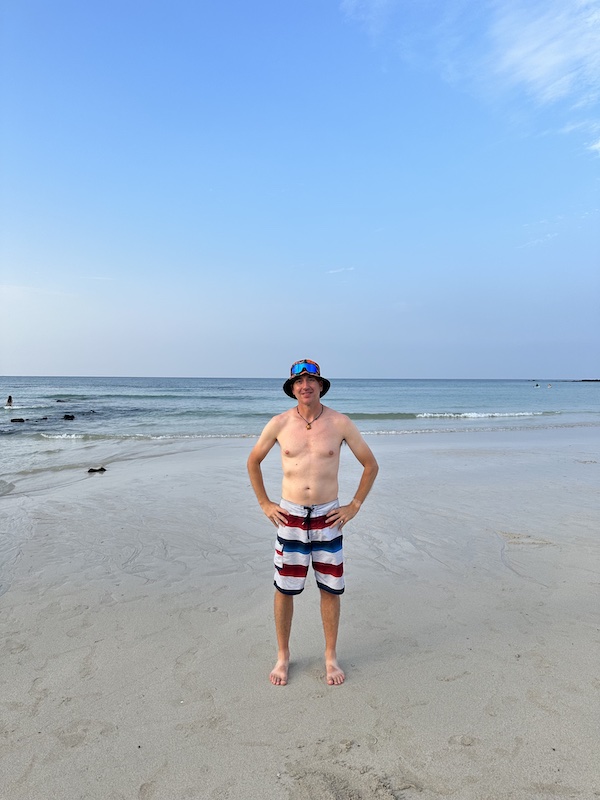
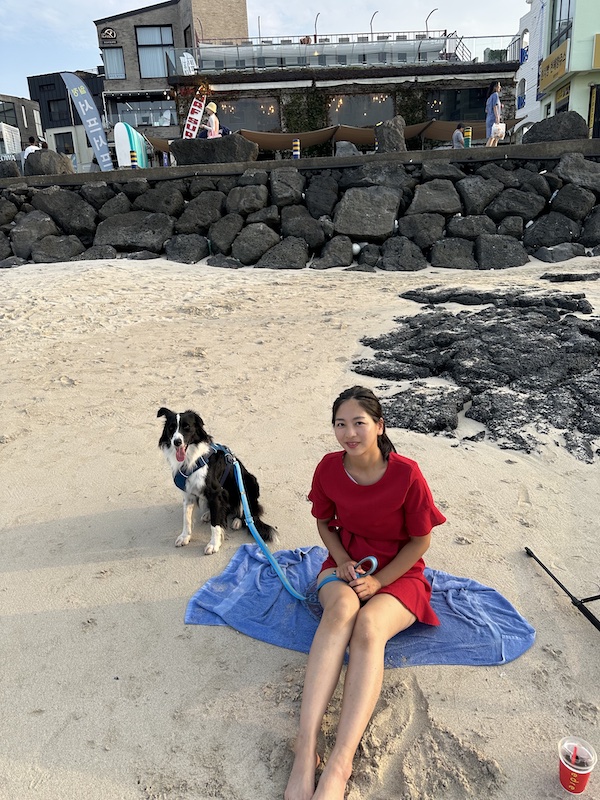
My favorite beach on the trip.
After Hamdeok, this felt more relaxed. Fewer rules, fewer people, and more space to just be at the water.
The water is shallow with a sandy bottom, and that clear Jeju blue you see in photos. Easy to get in and out without thinking about designated swimming zones.
Winnie had free run of the beach and loved it. No one seemed to mind.
There are cafés and small restaurants right across the street, along with parking and basic facilities, so it’s easy to spend a few hours here without much planning.
You can rent SUP boards right on the beach, and there are lessons available. If you’re just looking for an easy place to try it, this is probably the better setup than what we did on Day 3.
We wrapped up the day at the beach and headed back to Songdang.
We skipped the hike at Seongsan, but didn’t feel like we missed much. A few photos at the base were enough.
Next day was a change of pace. Snoopy Garden, paddleboarding, and a move down to Seogwipo.
Day 3: Snoopy, Paddleboards, and Seogwipo
After two days of beaches and time outdoors, we changed it up a bit. Snoopy Garden, paddleboarding, and a move south to Seogwipo.

Snoopy Garden
At my age, I’m not exactly proud to admit it, but growing up I was completely obsessed with Snoopy.
Stuffed toys, cartoons, anything Peanuts-related. That phase eventually passed, but walking into Snoopy Garden brought a lot of it right back.
The place is spread out across a large, well-kept property with themed sections built around the Peanuts characters. It’s polished, very photogenic, and clearly designed with that kind of nostalgia in mind.
Call it nostalgia with a side of Instagram.
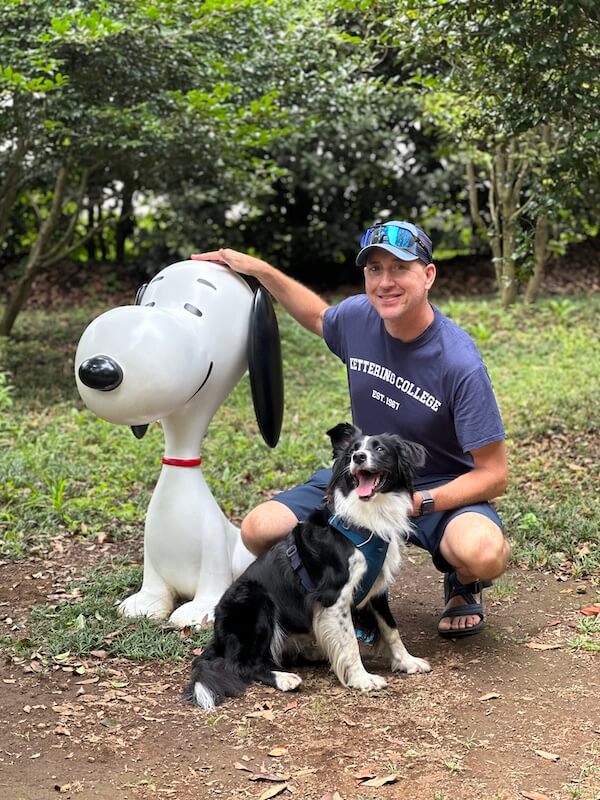
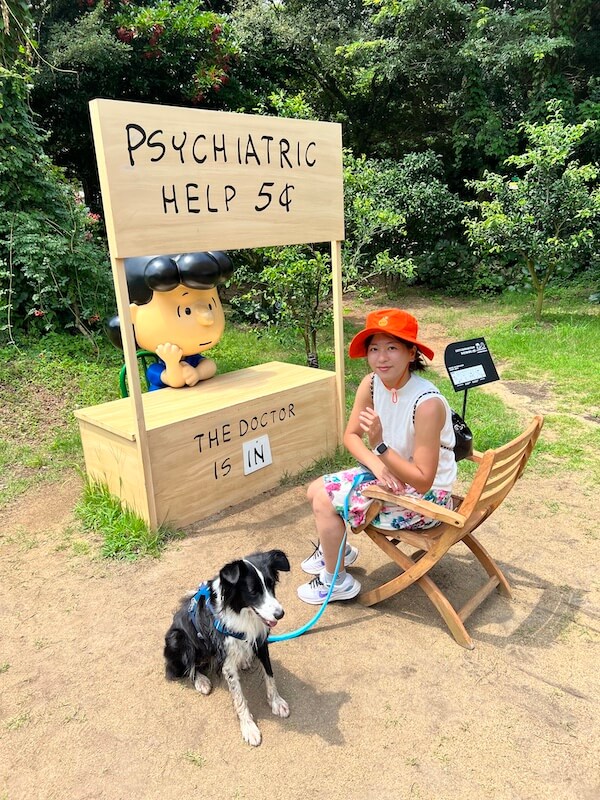
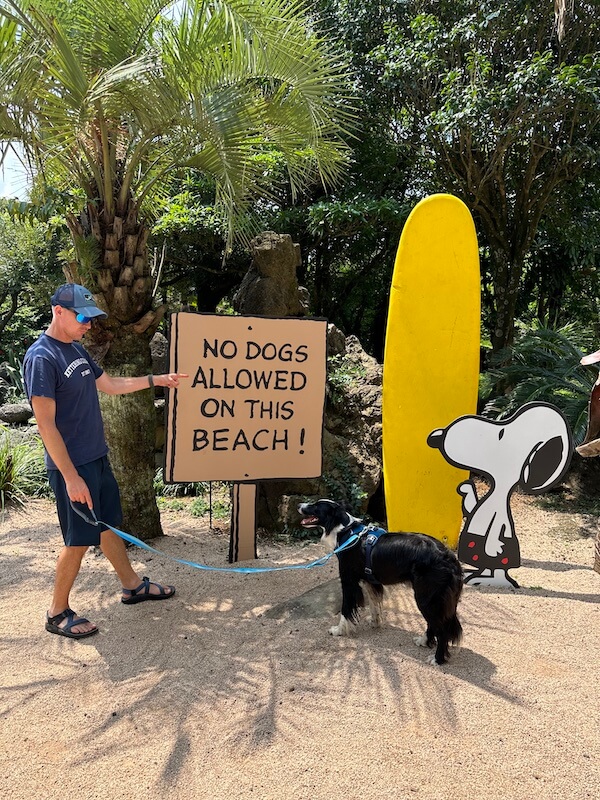
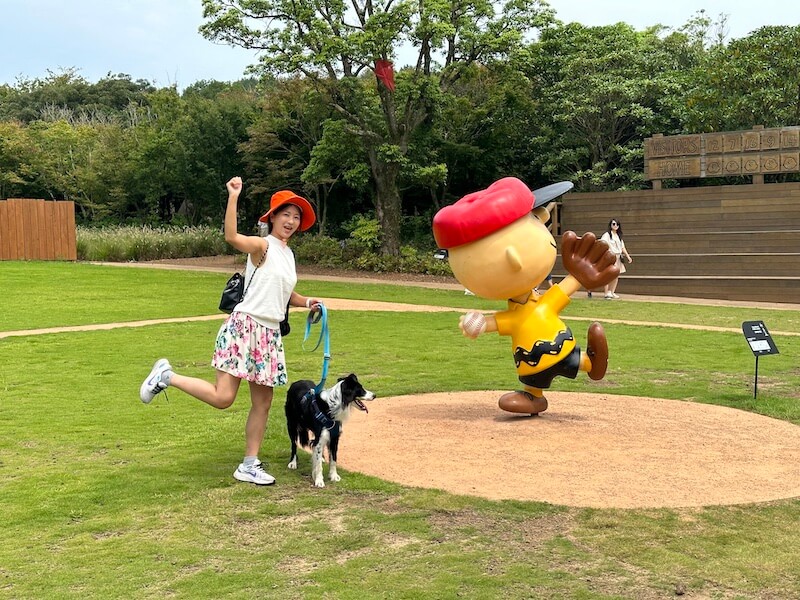
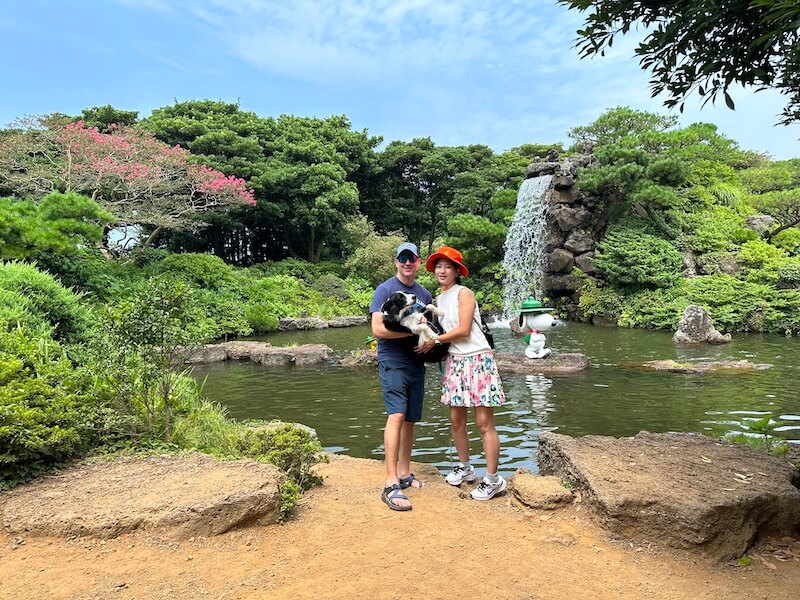
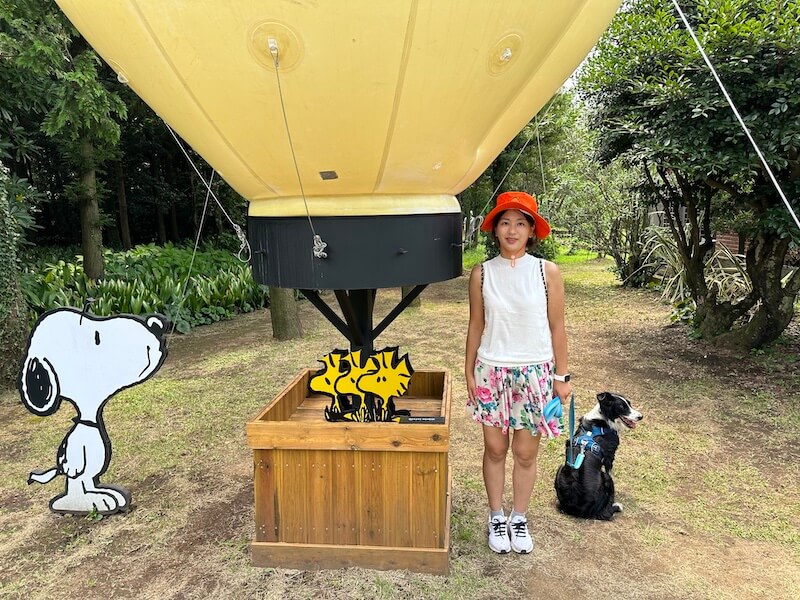
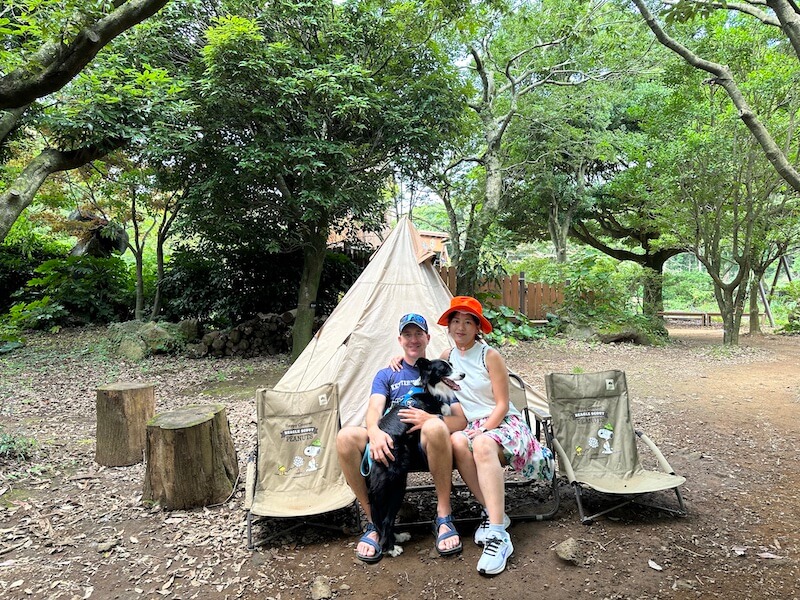
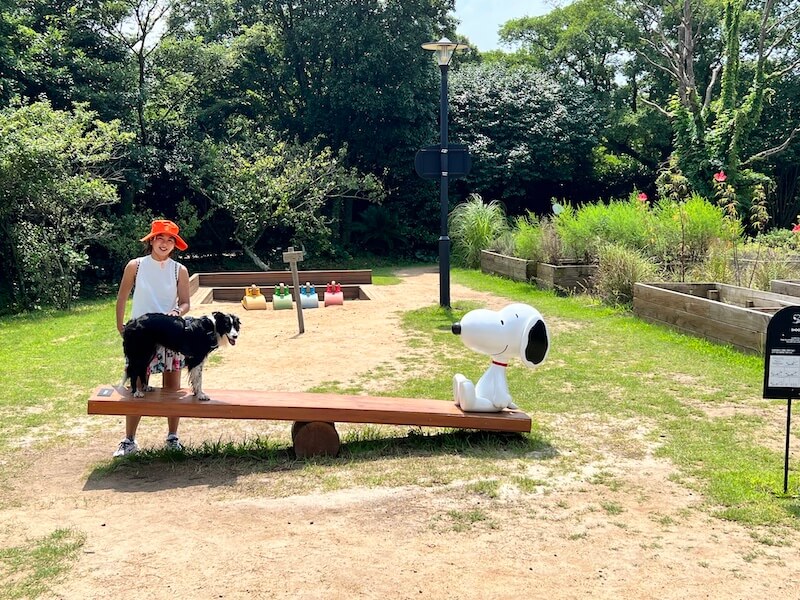
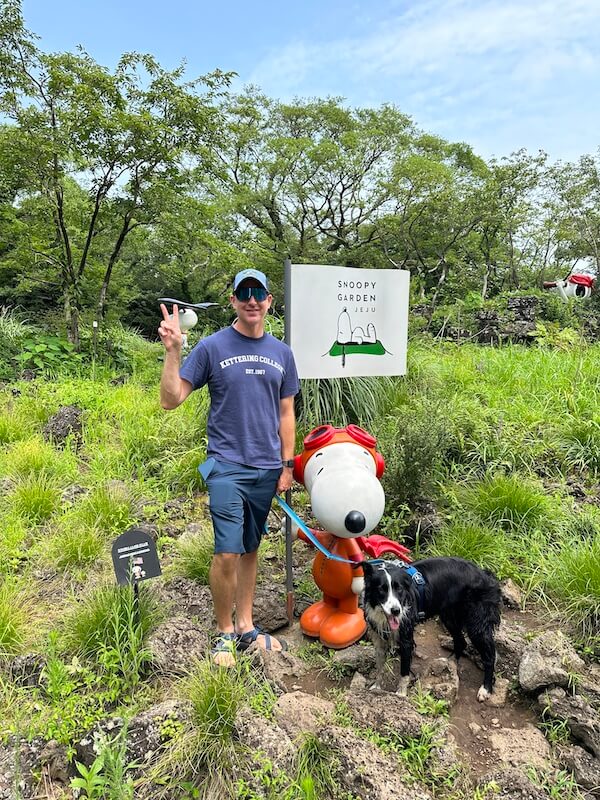
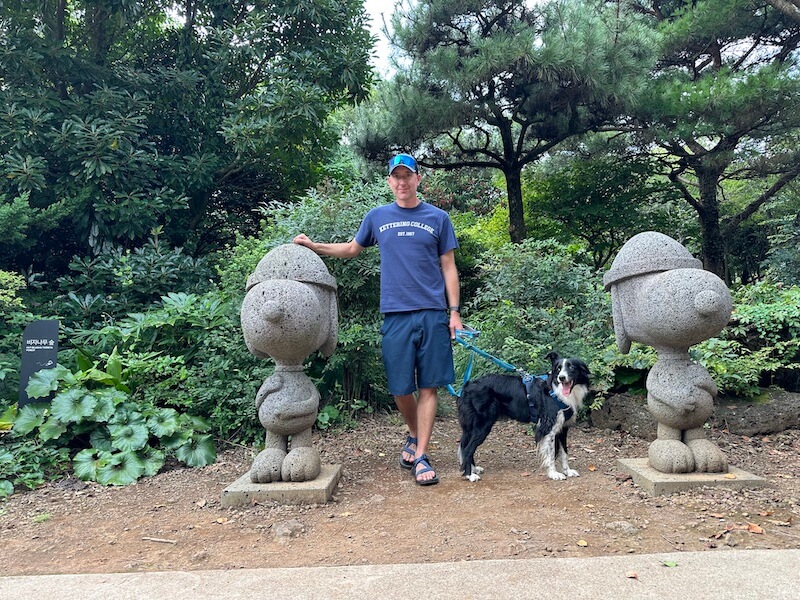
Dogs are allowed, but only on Wednesdays. Leashes are required outside, and if you want to go into the indoor exhibits, your dog needs to be in a stroller. We skipped that part since Winnie wasn’t going to cooperate with that plan.
Stand-Up Paddleboarding (Seogwipo)
This one was my wife’s idea.
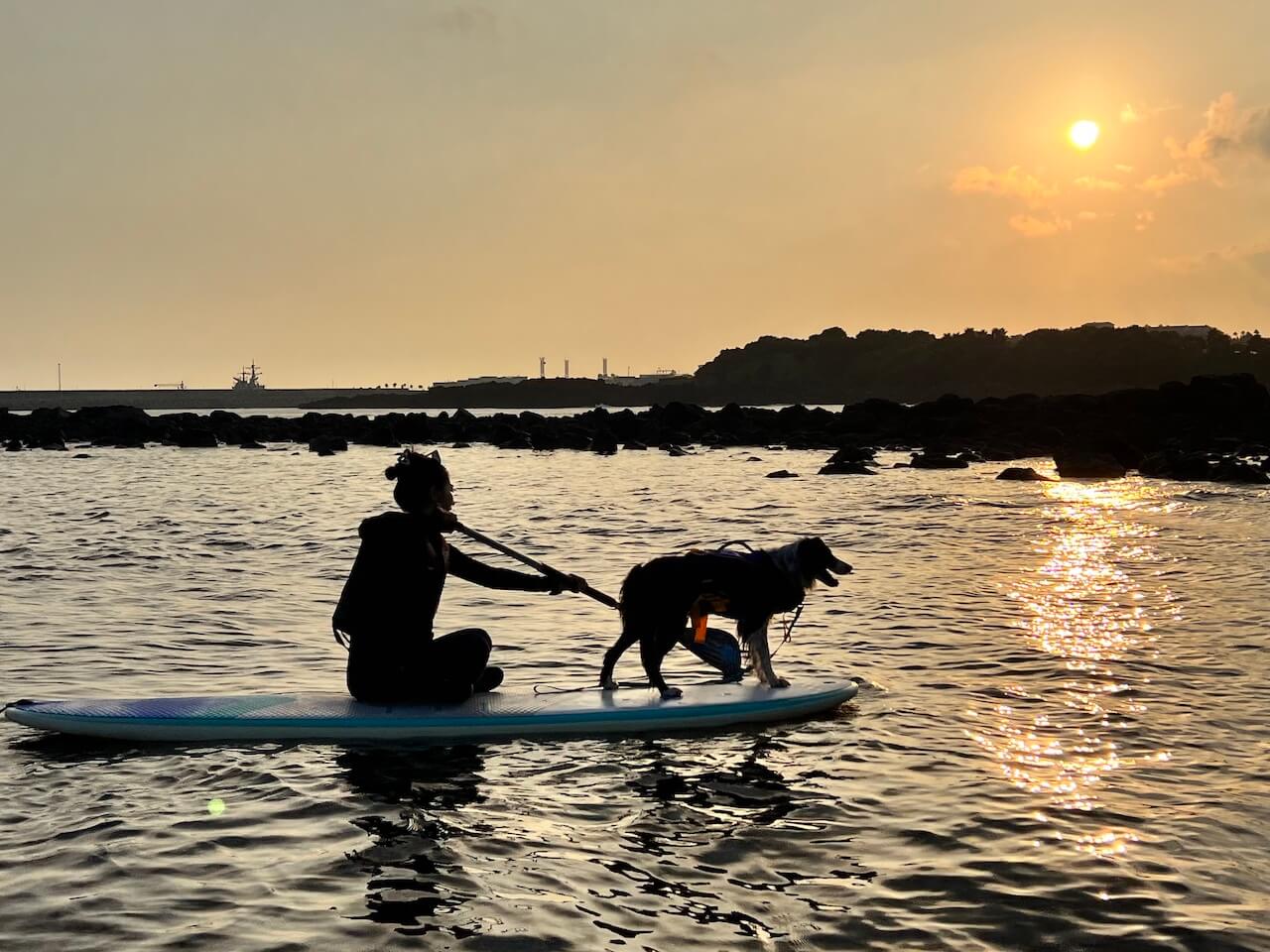
She found a place that allowed dogs on the board, which narrowed the options quite a bit and led us to a small operation down in Seogwipo.
I had tried paddleboarding once before and didn’t exactly take to it, so expectations were low. She picked it up quickly. Winnie did too.
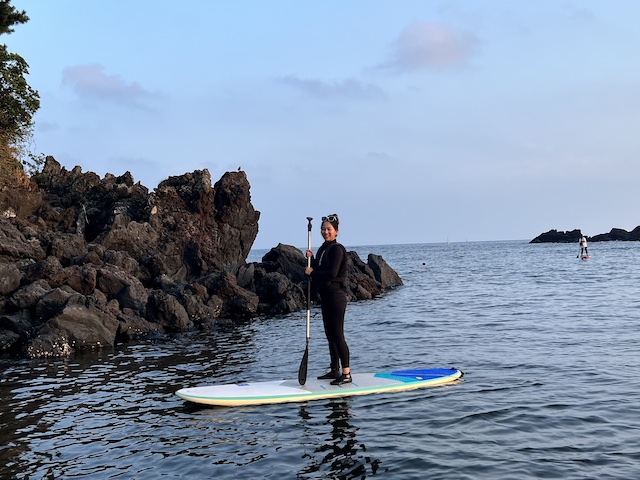 Standing after 30 minutes instruction from Ten Times Seogundo.
 Dog Friendly Stand Up Paddling in Jeju Island.
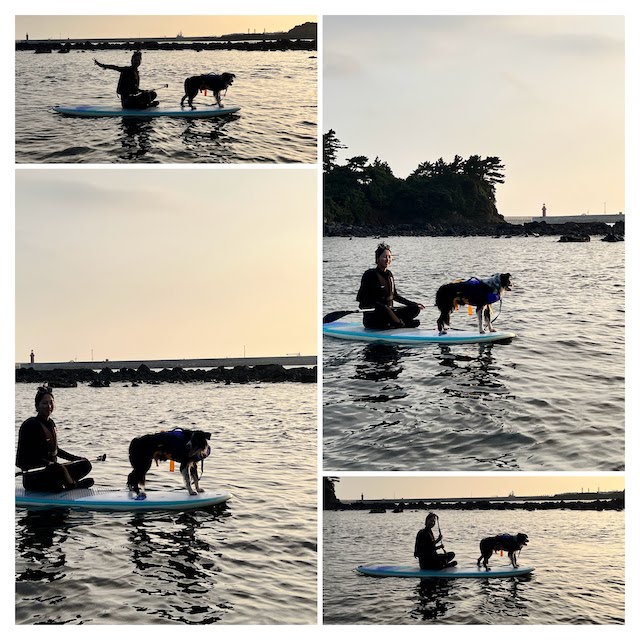 Stand Up Paddle lesson in Jeju Island included our border collie.
 I served as the photographer for the Jeju Island SUP lesson.
 A tired dog after her SUP lesson in Jeju.
The setting is a bit different from what you’ll find at the main beaches. Rocky shoreline, quieter, and a little harder to find. But the water was calm, and the instructor was patient, which made a big difference.
If bringing a dog isn’t part of the plan, I’d probably keep it simple and go back to Woljeongri. You can rent boards right on the beach there, the setup is easier, and the sandy shoreline makes it a more comfortable place to learn.
That said, this worked for what we wanted to do, and it ended up being one of the more memorable parts of the trip.
Day 4: Coastal Walks, Ranchland, and Conan Beach
With our base now in Seogwipo, this day was more spread out. Less structured, more wandering between stops along the coast.
Keuneong Coastal Walk
Not a must-see, but a good stop if you’re already nearby.
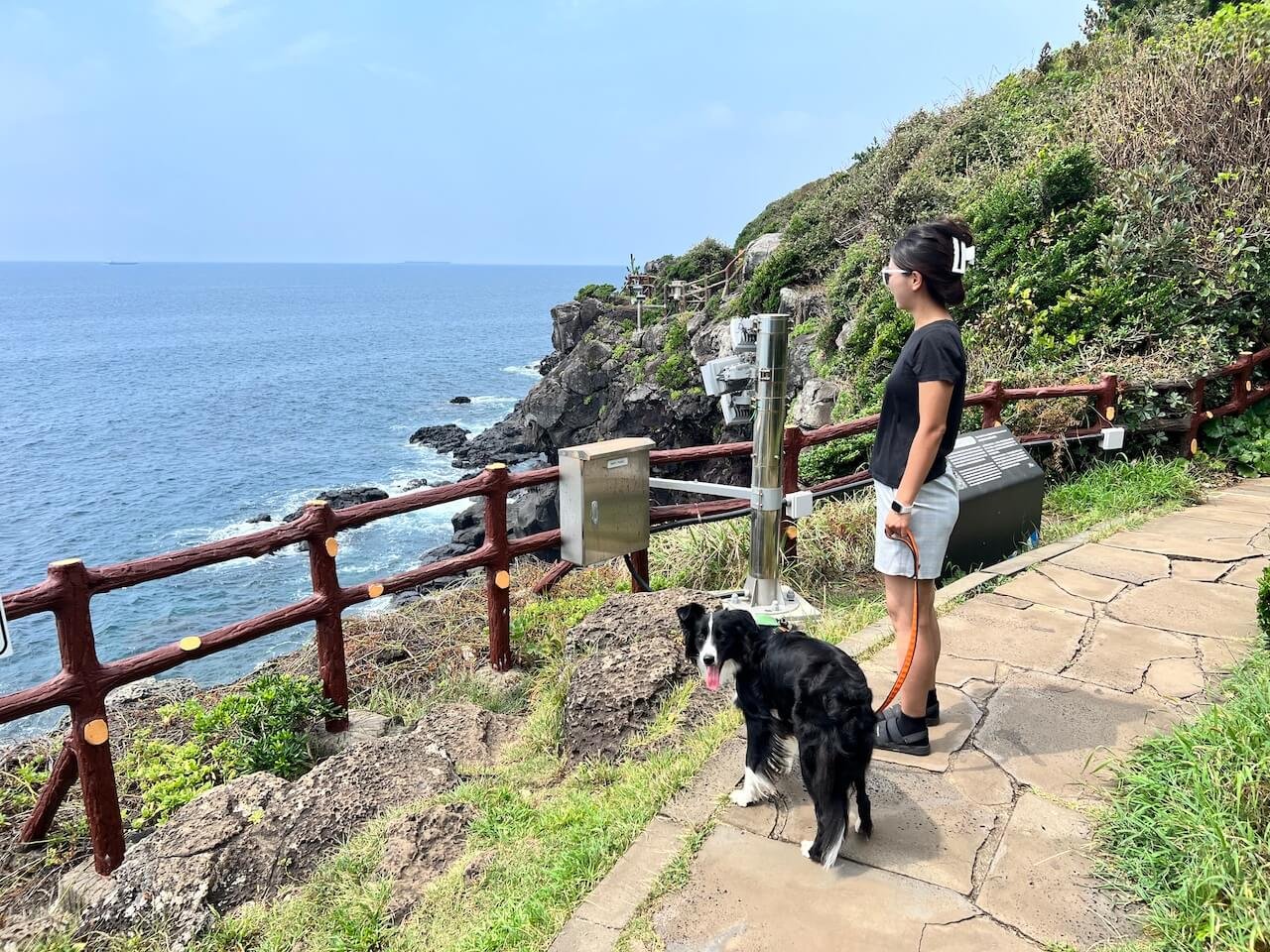
It’s a short coastal trail that runs along the cliffs with open ocean views the whole way. Nothing complicated. Just an easy walk to start the day.
We didn’t spend long here, but it worked as a low-effort way to get outside and take in the coastline.
Sincheon Seaside Ranch
One of the best stops of the trip.
Going in, I expected something a bit more built up. Maybe a tourist stop with pony rides and crowds. Instead, we ended up on a quiet stretch of coast where open fields met the sea.
It’s not a long walk, but we stayed for a while. Just wandering, taking photos, watching the cows, and letting Winnie run around.
There’s almost nothing out here. One small café at the far end, and that’s about it.
That’s what makes it really cool.
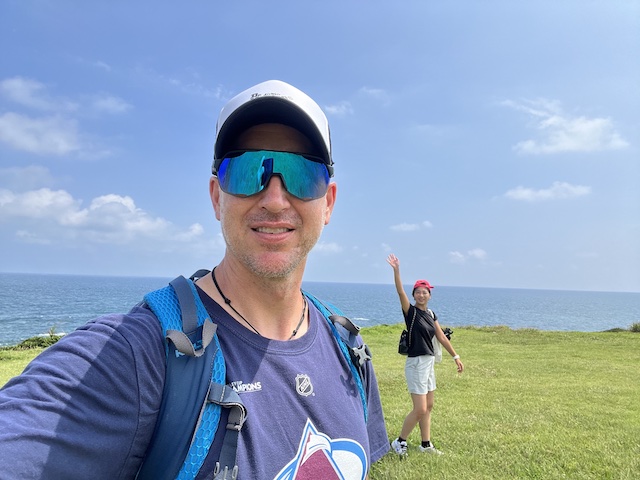 Sincheon Coastal Ranch Walk is a hidden gem on Jeju Island.
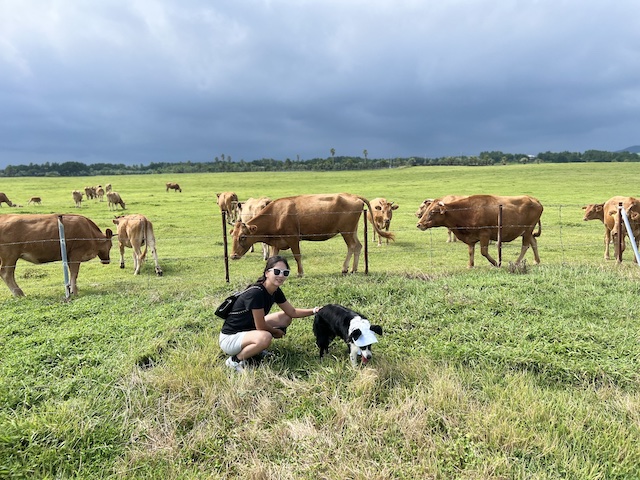 Storm rolling in behind the cattle at Sincheon Ranch, Jeju Island.
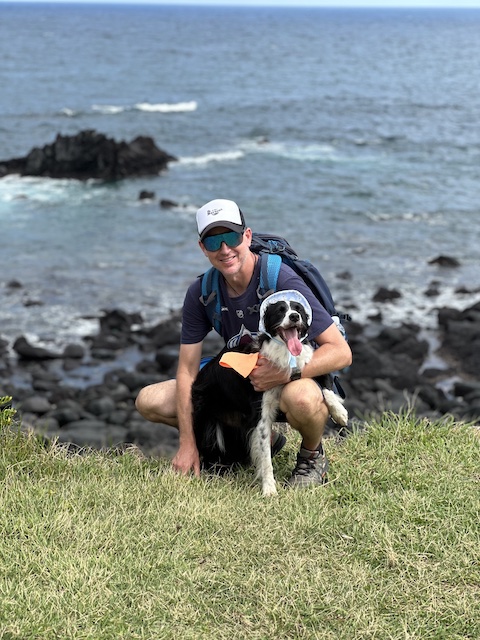 Sincheon Coastal Ranch is a perfect place for a dog-friendly photo shoot.
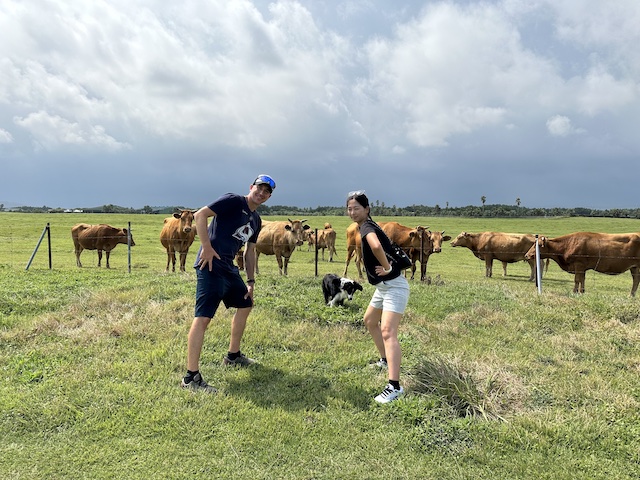 Sincheon Coastal Ranch is a real cattle ranch.
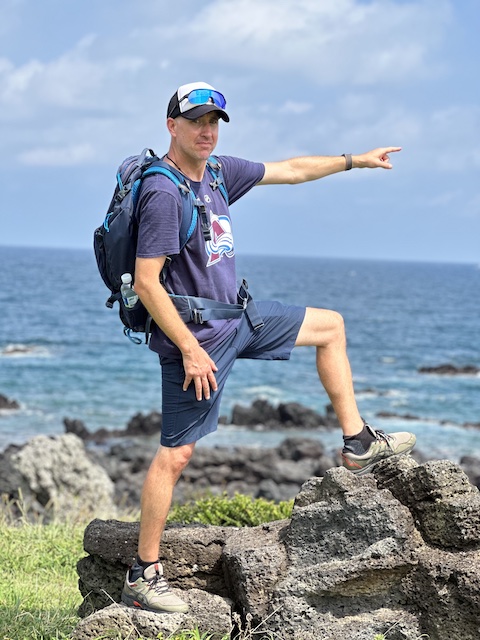 Sometimes you have to pose like a dork_Jeju Island.
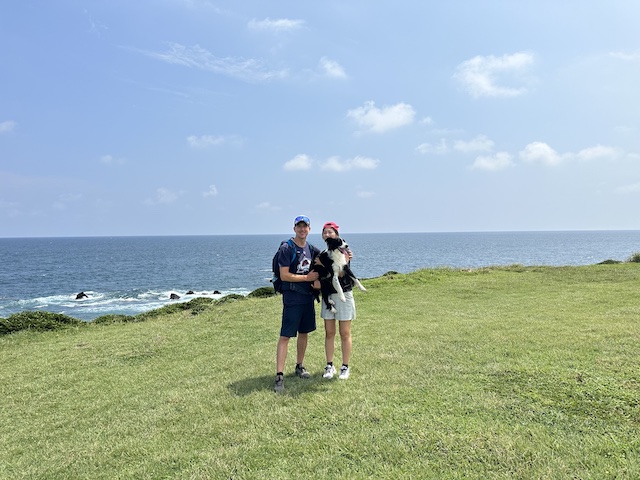 Sincheon Coastal Ranch was a dog-friendly, beautiful walk.
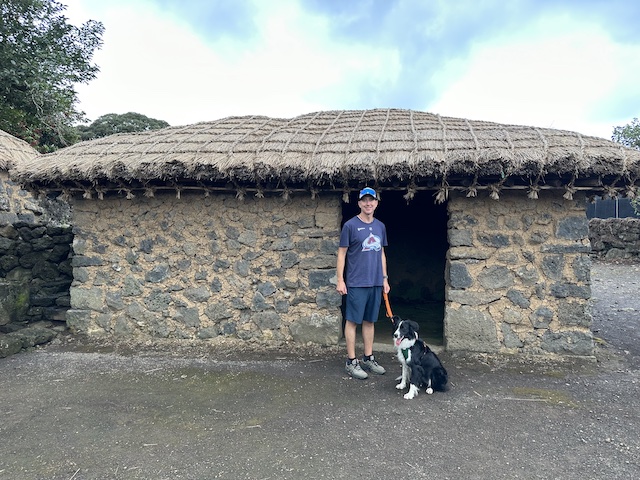
Seongeup Folk Village
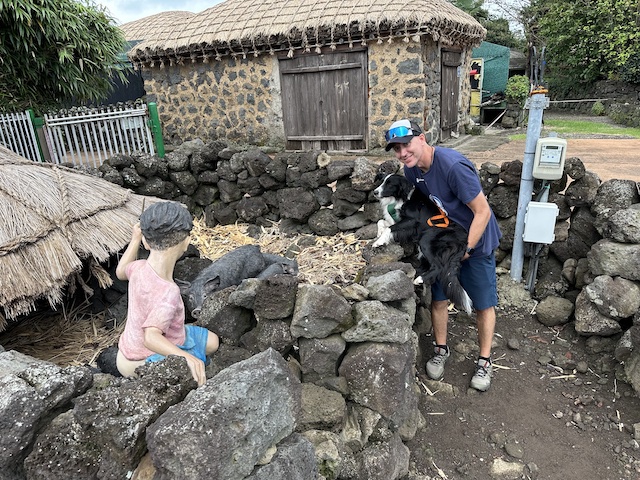
Worth a stop if you’re interested in seeing a more traditional side of Jeju.
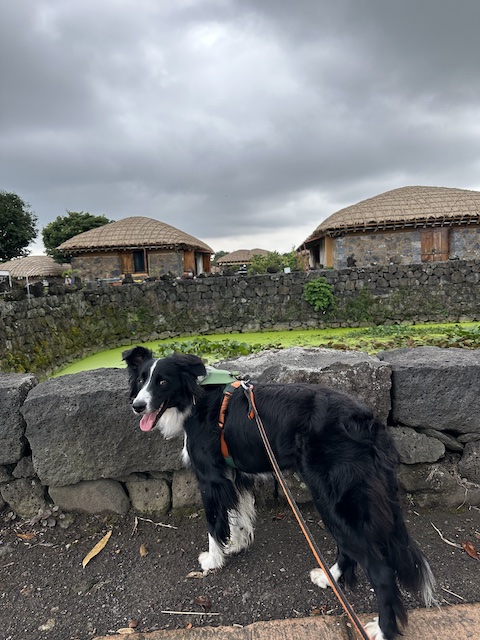
The village is set up around preserved homes with thatched roofs, stone walls, and narrow paths that give you a sense of how people lived here in the past. It’s less of a single attraction and more of an area you can wander through for a bit.
One thing you’ll notice right away is how many places there are to eat, especially restaurants serving Jeju’s black pork. It’s one of the island’s signature foods, and this is one of the spots where it’s heavily featured.
We visited when it was quiet, which made it easier to walk around without much interruption. From what we saw, it can get busy with tour groups, so the experience probably depends on timing.
We didn’t stay long, but it was enough to get a feel for it before moving on.
Conan Beach (Haengwon Beach)
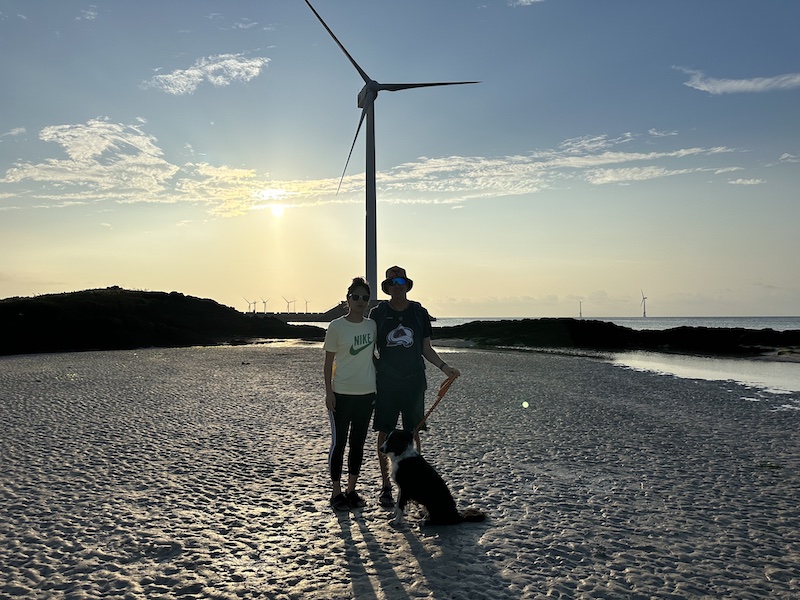
Our favorite beach of the trip.
It’s not a typical “developed” beach. No facilities, no restaurants, and not much around it. There’s even a fish cannery nearby.
But that’s exactly why it worked for us.
Wide-open space, calm shallow water, and hardly anyone else around. Winnie had room to roam, swim, and wear herself out without running into crowds.
There’s also a small freshwater stream that runs into the ocean, which made it even better for cooling off.
If you’re looking for something polished, this isn’t it. But if you want space and quiet, it’s hard to beat.
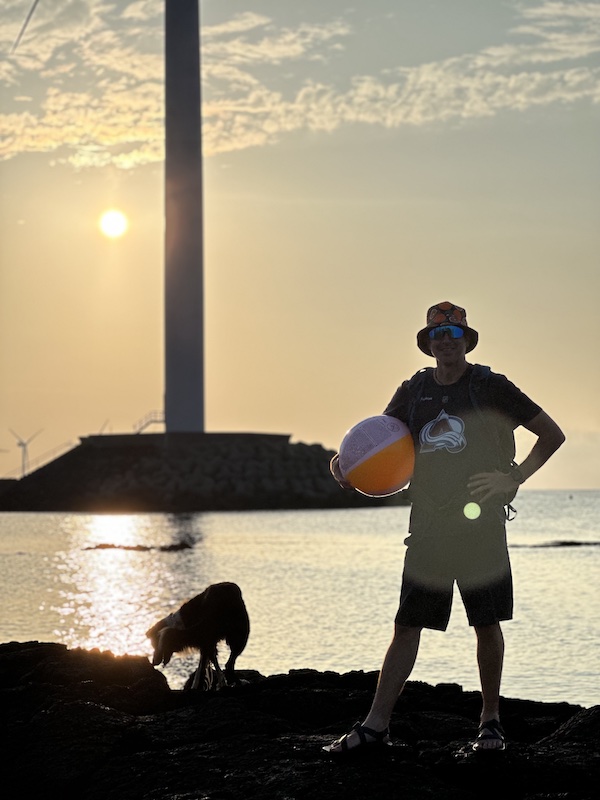
We ended up staying through sunset.
We headed back to Seogwipo after that.
Day 4 ended up being one of the more relaxed days of the trip. Less about checking off stops, more about finding places that felt a little removed from everything else.
Day 5: Seopjikoji and Batti Café
For our last day on Jeju, we kept things light. A coastal stop, a quick horseback ride, and one final café before wrapping up the trip.
Seopjikoji
Nice views, but not a must.
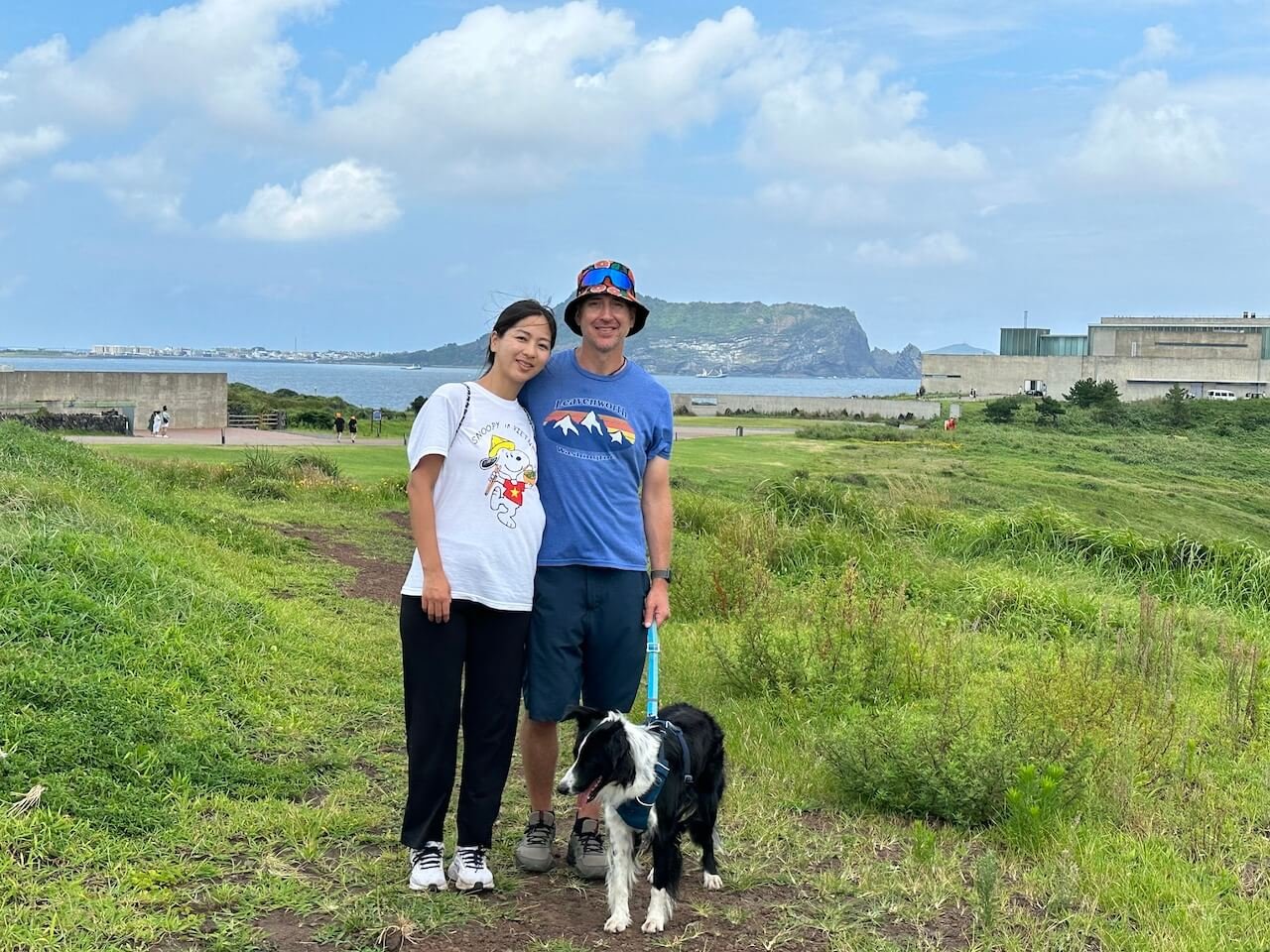
If you missed hiking Seongsan Ilchulbong, this is one of the better places to see it from a distance. You get a clear side view of the crater with the ocean in front of it.
That said, it didn’t do much for me. It’s scenic, but after places like Sincheon, it felt a bit underwhelming.
There’s a short horseback ride here that’s easy if you’re just want a quick loop to check horse back riding on Jeju Island off your bucket list.
I sat this one out with Winnie while my wife gave it a go.
There are a couple of other stops around the area, including a glass building with ocean views and an old “Candy House” that felt oddly out of place, but apparently it appeared in a Korean drama at some point so others .
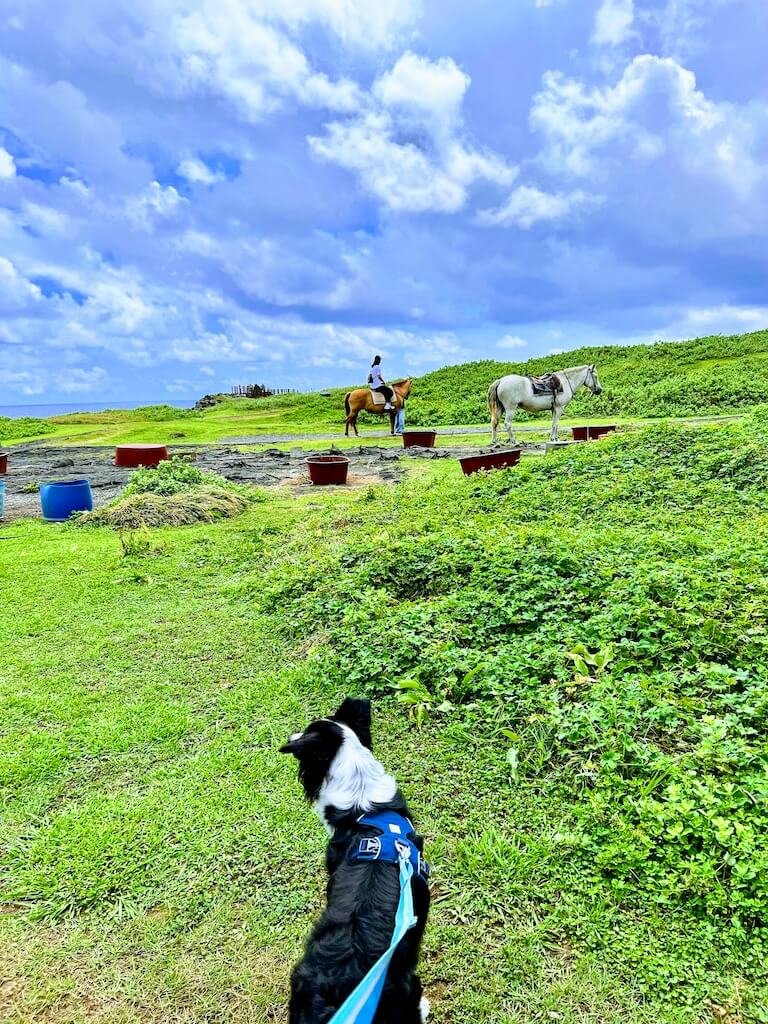
Batti Café
One of the more unique stops on the trip. It’s part café, part open space, with horses, walking paths, and a hill you can climb for the view.
It’s a good place to wander around with a coffee and take it slow.
There are horseback options here too, including a longer guided ride up the hill. We skipped that and just walked up instead, which ended up being just as good for the view.
There’s a swing at the top that makes the walk worth it on its own.
Dogs are allowed, but you’ll want to keep some distance from the horses.
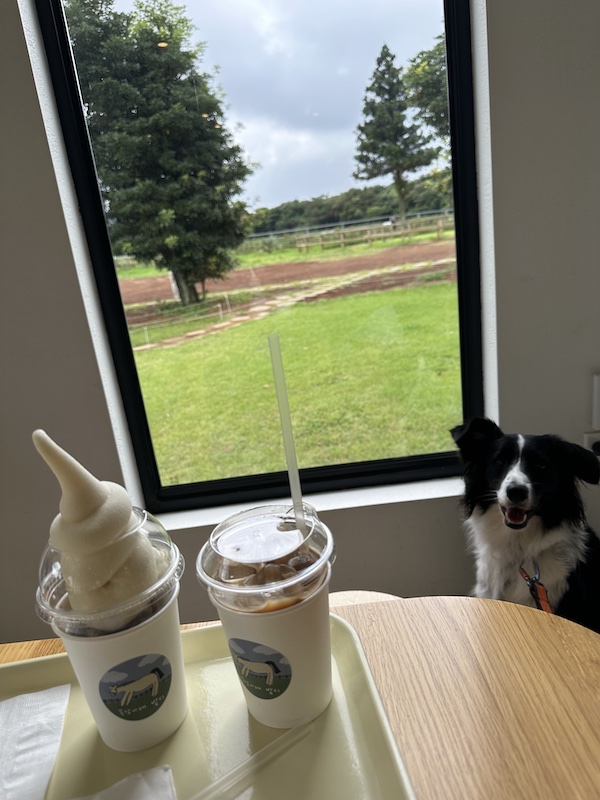 The Ice Cream Latte is a specialty at Batti Cafe.
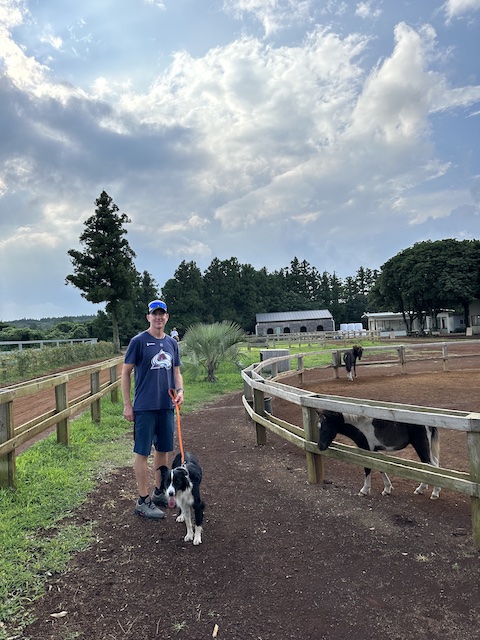 There are mini-ponies for children to pet and ride at Batti Cafe.
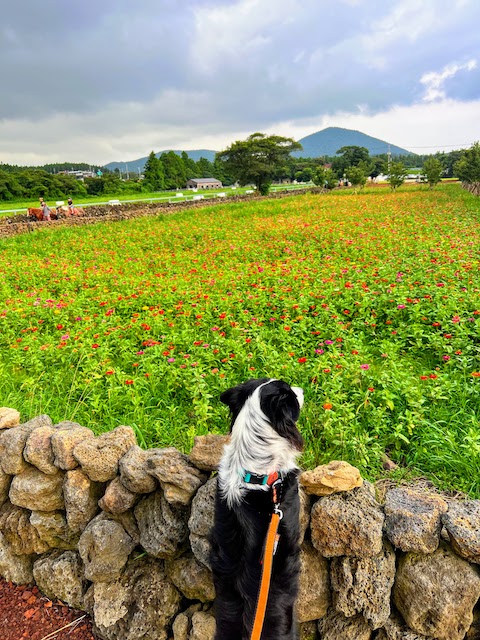 There is a lovely field of flowers behind Batti Cafe, Jeju.
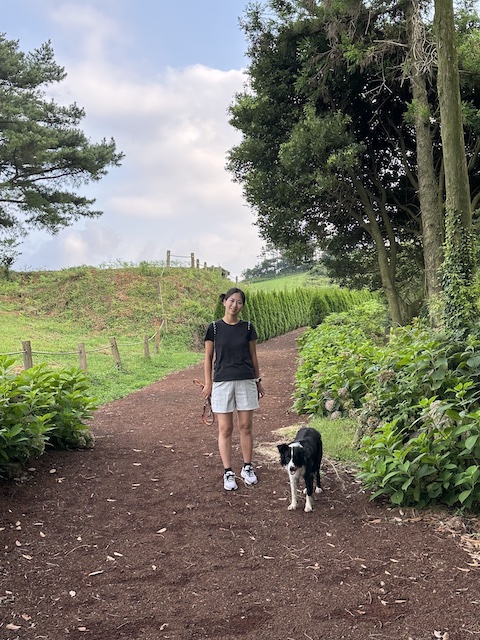 Nature walking trails behind Batti Cafe.
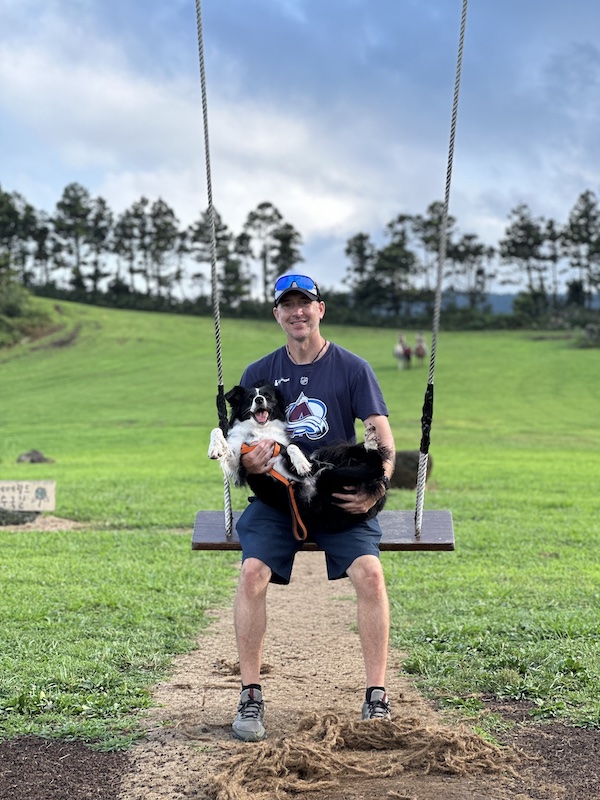 Atop a hill, above the Batti Cafe grounds is a nice swing for a photo.
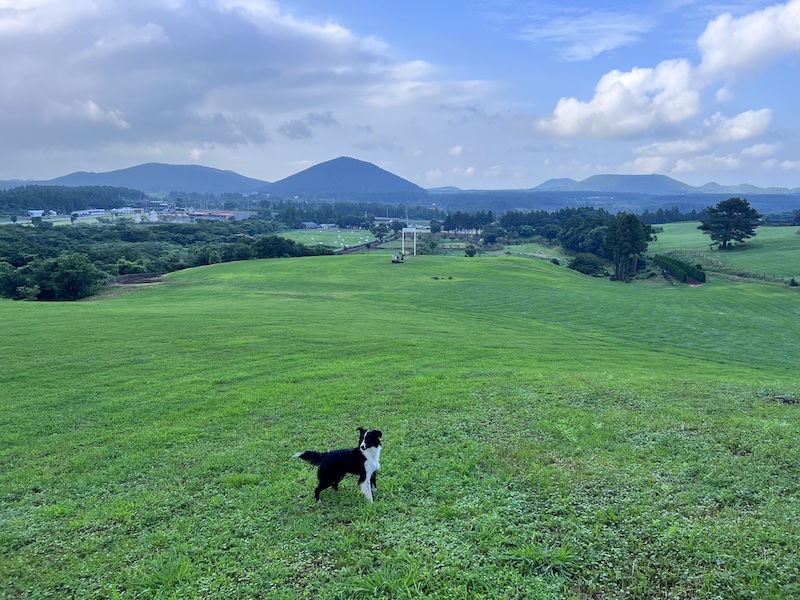 There’s a beautiful paddock behind Batti Cafe where they lead horse tours. It’s also a great place for a border collie!
We wrapped things up here before heading back.
It was an easy way to end the trip. Nothing felt rushed, and we didn’t feel like we had to squeeze anything in.
What I’d Do Again
If I were planning this trip again, a few places would make the list without much thought.
Woljeongri Beach was probably the easiest yes. It had everything I was looking for, with open space, clear water, and fewer restrictions than some of the other beaches we visited.
Parking was easy and free, and there are plenty of shops, cafés, and restaurants just across the road, so it’s not hard to settle in for a while.
We ended up having our best meal of the trip at a black pork spot just steps from the beach, and the whole area has a relaxed, beach-town feel that’s not all that common in Korea.
Sincheon Seaside Ranch was another one. I didn’t expect much going in, but we ended up staying longer than planned, just walking around, taking photos, and letting Winnie run.
Conan Beach stood out for similar reasons. It’s not developed, which is exactly why we liked it. We had plenty of space, and it felt like a place where we could just hang out without dealing with crowds.
The paddleboarding experience is something I’d keep. If we didn’t have Winnie with us, I’d probably just rent a board at Woljeongri and keep things simple.
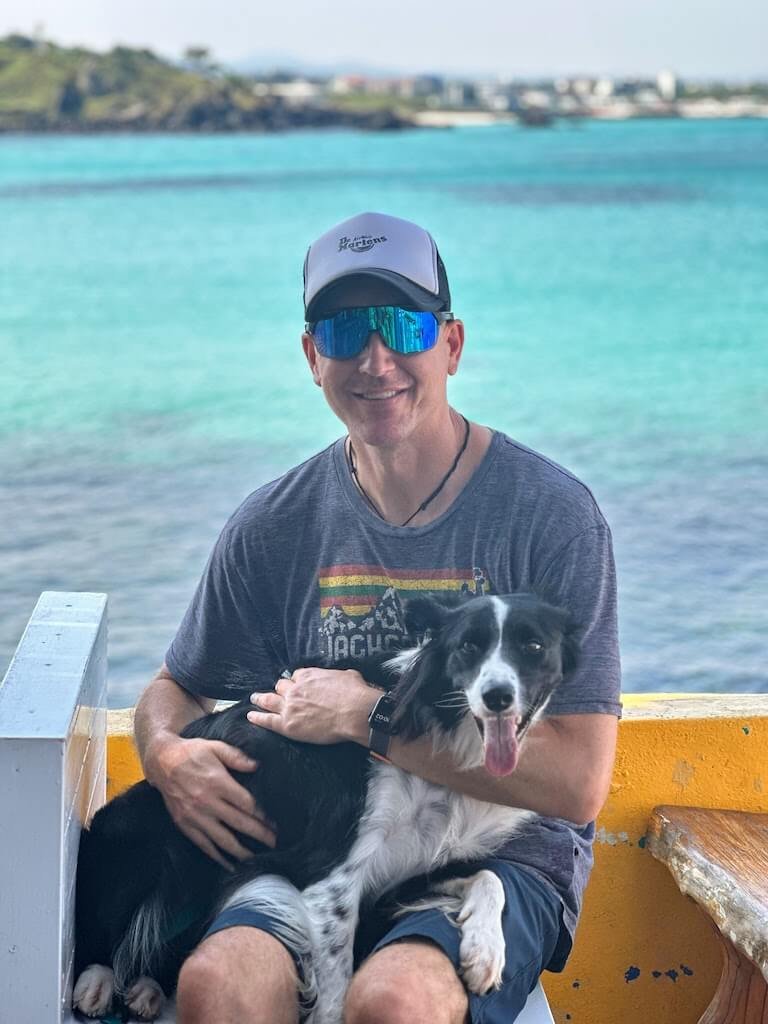
Aewol Café Street is still worth including. It runs along a narrow stretch of coastline, with cafés and restaurants lined up right against that bright, clear water, so it’s no surprise it’s one of the more popular stops on the island.
It’s also been used as a filming location for a number of Korean dramas, which adds to the draw. When you’re there, it makes sense why it shows up so often.
We stopped for coffee and spent some time walking along the water, and it felt like an easy place to slow down for a bit before moving on.
What I’d Skip or Do Differently
Though we enjoyed every part of the trip, there are a few places I’m not sure I need to see again.
Hamdeok Beach is probably the easiest one to point to. It’s a great beach and easy to see why it’s so popular, but it didn’t quite work for us. We showed up midday on our first day, still tired, with nowhere to change except the car, and it was already hot and crowded by that point. On top of that, the main beach isn’t dog-friendly, which made it harder to settle in. There are grassy areas above the beach where dogs are allowed, but for our situation, we were more comfortable at the quieter, less developed spots we found later.
Seopjikoji falls into a similar category. The views are good, especially looking back toward Seongsan Ilchulbong, but compared to some of the other coastal spots we visited, it didn’t stand out as much.
Seongsan Ilchulbong is one I’d handle differently rather than skip. We showed up in the middle of the day in August with a dog, which made hiking it unrealistic from the start. If you want to go to the top, it’s something you need to plan around, either early in the morning or later in the day when the heat isn’t as much of a factor.
The paddleboarding experience in Seogwipo worked for us because it was one of the few places that allowed dogs on the board. If that hadn’t been part of the plan, I would have kept it simple and rented a board at Woljeongri instead.
Quick Planning Notes
Do you need a car on Jeju Island?
I wouldn’t do this trip without one.
Jeju is bigger than it looks, and once you get outside the main areas, things spread out quickly. There are buses and taxis, but having a car makes a big difference in how easily you can move around the island.
If you’re visiting as a foreigner, you’ll need an International Driving Permit or a valid Korean driver’s license. I’ve covered that in more detail in my guide to driving in South Korea as a foreigner.
For rentals, DiscoverCars is one of the easier ways to see what’s available from international agencies. It pulls options from multiple providers and works well for comparing what’s out there.
Where should you stay on Jeju Island?
We split our time between Songdang and Seogwipo, which worked well for seeing different parts of the island.
Jeju has a wide range of accommodations, from hotels to pensions and private rentals. Agoda tends to have the strongest selection across Korea, especially if you’re looking for something straightforward.
If you’re leaning more toward a private stay, VRBO is worth checking as well. There are plenty of good options across the island, especially outside the main hotel areas.
Ferry or flight to Jeju Island?
Flying is the easiest option for most people. There are frequent flights from mainland Korea and other nearby cities, and it’s quick.
We’ve also taken the ferry when bringing a car over, which is a different experience altogether.
If you’re deciding between the two, I’ve broken that down in more detail in my Jeju ferry travel guide.
Do you need to book tours in advance?
For most of what we did, no. Having a car made it easy to get around and do things on our own.
That said, if you’re not planning to drive or just prefer something more structured, there are plenty of guided tours and day trips available around the island. You can browse what’s available here on GetYourGuide or below on Viator.
Is Jeju Island dog-friendly?
More so than mainland Korea, but not without limitations.
We were able to bring Winnie to a lot of places, including some cafés and outdoor areas where we didn’t expect it. At the same time, there were clear restrictions in certain spots, especially beaches and major attractions.
If you’re traveling with a dog, it’s manageable, but you’ll need to stay flexible.
Is 5 days enough for Jeju Island?
It was enough for this trip.
We covered a good mix of coastal spots, inland areas, and some of the more well-known landmarks without feeling rushed. That said, we weren’t trying to do everything.
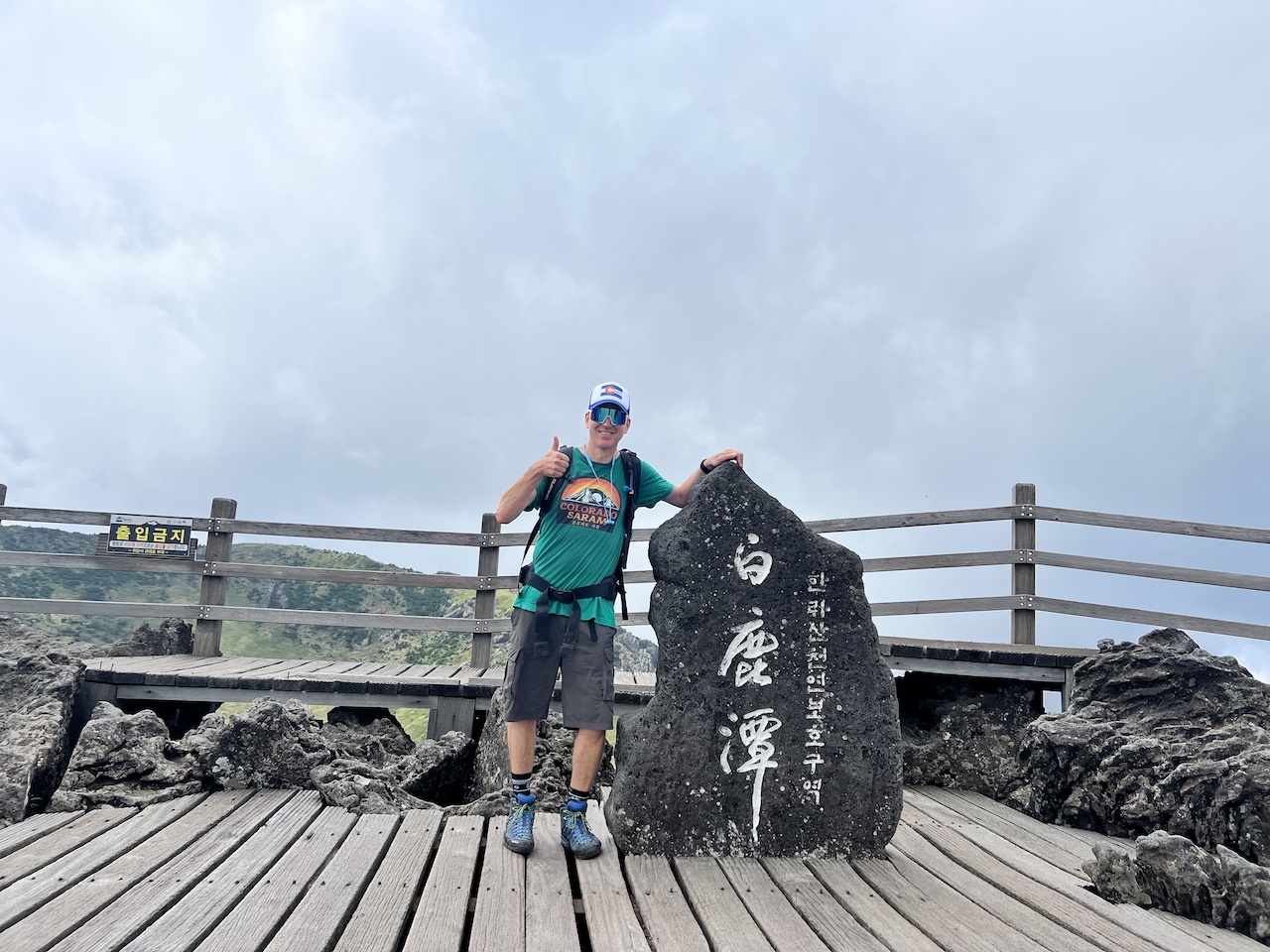
On a later trip, I came back specifically to hike Hallasan, which didn’t really fit into the pace we had here. You could work it into a five-day itinerary, but it would change the feel of the trip quite a bit.
If that’s on your list, it’s worth planning around. I’ve written more about that hike here: Why Climbing Hallasan in Summer Nearly Broke Me, and What I’d Do Differently
Final Thoughts
Five days was enough to see a good stretch of the island without feeling rushed.
We didn’t try to do everything, and I think that made the trip better. Some of the more well-known spots were worth it, but the places we kept coming back to were the quieter ones where we could just take our time.
It’s the kind of trip I’d repeat, just with a few small adjustments.