Quick heads up: This post may contain affiliate links to gear, hotels, flights, or experiences I’ve used or genuinely recommend. If you book through one, I may earn a commission at no extra cost to you. Full disclosure here.
Gulmarg is famous for lift-accessed backcountry skiing in the Himalayas. One question that often comes up when planning a trip there is this: do you actually need a guide to ski in Gulmarg?
Let’s get the answer out of the way right from the start.
Do you need a guide to ski Gulmarg in Kashmir, India?
From someone who skied there in February 2026, the answer is yes. While hiring a guide may not be officially required, if you’re an advanced skier or snowboarder with your eyes on the famous off-piste terrain above Phase 2, you should absolutely have one.
Could you fly halfway around the world to Kashmir, book your own hotel, figure out how to buy a gondola ticket, arrange your own complicated logistics, and then ski only the lower mountain known as Phase 1?
Sure. That’s possible.
But why would you?
Gulmarg is famous for what sits above Phase 1, the mid-mountain station reached by the first gondola from the village. From there, a second gondola climbs to the top of Apharwat Peak at around 14,000 feet, known as Phase 2.
From that top station, you are staring across a high Himalayan ridgeline toward Pakistan, with steep, largely uncontrolled terrain dropping away in every direction.
Getting there takes effort. It takes planning. It means stepping outside the comfort zone of polished ski resorts and into a region most travelers don’t casually add to their winter holiday plans.
If you are going to go through all of that and stand at the top of Phase 2 with that terrain below you, you should have a guide.
Just because you could, doesn’t mean you should.
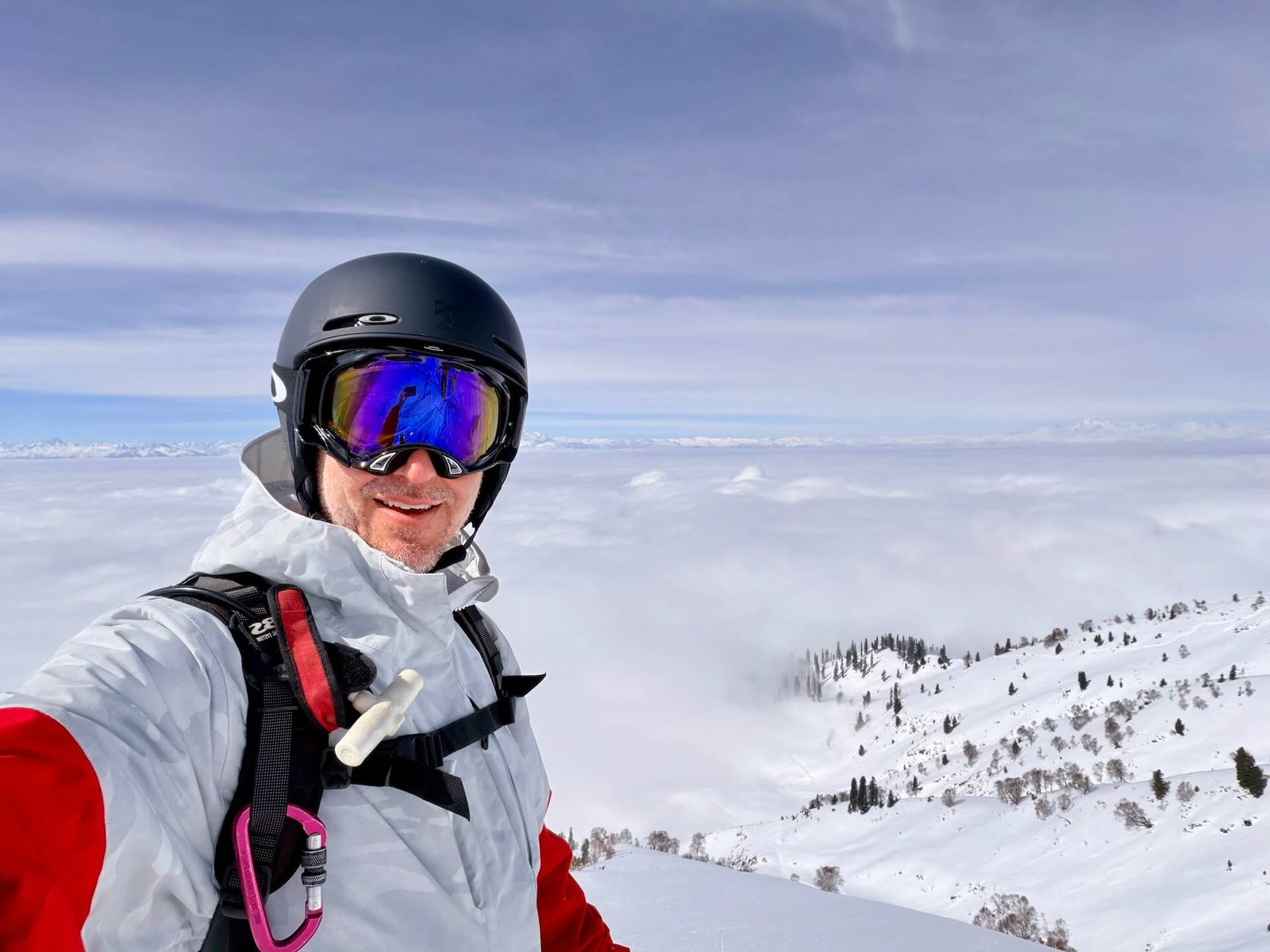
I’ve been skiing backcountry terrain in Colorado since I was a kid. Having just returned from Gulmarg, there is no way I would have felt comfortable skiing Phase 2 on my own without one.
Short answer:
Yes, most visitors should hire a guide to ski Gulmarg. While it is technically possible to ski without one, the terrain above the Phase 2 gondola is vast, largely uncontrolled, and difficult to navigate without local knowledge. Guides also help coordinate logistics like transportation, lift passes, and avalanche safety equipment.
🏔 What Is It Like Skiing Above Phase 2?
When you step out of the gondola at the top of Phase 2, the first thing you notice is the awesome scale of it all.
You are standing on a Himalayan peak at roughly 13,000 feet, with other peaks stretching out in every direction. On a clear day, you can see all the way into Pakistan. Soldiers posted near the top station are a quiet reminder of where you are.
Before I even clicked into my skis, I checked the compass app on my phone. It read just under 4,000 meters. Later in the week, after skinning higher along the ridge, we pushed closer to 4,100 meters, nearly 14,000 feet.
I grew up skiing and hiking in Colorado, so I was no stranger to this altitude. However, after living near sea level in South Korea for almost two decades, my lungs no longer felt at home up there.
So as I tried to get my skier legs back under me over the first couple of days, my lungs also needed time to remember where they came from. I took a lot of videos looking back up at what I’d just skied during the week, and the sound of me gasping for air is audible in all of them.
On the ride up the Phase 2 gondola, you get a preview of what’s below. Wide-open faces. Long fall lines. No visible boundaries.
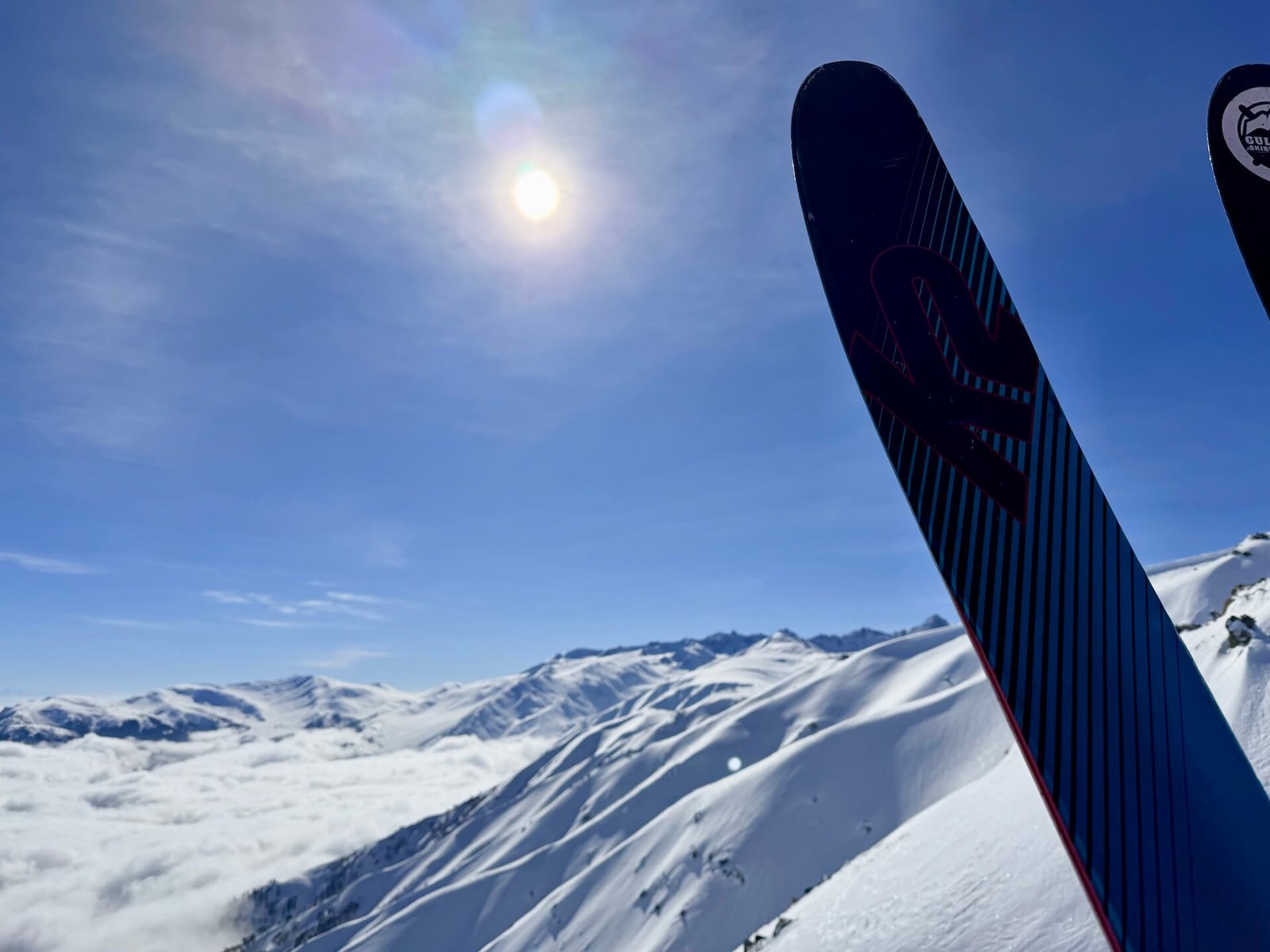
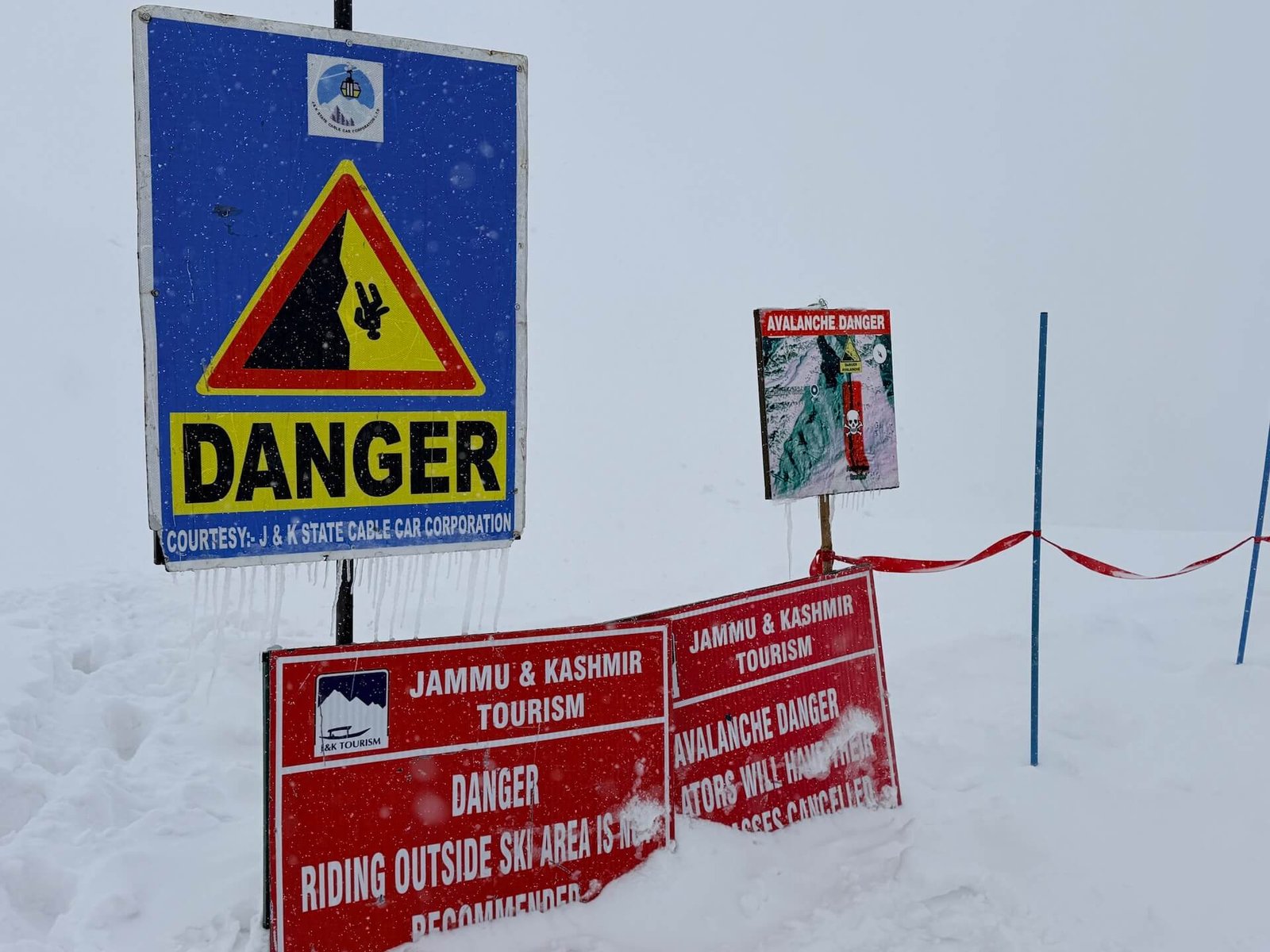
There are no ropes marking off-limits terrain. No ski patrol at the top wagging a finger. Just a few signs warning that riding outside the ski area is not recommended.
Some ridgelines are crowned with enormous cornices. From the gondola you can see how exposed many faces are. It doesn’t take much experience to recognize that impulsive decisions would not end well.
That’s part of the appeal. I started calling it the “Wild West of skiing” when people asked why I was going.
Gulmarg is one of the few places where lift access drops you directly into true alpine terrain. You can point your skis almost anywhere, but you are responsible for where that takes you.
Before my first run above Phase 2, I went through avalanche protocol at mid-mountain with some fellow skiers and snowboarders from Austria with our guides.
Spoiler alert: I hired a guide for this trip through Gulmarg Powder Guides. I’m not being paid to write this, and what follows is not sponsored content.
On my final day, after skinning along the ridge above the gondola, my guide and I dropped into a steep, untouched face and crossed over a slide path from the day before. Looking back up from a safe zone, it was a reminder that the mountain doesn’t care how sweet a line looks. It will win if you test it and you’re unprepared.
The terrain up there is expansive, exposed, and largely unpatrolled. That is the draw. It is also why most serious skiers and snowboarders you see at the top are not standing there alone.
🎿 Can You Ski Gulmarg Without a Guide?
Technically, yes.
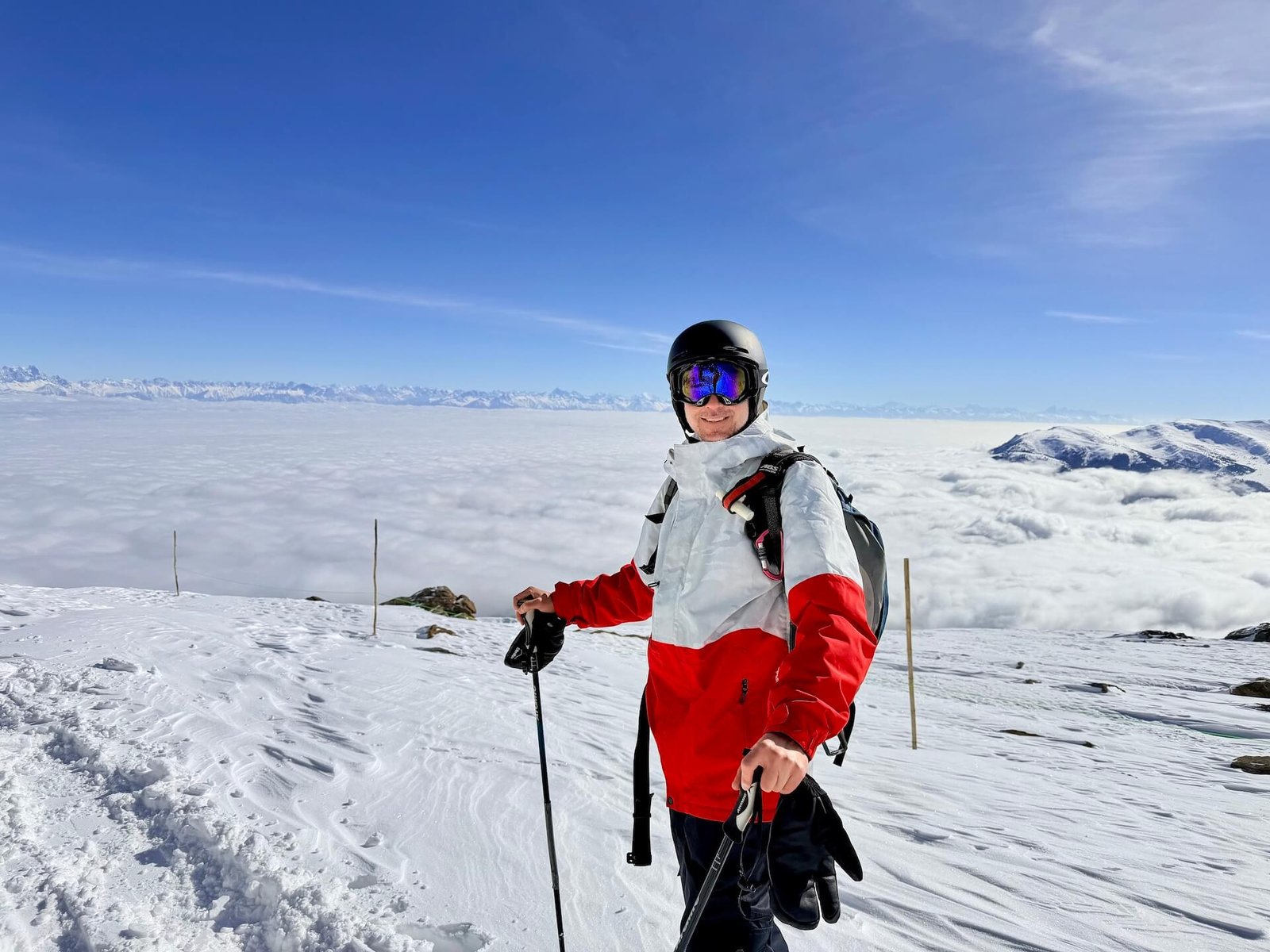
As far as I could tell, there’s no rule requiring you to hire a guide in Gulmarg, even if you ride the Phase 2 gondola to the top of Apharwat. If you buy a lift ticket and click into your skis, you can head out on your own.
But that doesn’t mean it’s a good idea.
If you stay below Phase 2, there is terrain that can be skied without a guide. The mid-mountain chairlift and poma lift access controlled runs that feel more like a small ski resort. I actually spent a full day skiing just this terrain during a storm that kept the Phase 2 gondola closed.
It was fun for a day.
But if I had flown halfway around the world to ski that single chairlift for a week, I would have been disappointed.
Above Phase 2 is where Gulmarg becomes what people travel there for. The terrain is enormous and largely unmarked. Finding fresh lines usually means long traverses, sometimes short hikes, and occasionally committing to ridgelines that drop into terrain far away from the main lift.
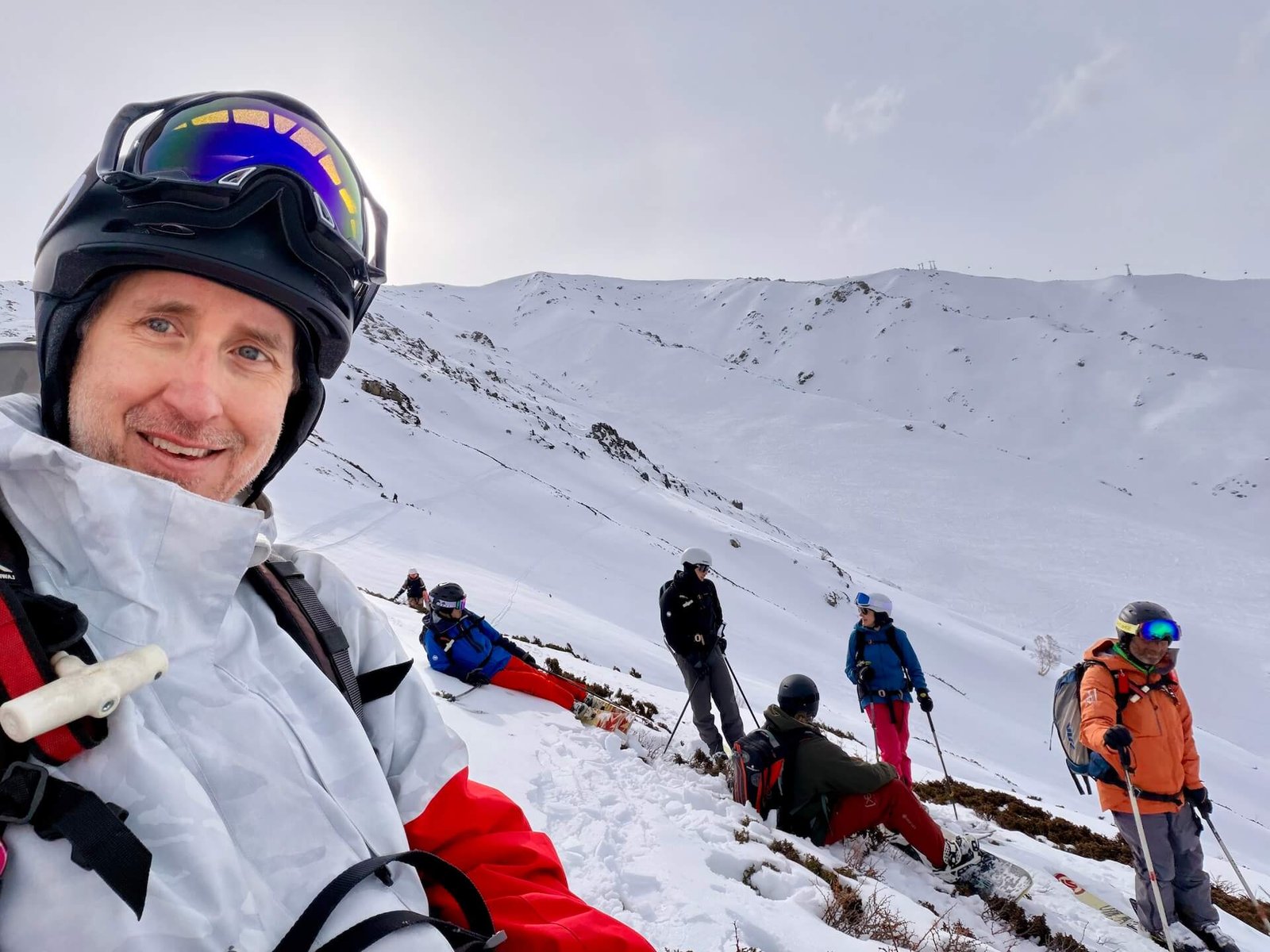
Most runs eventually work their way back toward the mid-mountain base area, but not always in ways that are obvious from the top. Some lines spill into gullies or drainages where the exit is anything but intuitive.
One of my favorite untouched lines from the week traversed the upper ridgeline, bypassed a massive cornice, and required a 15–20 minute hike back up to the mid-mountain station. We skied down under clear skies from the top, but entered the clouds by the time my guide instructed us to start hiking. I would have had no clue on my own that the run was over and it was time to start climbing.
That’s where a guide isn’t just helpful, but can potentially keep you from spending the night outdoors in the Himalayas.
During my week skiing there, I didn’t encounter anyone skiing serious Phase 2 terrain without a local guide. I’m sure it happens, and in general I’m not a “guided tour” type of guy, but Gulmarg does not seem like the place to hold to strict DIY principles. There can be real consequences.
Could an experienced backcountry skier with avalanche training ski the terrain alone?
Probably.
But the bigger question is whether you would know where to go, and just as importantly, how to get out.
Possible? Yes.
Worth saving what this poor English teacher would consider a fairly reasonable investment? No.
Besides, I didn’t just pay a guide to show me around the mountain. For that investment, I hired a well-respected local guiding service that helped me plan months in advance and handled most of the logistics from arrival to departure in this unique corner of the world.
🧭 What Do You Actually Get When You Hire a Guiding Service in Gulmarg?
One thing that became clear as I researched Gulmarg is that there are a lot of different ways to hire a guide.
At the base DIY level, you can hire a local guide by the day and figure out the rest of the trip yourself. Accommodation, transportation, lift tickets, avalanche gear, and skis can all be arranged separately if you are willing to piece everything together.
At the other end of the spectrum are several full-service guiding operations that handle most of the trip for you.
Because I knew I was going to hire a guide anyway, I decided early on that I wanted to do it properly.
In most of my travels I like to organize things on my own whenever possible. Gulmarg didn’t feel like the kind of place to let my stubbornness and pride take over. Once I accepted that, I decided to take all the help I could get.
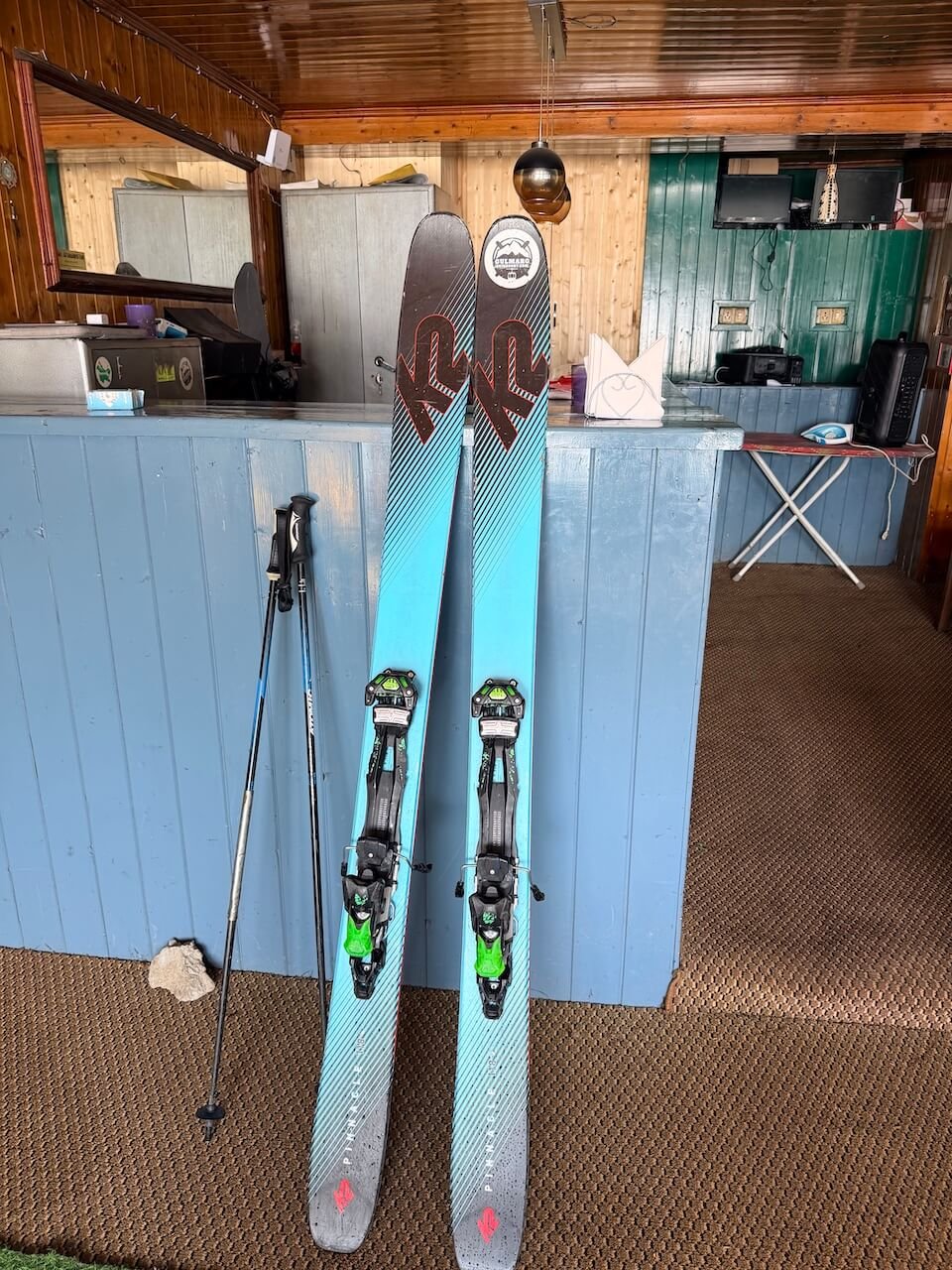
Let’s be honest, just getting in and out of the Srinagar airport and up to Gulmarg takes some planning. Uber does not operate in Kashmir. I had also booked flights on the budget IndiGo airline with a 15kg checked baggage limit, so lugging my K2 Pontoons from Korea was going to be daunting. I knew I was going to need some local guidance, beyond just the steep slopes of Gulmarg ski resort.
There are actually quite a few guiding outfits operating in Gulmarg. Some of the names that came up during my research or while I was there included Gulmarg Snow Leopards, Bill’s Trips, skigulmarg.com, and Gulmarg Snowkings.
I ultimately chose Gulmarg Powder Guides, but anyone planning a trip should spend some time researching the different options and decide what feels like the best personal fit.
One thing I did notice while comparing companies is that the level of service can vary quite a bit. Some outfits provide guiding only, while equipment, lift passes, and transportation may be additional costs.
The package I booked with Gulmarg Powder Guides handled almost everything for me, with the exception of flights and my Indian visa.
For roughly $1657 USD after an early booking discount, the package included:
• Six nights of accommodation in Gulmarg
• Breakfast and dinner
• Six days of guided skiing
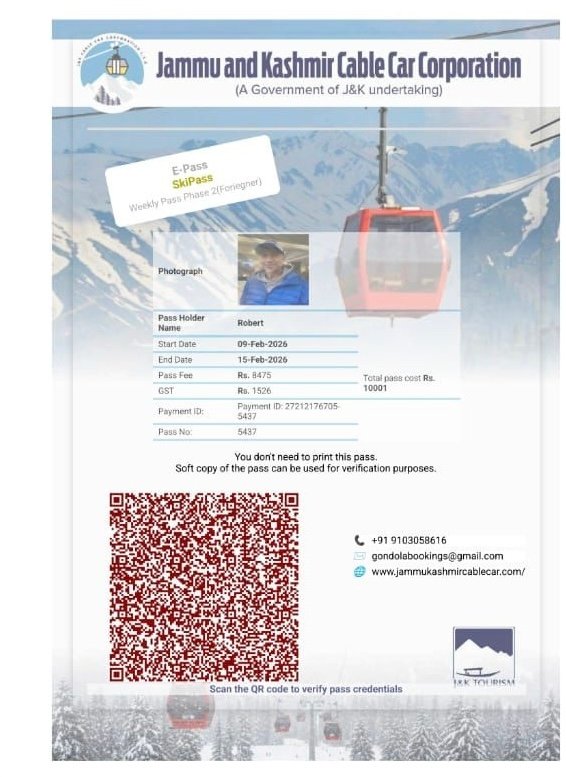
• Gondola passes
• Avalanche safety gear (airbag, transceiver, shovel, probe)
• Airport pickup and transportation
• A final night on a houseboat in Srinagar
Billa, the founder of Gulmarg Powder Guides and Kashmir Heliski, also offered to let me use powder skis with touring bindings at no extra cost. I brought my own boots (IYKYK), but not having to fly across India with skis saved me baggage fees and a lot of hassle.
Once the trip was booked, there honestly was not much left for me to organize. I booked my flights, secured my Indian visa, and showed up.
The guides (which eventually turned into a personal guide, long story for another post) handled the rest, including daily planning and guiding on the mountain.
Something else I noticed while skiing there is that guiding in Gulmarg seems to operate with a bit of a progression system. Some of the younger Kashmiri guides appeared to be working alongside more experienced guides as they built experience on the mountain. Others seemed to operate more independently. I cannot speak to every operation in the valley, but it was clear that there is a local ecosystem of guides with varying levels of experience and responsibility.
It is also possible to organize your own accommodation and simply hire a guide day by day. Gulmarg Powder Guides, for example, lists daily guiding at around $200 per day for a group of up to four people, or about $60 per day if you join an existing group.
Other outfits appear to offer similar arrangements.
For some travelers that approach might work fine.
Personally, after experiencing the trip with a full-service guiding operation, I would not recommend trying to cut too many corners. Gulmarg is not the easiest place in the world to organize a ski trip from scratch, and having a local team handle the logistics made the entire experience much smoother.
💰 Is This a Trip Where You Should Try to Save Money?
I’ve written quite a bit on this blog about skiing in Japan, especially around Niseko and Rusutsu. One of the reasons I started looking elsewhere in Asia for 2026 is that skiing in Japan has exploded in popularity. The powder is still incredible, but the crowds, lift lines, and prices have all gone up with it.
I wanted to try something different.
For skiers already thinking about traveling overseas for a ski trip, Gulmarg is actually one of the more affordable destinations out there, even when booking a fully guided experience.
My entire two-week trip to India came in around $5,000 USD. That included flights from Korea, several nights in Delhi, a trip to the Taj Mahal, a full week skiing in Gulmarg, and even a day of heliskiing.
For comparison, the seven-day trip I took to Niseko last winter with five days of skiing, a rental car, and an Airbnb (shared with two friends) ended up costing almost the same.
So when people ask whether it makes sense to try to save money by skipping a guiding service in Gulmarg, my answer is pretty simple.
Probably not.
If you’re flying halfway around the world to ski the Himalayas, shaving a few hundred dollars by trying to organize everything yourself doesn’t change the overall math very much. You still need accommodation, transportation from Srinagar, lift tickets, avalanche gear, and someone who actually knows the mountain.
You might save a little money doing it all on your own.
But you might also spend a lot more time dealing with logistics and uncertainty.
Gulmarg is not the kind of ski trip you throw together at the last minute. It takes planning. It takes commitment. And it takes someone on the ground who understands how the mountain and the town actually work.
Even as a poor English teacher, I’m happy to pay for that kind of peace of mind.
Or, to borrow a line from The Shawshank Redemption:
If you’ve come this far, you might as well go all the way.
🔎 What I Learned About Choosing a Guiding Service in Gulmarg
Because I only skied Gulmarg once, I’m not going to pretend to be an expert on every guiding outfit operating there.
What I can share is what stood out to me during my week on the mountain.
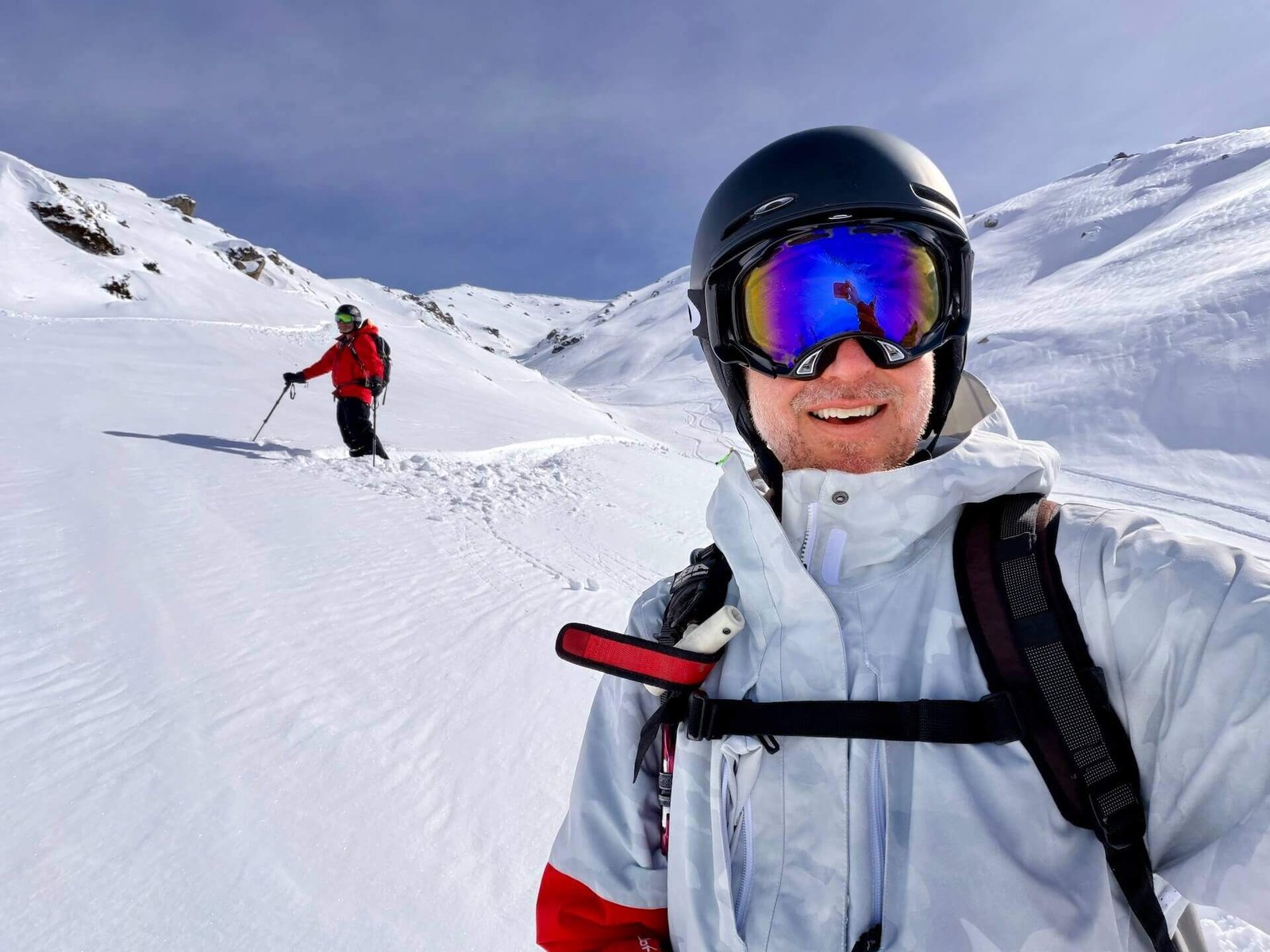
My guide for most of the trip was a Kashmiri skier named Irfan. One thing that stood out about him almost immediately was that he radiated honesty. He had a very earnest demeanor and I never once questioned whether he had my best interests in mind.
On several occasions I tried to carry my own skis or handle things myself and he would simply say something like, “It’s my job to make sure you’re taken care of.”
And he meant it.
That didn’t translate into hand-holding on the mountain. When it came time to ski, he would lead the way and expect you to keep up. But outside of the skiing itself, he quietly handled a lot of details that made the trip run smoothly.
He picked me up at my hotel in the mornings, drove me to the helipad on my heliski day, and helped coordinate picking up and returning my skis at the shop at the beginning and end of the trip.
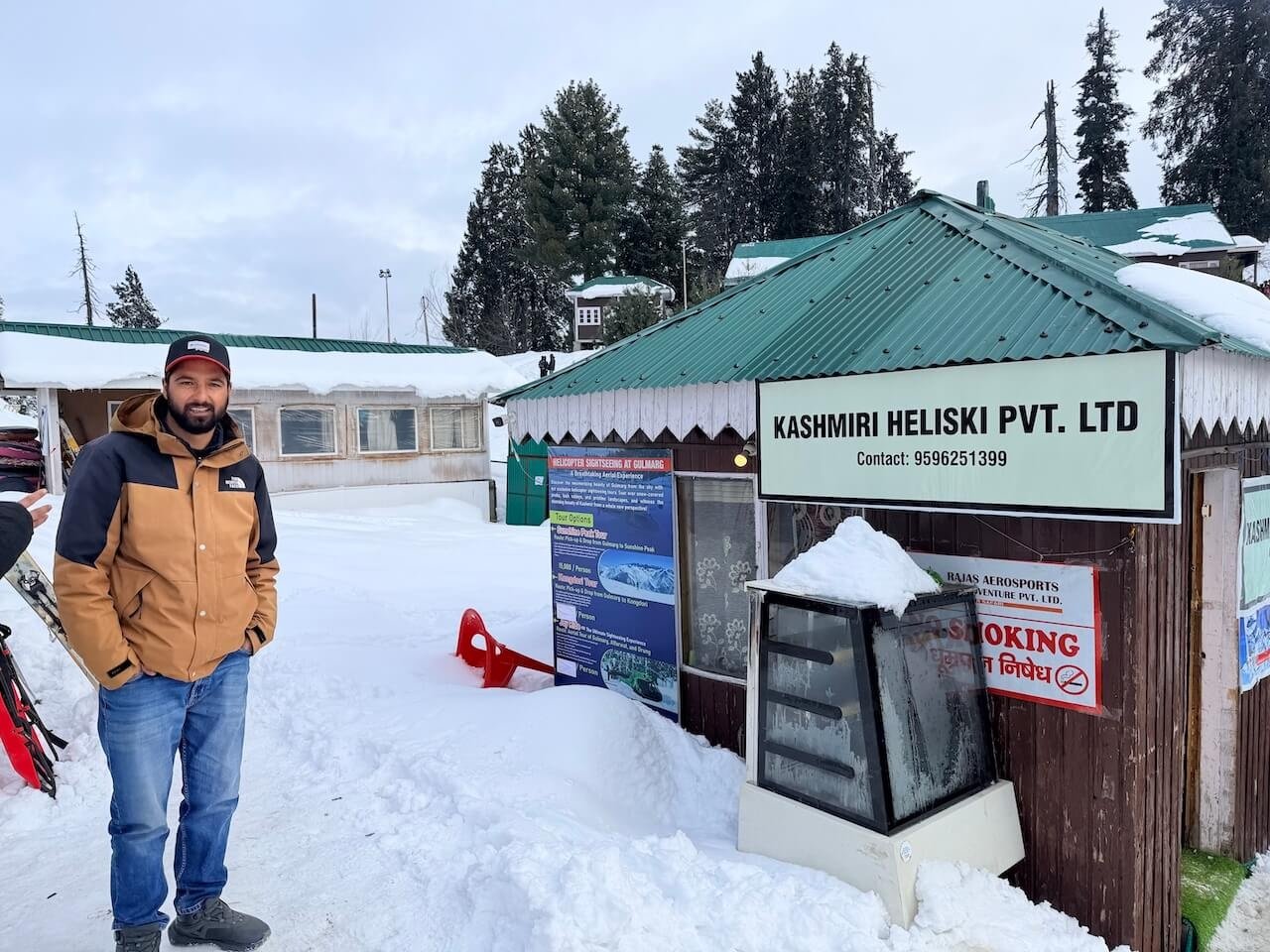
He also seemed to know everyone.
That’s not entirely surprising in a small mountain community like Gulmarg, but it was clear that he was respected by the other guides and locals we came across throughout the week.
Irfan wasn’t the highest on the totem pole. At one point he mentioned that he hoped to guide heliskiing someday. But he clearly had the training and certifications that a professional guide in the area should have.
That was another takeaway for me.
There are plenty of people in Gulmarg who can ski the mountain well, but that doesn’t necessarily mean they are trained guides. If you’re hiring someone to take you into big, uncontrolled terrain, it’s worth making sure they have the proper avalanche training, equipment, and experience.
In my case, I felt like I was in very capable hands.
A short clip (above) from one of our runs above Phase 2. You can see Irfan leading the way up the ridge before dropping into one of the lines we skied that morning.
🏁 So, Do You Need a Guide in Gulmarg?
By now you probably know my answer.
Yes.
Technically you can ski Gulmarg without a guide. Nobody is standing at the top of the Phase 2 gondola checking credentials before you drop in.
But doing so puts your life and the lives of others at substantial risk.
Below Phase 2 there is some controlled terrain off the chairlift and poma lift. If someone really wanted to travel all the way to Kashmir just to ski that section of the mountain, they could probably get by without hiring a guide.
That’s not why most people come to Gulmarg.
The terrain above Phase 2 is vast, complex, and largely uncontrolled. Finding the best lines often means traversing ridges, committing to terrain that isn’t obvious from the top, and knowing how to work your way back toward the lifts when the run is over.
During my week there, I didn’t meet anyone skiing that terrain without a local guide.
And after experiencing the mountain myself, I understand why.
A good guide doesn’t just help you avoid trouble. They help you understand how the mountain works. They know which lines hold snow after a storm, which ridges lead to long traverses, and which gullies eventually bring you back to the lift instead of somewhere you don’t want to be.
Just as importantly, a guiding service helps make the entire trip run smoothly.
From airport pickup in Srinagar to lift tickets, equipment, and daily planning on the mountain, having people on the ground who know the area removes a lot of uncertainty from a trip that already involves flying halfway around the world.
Gulmarg is not the kind of ski trip you throw together at the last minute.
It takes planning. It takes commitment. And if you’re already making that effort, trying to save a few hundred dollars by skipping a guide doesn’t make much sense.
My advice is simple.
If you’re going to ski Gulmarg, do it right.
Hire a guide.
Bottom line: If you’re traveling to Gulmarg to ski the terrain above Phase 2, hiring a local guide or guiding service is the safest and most practical way to experience the mountain.
❓ Gulmarg Ski Guide FAQs
Do you need a guide to ski Gulmarg?
Technically, no. There is no official rule requiring skiers to hire a guide in Gulmarg, even on the Phase 2 gondola. However, most people skiing the terrain above Phase 2 do so with a local guide because the mountain is vast, largely uncontrolled, and not always easy to navigate back to the lifts.
Can you ski below Phase 2 in Gulmarg without a guide?
Yes. The mid-mountain chairlift and poma lift access controlled terrain that can be skied without a guide. This area feels more like a traditional ski resort and is where beginners and intermediate skiers often spend most of their time.
Why do most skiers hire guides in Gulmarg?
The terrain above Phase 2 is extremely large and mostly off-piste. Guides help with route finding, avalanche safety, and navigating exits that are not always obvious from the top. They also often help with logistics such as lift tickets, transportation, and daily planning.
How much does a ski guide cost in Gulmarg?
Daily guiding rates in Gulmarg typically range from about u003cstrongu003e$200 USD per day for a private guideu003c/strongu003e or roughly u003cstrongu003e$60 USD per person when joining a groupu003c/strongu003e. Many guiding companies also offer full-service packages that include accommodation, lift passes, avalanche gear, and airport transportation.
Is avalanche gear required in Gulmarg?
If you plan to ski above Phase 2, avalanche gear is strongly recommended. Most guiding companies provide an avalanche airbag pack, transceiver, shovel, and probe as part of their package. The terrain above the gondola is largely uncontrolled backcountry.
How much should you tip a ski guide in Gulmarg?
Tipping guides in India is common, but there is no fixed standard in Gulmarg. Many visitors tip somewhere in the range of u003cstrongu003e$100–$200 USD for a week of guidingu003c/strongu003e, depending on group size and overall experience. I tipped my guide about u003cstrongu003e13,000 INR (around $145 USD)u003c/strongu003e at the end of the trip.
Is Gulmarg good for beginner skiers?
Gulmarg is primarily known for advanced off-piste terrain, especially above the Phase 2 gondola. However, beginners can ski the controlled terrain around Phase 1 where the Gulmarg Ski School operates. Most international visitors travel to Gulmarg for the backcountry-style skiing above Phase 2, so beginner terrain is limited compared to traditional ski resorts.
When is the best time to ski Gulmarg?
The Gulmarg ski season typically runs from u003cstrongu003elate December through Marchu003c/strongu003e, depending on snowfall. Many experienced visitors consider u003cstrongu003elate January through Februaryu003c/strongu003e to be the most reliable period for good snow and stable lift operations, although conditions can vary significantly from year to year.
Gulmarg & Kashmir
👉 Why I Chose to Ski Gulmarg in Kashmir (Despite the Risks)
👉 Beyond Japow: My Search for the Next Great Ski Destination in Asia
More Skiing in Asia
👉 Skiing in Japan (Complete Guides & Trip Planning Resources)